


Ag Policy Blog
House Ag Leaders Press Trump to Fill CFTC Seats as Agency Faces Growing Political Pressures
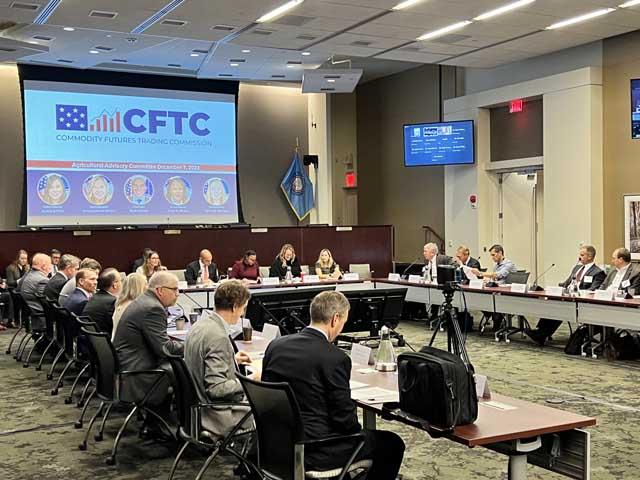
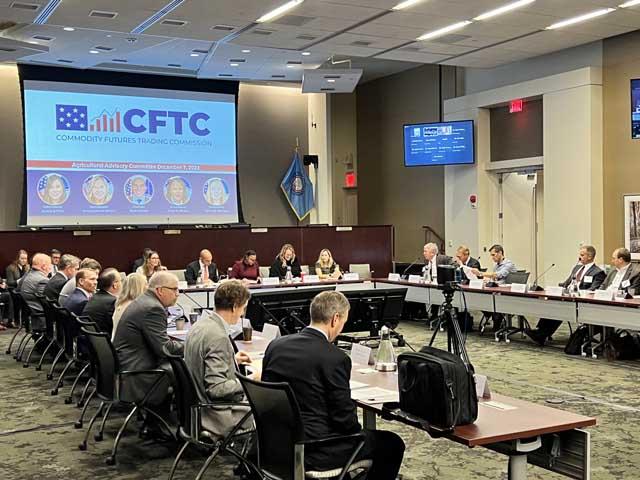
House Agriculture Committee Chairman Glenn "GT" Thompson, R-Pa., and ranking member Rep. Angie Craig, D-Minn. sent President Trump a letter Friday urging him to nominate a full bipartisan slate of commissioners for the Commodity Futures Trading Commission.
The Senate confirmed Trump's nomination of Michael Selig as chairman of the CFTC in December, and he has been acting on his own because the CFTC does not require a quorum to take action. Prior to Selig's appointment, former Chairwoman Caroline Pham was also acting on her own after other commissioners resigned in 2025. Pham left the agency to join a cryptocurrency firm.
While it is common for Democrats to press Trump on appointments, the bipartisan letter with Thompson also reflects some growing concerns among lawmakers and state officials from both parties over the CFTC.
The CFTC traditionally has five commissioners -- three from the president's party and two from the opposition party -- but Trump has not nominated any commissioners except Selig.
The CFTC was set up to oversee agricultural commodity markets, but also regulates trading markets for energy and other products. In recent years, the CFTC's portfolio has broadened, and the agency faces intense scrutiny as it claims authority to regulate the crypto industry as well as the growing phenomenon of prediction markets.
P[L1] D[0x0] M[300x250] OOP[F] ADUNIT[] T[]
The Agriculture committees share jurisdiction with the Banking committees because crypto is also regulated by the Securities and Exchange Commission.
The House passed the CLARITY Act to regulate the crypto industry and last week the Senate Banking Committee approved it.
In their letter, Thompson and Craig wrote, "As the commission carries out its work, the public, the markets, and the agency itself will be best served by a full five-member commission. This will result in better regulations, more durable rules, and more sensitivity to the divergent views of key derivatives market stakeholders."
"Similarly, a full commission will complement your administration's request for an increase in the commission's budget, making a welcome pairing of bipartisan leadership and essential financial resources."
Sen. Amy Klobuchar, D-Minn., the ranking member on the Senate Agriculture Committee, has called repeatedly for Trump to nominate a full slate of commissioners.
Selig and the CFTC are also under growing pressure from states over prediction markets. The CFTC has sued several states over arguments by states that prediction platforms such as Kalshi and Polymarket fall exclusively under the jurisdiction of the CFTC despite the main focus of their business relying on sports contracts. Minnesota lawmakers last week sent a bill to Gov. Tim Walz that would ban prediction markets from operating in the state. Texas lawmakers are looking at passing similar legislation as well. Kentucky residents also have filed a federal class-action lawsuit against Kalshi.
The CFTC has been fixated on defending prediction markets and asserting that it has full authority over their business platforms. Last week, the agency exempted prediction markets from being required to file specific swap-data reports and recordkeeping generally expected from market exchanges using swap contracts.
The CFTC also last week filed a brief in the Sixth Circuit Court of Appeals seeking to overturn a lower court ruling against Kalshi in Ohio. A federal judge had ruled in March that Kalshi's prediction markets amount to acts of gambling, which should fall under state jurisdiction. Kalshi maintains its sports contracts are regulated swaps under the jurisdiction of the CFTC. The federal judge in the case described that as "absurdity."
Selig steadfastly maintains that the CFTC has broad discretion in regulating commodities and prediction markets fall under that umbrella.
"The federal district court in Ohio took an improperly narrow view of the Commission's jurisdiction, and we are asking the Court of Appeals to correct that error," Selig said. "As I've said repeatedly, the CFTC will not allow overzealous state governments to undermine the agency's longstanding authority over these markets."
Chris Clayton can be reached at Chris.Clayton@dtn.com
Follow him on social platform X @ChrisClaytonDTN
Jerry Hagstrom can be reached at jhagstrom@nationaljournal.com
Follow him on social platform X @hagstromreport
(c) Copyright 2026 DTN, LLC. All rights reserved.
Comments
To comment, please Log In or Join our Community .