

Ag Policy Blog
6 Things You Might Want to Know About the Farm Bill
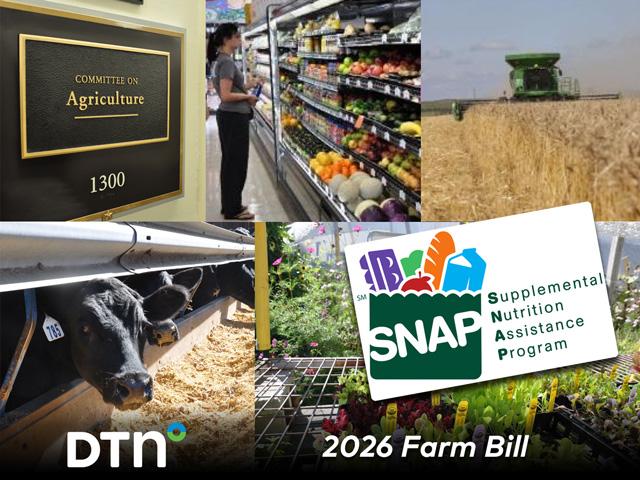
It might be dubbed a "skinny farm bill," but the House's "Farm, Food, and National Security Act of 2026" is still 850 pages long with 12 titles, each with a laundry list of parts, sections and provisions.
The bill passed the House on April 30, and now eyes turn to the U.S. Senate to see if the Senate Agriculture Committee can pass a bill before the fall.
So, out of all of that, here are just six provisions that you might want to know about:
1. CREDIT CHANGES
The bill would increase Farm Service Agency loan limits for guaranteed operating loans to $3 million and guaranteed ownership loans to $3.5 million. Direct ownership loans would be increased to $850,000, while direct operating loans would be increased to $750,000. The loan limits also would adjust over time with inflation. The bill also includes provisions meant to speed up approval times, especially for certified and preferred guaranteed lenders.
Also, within a year, the bill would require USDA to create rules allowing certain guaranteed loans to be refinanced into direct USDA loans if the loan is in distress.
The time requirements to be a farmer qualifying for USDA loans are lowered from three years to two years as well.
2. PRIME ACT
The bill includes a pilot of the PRIME Act by Rep. Thomas Massie, R-Ky. -- the Processing Revival and Intrastate Meat Exemption Act.
P[L1] D[0x0] M[300x250] OOP[F] ADUNIT[] T[]
The PRIME Act would amend the Federal Meat Inspection Act to allow custom-exempt facilities. States could operate pilot programs to allow custom facilities to sell meat directly to consumers within the same state, such as at the farm gate, local delivery or farmers' markets. Facilities in states without a pilot program also could request an exemption from USDA. The pilot will cap the number of facilities at five participating in any state. USDA can approve up to 10 facilities. Meat from such facilities will be restricted from being resold. Facilities in the pilot program will also be subject to on-site inspections at least once annually.
3. PRECISION AG AND CONSERVATION
The bill offers some funding opportunities for farmers to adopt precision agricultural practices, including providing loans and loan guarantees for equipment under the Environmental Quality Incentives Program (EQIP).
In another provision, the director of the National Institute of Standards and Technology and the FCC will have two years to adopt interconnectivity guidelines and best practices for precision agriculture as well. That also includes examining challenges such as cybersecurity risks and artificial intelligence. The Government Accountability Office will also conduct a study of precision agricultural standards.
Further, precision agriculture will also be included as a research topic for USDA and land-grant universities.
4. NASS MODERNIZATION
With questions lingering over the accuracy of data generated by the National Agricultural Statistics Service (NASS), the farm bill creates a commission to look at modernization. The commission will study NASS data collection and how the quality of statistics can be improved. That includes finding ways to get farmers to participate in surveys and improve response rates. As was reported, the reported acreage for corn last year was adjusted several times to increase acreage and production. At the same time, the farmer survey response rate for this year's Prospective Plantings report was under 38% and considered the lowest on record.
USDA's current reorganization plan sends most NASS staff to new offices in St. Louis, Missouri, which will likely have dramatic impacts on employee retention.
5. AGROFORESTRY
The U.S. Forest Service, which is currently moving most of its offices to Utah, will establish "one or more" regional agroforestry centers to advance research on agroforestry and technical assistance.
Such systems look to integrate trees or shrubs with crops and/or livestock on the same land.
6. LOCAL FARMERS FEEDING OUR COMMUNITY PROGRAM
After USDA ended a similar Biden administration program, the House bill requires USDA to enter into cooperative agreements with groups to support local producers with the distribution of fresh and frozen foods to strengthen local and regional food security and systems. Such organizations as local food banks that participate will buy minimally processed foods and ensure that at least 25% of the products purchased come from small- to mid-sized producers, beginning farmers and ranchers, or veterans who have become farmers or ranchers. What might seem unclear here would be details about funding.
For more on the farm bill, see "Farm Bill Advances to Senate After Contentious E15 Battle and Pesticide Liability Vote" here:
Chris Clayton can be reached at Chris.Clayton@dtn.com
Follow him on social platform X @ChrisClaytonDTN
(c) Copyright 2026 DTN, LLC. All rights reserved.
Comments
To comment, please Log In or Join our Community .