



Lawsuit Targets Syngenta Over Atrazine
Syngenta Sued for Failing to Warn of Atrazine's Alleged Cancer Risks
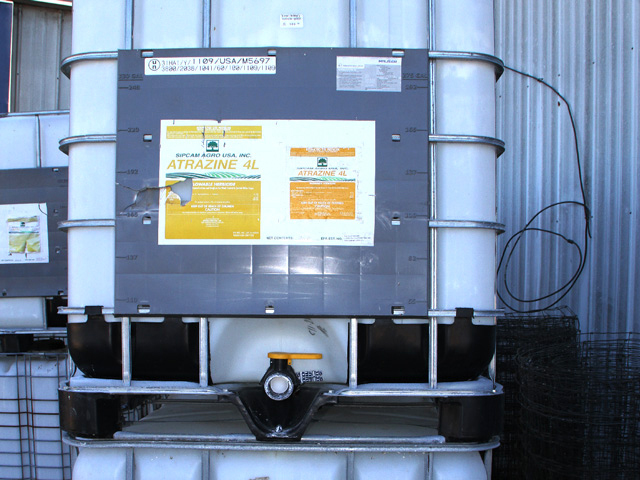
JEFFERSON CITY, Mo. (DTN) -- More than three months after the U.S. Supreme Court ruled that federal law for labeling herbicides preempts state failure-to-warn laws, a new lawsuit takes aim at another herbicide and its manufacturer with a different twist on failure-to-warn claims.
On Oct. 6, in the U.S. District Court for the Central District of California, a lawsuit was filed against Syngenta AG and Syngenta Crop Protection LLC on behalf of California resident Apostolos Panayiotou, alleging that decades of exposure to atrazine-based herbicides caused him to develop non-Hodgkin lymphoma.
According to the complaint, Panayiotou regularly mixed, loaded, sprayed and applied atrazine products in Los Angeles County over a three-decade time span. The lawsuit alleges that Syngenta designed and sold products that exposed users to a risk of cancer and failed to warn them in its advertising, training, sales communications and other channels outside federally approved pesticide labels.
"Mr. Panayiotou handled these products year after year, exactly as they were intended to be used, and he developed cancer. Syngenta knew or should have known about the risks applicators faced, and it failed to warn them," said Pedram Esfandiary, a partner at Wisner Baum and one of the attorneys representing Panayiotou, in a news release issued by the firm Oct. 12.
FAILURE TO WARN TWIST
In his lawsuit, Panayiotou brings three claims under California law: strict liability for design defect, strict liability for failure to warn outside the label and negligence. The complaint alleges that Syngenta could have reduced or eliminated the cancer risk through alternative ingredients, formulations, packaging and application systems.
It also alleges that Syngenta waged a campaign to shape, suppress and undermine the science on atrazine, including a plan to discredit a scientist whose research raised concerns, as well as the use of paid advocates whose financial ties to the company were not disclosed.
Had he received an adequate warning, Panayiotou said he would not have purchased or used atrazine products. His failure-to-warn claim targets communications outside of EPA labels approved under the Federal Insecticide, Fungicide and Rodenticide Act (FIFRA). These include promotional materials, sales and technical communications, product stewardship programs and applicator training.
P[L1] D[0x0] M[300x250] OOP[F] ADUNIT[] T[]
In November 2025, the International Agency for Research on Cancer (IARC) classified atrazine as "probably carcinogenic to humans." Other regulatory bodies, including the U.S. EPA and Health Canada's Pest Management Regulatory Agency, have not concluded that a link exists between atrazine use and adverse human health outcomes or increased cancer risks. Though available to control annual grasses and broadleaf weeds in crops such as corn and sorghum in the U.S. and Canada, atrazine has been banned throughout the European Union since 2004.
Panayiotou's complaint alleges that Syngenta knew or should have known that published research linked atrazine exposure to non-Hodgkin lymphoma and showed that atrazine suppresses the immune system. It further alleges that the company failed to adequately investigate the risks or warn users and continued to market its products without disclosing the cancer risk.
"People deserve to know whether the products they use to do their jobs could put their health at risk," said Timothy A. Loranger, a senior partner at Wisner Baum in the firm's news release. "Syngenta had information these workers needed to protect themselves, and it failed to share it. Mr. Panayiotou and others deserved better."
ATRAZINE ADVOCATE
This is not the first time that Syngenta has been sued over atrazine. In 2012, the company agreed to a $105 million settlement to resolve water-contamination claims brought by nearly 2,000 community water systems across the United States. The agreement resolved drinking water contamination claims, though it did not address or resolve separate personal injury or individual health lawsuits.
Jeff Cecil, president of Syngenta's North America Crop Protection business, told DTN that the lawsuit was "disappointing" and that the company is "trying to understand what it actually means.
"We've been fighting the fight for science on atrazine for a lot of years," he said. "We don't think (the lawsuit) is based in reality."
He noted that it would not change Syngenta's pursuit of new innovations.
"We're very committed to finding new solutions for farmer needs," Cecil said. "We'll have to take resources away from some things to put in others, and that's the realities of the world. But we are still committed and still investing in the future of innovation."
HIGH COURT RULES FIFRA IS FINAL
In June, the Supreme Court held that FIFRA expressly preempted state-law failure-to-warn claims against the glyphosate-based herbicide, Roundup -- meaning injured plaintiffs cannot sue in state court to force a cancer warning that the EPA has not required.
The court's ruling essentially established that companies complying with EPA-approved labels are shielded from state failure-to-warn lawsuits on safety issues.
Read more from DTN here: https://www.dtnpf.com/…
DTN Crops Editor Matthew Wilde contributed to this report.
Jason Jenkins can be reached at jason.jenkins@dtn.com
Follow him on social platform X @JasonJenkinsDTN
(c) Copyright 2026 DTN, LLC. All rights reserved.

