



CFTC Chair Signals Deregulatory Shift
CFTC Chair Says Regulations Have Made Risk Management More Costly for Farmers
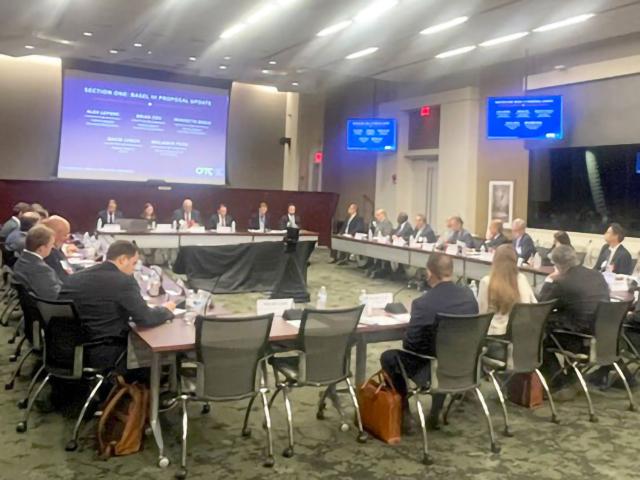
WASHINGTON (DTN) -- The chairman of the Commodity Futures Trading Commission told the CFTC's Agricultural Advisory Committee that commodity markets are too heavily regulated while some on the committee debated whether agriculture could benefit from prediction markets and perpetual futures contracts.
In a wide-ranging discussion Wednesday, members of the CFTC's Agricultural Advisory Committee met with CFTC Chairman Michael Selig. In his opening remarks, Selig said the agency, under his direction, was pursuing a policy of deregulation.
Following the passage of the Dodd-Frank Act after the 2008 financial crisis, "the number of futures commission merchants shrunk from roughly 90 before 2007 to less than 50 today," Selig said. "Farmers, ranchers, and producers who rely upon commodity derivatives for risk management had to address new hedging rules, position limits, swap data reporting obligations, and the expense of hiring an army of lawyers and compliance personnel to figure it all out. The worst part of the story is that many of these regulations have proven to be unnecessary, duplicative, overly complex, and difficult to enforce.
"This is unacceptable. Farmers, ranchers, and producers depend on these markets to hedge risk, manage uncertainty, and plan for the future. Our responsibility is to ensure continued access to fair, efficient, and well-functioning markets. Not to overregulate the marketplace, force innovators to conform with ill-conceived rules, and drive our industries offshore."
Selig noted he has directed staff to begin circulating the Commitments of Traders report on a twice-weekly basis, as opposed to the current once-weekly format, by the end of the year.
The CFTC normally operates with five commissioners but has been operating with only one commissioner running the agency since last September. Selig was sworn in as chairman last December, but President Donald Trump has not nominated any other members to serve on the commission.
The Agricultural Advisory Committee discussed government crop subsidies, crop insurance and traditional futures, and heard presentations about innovations including prediction markets and perpetual futures.
Nelson Neale, president of CHS Hedging, representing the Futures Industry Association at the meeting, said that if futures commission merchants decide to cut out certain lines of business, "agriculture could be left with less choice and less service."
John Newton, vice president of public policy at the American Farm Bureau Federation, noted the markets are important for price discovery but said one of the challenges farmers face is the cost of using futures tools compared with crop insurance. Markets move so fast farmers can't move fast enough to take advantage of them, Newton added.
Newton noted specialty crop growers have a hard time managing risk and, even though they can use whole farm insurance, it is "not an easy plan of insurance to take out."
Newton also said poultry growers, aquaculture operators, fishers, and small farmers all need better risk management tools.
Joe Barker of the National Council of Farmer Cooperatives said there is capital available but "it is not always allocated in a way that is good for agriculture."
P[L1] D[0x0] M[300x250] OOP[F] ADUNIT[] T[]
Robbie Boone of the Farm Credit Council, which represents 45% of farm lending in the country, said, "The derivatives markets are a tool; but the crop insurance program is the first and foremost tool."
Ed Prosser, vice president of special projects at the Scoular Company, who chaired the meeting, asked if event contracts could be used to help producers hedge risks.
Prosser said the agriculture community is too quick to resist innovation and that "some innovations have merit."
Ananda Radhakrishnan of the American Bankers Association asked if there would be "an objective reference point" in the contract.
Barker said the challenge in innovations is whether the "binary payout" -- a fixed, all-or-nothing financial return -- would be worth it.
Newton noted that futures and options have been studied by land grant institutions for decades while "these event contracts could encourage speculative behavior." He said more research is needed before they are widely adopted.
On event contracts, Boone said, "We shouldn't be against innovation just for its sake," but the standard should be whether it is improving a producer's ability to manage actual business exposure, not just whether a new contract can be created.
Liam Smith, chief strategy officer for Optiver, representing the FIA Principal Traders Group, made a presentation on perpetual futures, which are defined as derivative contracts that never expire. They allow traders to speculate on asset prices indefinitely without ever owning the underlying physical or digital asset.
Perpetual futures are used today in crypto markets, but the group was asked to consider if they would be appropriate for agriculture.
Tommy Hayden, vice president and COO at Louis Dreyfus Company Cotton LLC, representing the Commodity Markets Council, said he sees perpetual futures contracts as "a potential slippery slope."
Traditional agricultural markets derive utility from contract expiration, physical delivery and convergence, Hayden said.
The CFTC this spring opened a comment period on perpetual contracts. Agricultural groups and traders raised concerns over perpetual derivatives because grain futures are tied closely to price discovery and delivery mechanisms are tied to futures and physical grain.
The committee also discussed the potential and problems of trading 24 hours a day, seven days a week.
Curt Strubhar, chairman of Advance Trading, representing the Grain and Feed Association of Illinois, said a big problem is that banks don't operate over the weekend.
Ryan Weston, CEO of the Florida Sugar Cane League, representing the American Sugar Alliance, also noted that risk management is harder for smaller acreage crops like sugar.
Heather Manzano, associate administrator of the Risk Management Agency, and Mary Catherine Cromley of the Farm Service Agency made presentations on crop insurance and farm subsidies.
After Barker also said government crop reports should be updated in a timelier manner, Cromley said the Trump administration is working with the National Agricultural Statistics Service on getting data out sooner as part of its One Farmer, One File project.
Kate Thompson, director of government affairs at the National Cattlemen's Beef Association, said USDA programs "are so important and complement the futures market."
Gabe Afolayan, vice president of soybean merchandising and trading at Cargill, asked if action needs to be taken so farmers can take more advantage of the biofuels market. Manzano noted the crop insurance program is required to be actuarially sound but said RMA is "trying to make progress in the oilseed arena."
Selig noted, "We've ended the prior administration's one-size-fits-all approach to financial regulation" and said the CFTC is not going to take a "one-size-fits-all-approach" to novel contracts. What may work for crypto may not work for agriculture, Selig said. But he added that novel ideas must be considered or other countries outside the U.S. regulatory framework may begin to use them.
DTN Farm Business Editor Chris Clayton contributed to this report.
The CFTC's Agricultural Advisory Committee https://www.cftc.gov/….
Also see, "Lawmakers Raise Risks Over 24/7 Trading in Ag Markets During CFTC Hearing,"
Jerry Hagstrom can be reached at jhagstrom@nationaljournal.com
Follow him on social platform X @hagstromreport
(c) Copyright 2026 DTN, LLC. All rights reserved.

