



Farm Seller Impersonation Fraud Surges
Real Estate Fraud Alert: Scammers Are Selling Farmers' Land Without Their Knowledge
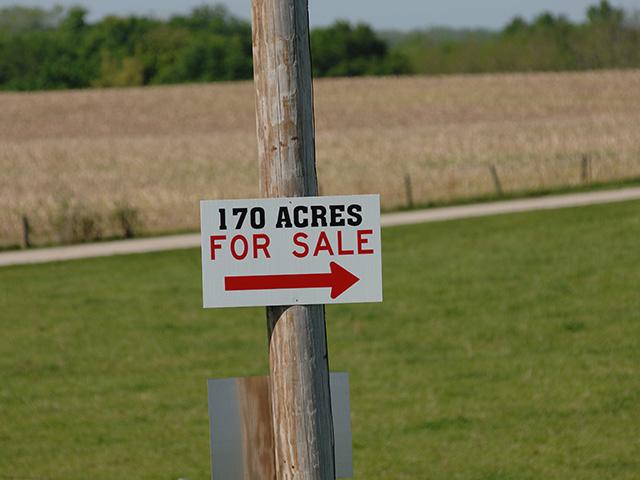
LINCOLN, Neb. (DTN) -- Colorado farmer Casey Kimbrell picked up the phone one day in early April 2026, and a friend on the other end asked about the land he had for sale.
The only problem was that Kimbrell wasn't trying to sell the tract, which had been marked by a realtor's for-sale sign in Hutchinson County, Texas.
"Someone using my name and address called a fairly unheard-of realtor and listed one of my farms," Kimbrell told DTN. "They used a Google phone number. Oddly enough, they pronounced the name of my town as the locals tend to mispronounce it, and that gave them enough credibility to convince the realtor to list it, as the realtor has a vacation home near here. The realtor listed it and put up a sign, even visited with a neighbor about it."
The realtor became suspicious and called Kimbrell on the same day a neighbor called him.
"She (the realtor) was willing to cooperate with law enforcement, but I couldn't find a law enforcement agency that was willing to investigate," Kimbrell said.
He reported it to the Hutchinson County, Texas, sheriff's office, and he was then referred to his local sheriff in Colorado.
"Since that went nowhere, I reported it to the FBI, with no response whatsoever," Kimbrell said.
LAND FRAUD ON THE RISE
Doug Hensley, president of Hertz Real Estate Services in Nevada, Iowa, said the type of fraud perpetrated on Kimbrell has become more common in the past 12 to 18 months, especially with land assets.
"I probably get three to five inquiries every week from scam sellers saying they want to talk to us about selling their property," he said.
"We train and counsel our agents to complete lots of due diligence on the front end, to better ensure that what they may think is a legitimate seller/sale to, in fact, be a legitimate seller/sale."
Seller impersonation has become a more acute problem across the entire real estate industry when it comes to smaller vacant lots and acreages, Hensley said, as well as in some housing sectors.
According to Hensley, the scam goes something like this: "A fraudster 'seller' will contact a real estate agent with a supposed desire to sell their property. They do this by email or web inquiry most often and work to never want to meet with the agent in person."
P[L1] D[0x0] M[300x250] OOP[F] ADUNIT[] T[]
Fraudsters generally look for property with non-local owners and without a mortgage on it because there are "fewer hoops to jump through" in the sale process, Hensley said.
They will then price the property with the real estate agent at a "fire-sale" price.
"They do this to try and attract a fast sale with a cash buyer who can and will close very quickly," he said.
"But when evaluating and deconstructing how these things occur, it checks all the standard boxes for a fraud -- involve as few people as possible, never meet anyone in person, do everything remotely, do everything with great urgency and as fast as possible, etc. By the time the cash buyer realizes that they've been dealing with a fraudster, the fraudster seller is gone with the buyer's money, and they (the buyer) are left holding a fraudulent deed."
ALERT SYSTEMS AVAILABLE
Some states and counties are creating systems for county-level alerts that property owners can sign up for, Hensley said.
"However, as I understand them, that only creates an alert after the fact and seems like an imperfect solution," he said.
"I think the biggest deterrent is going to be verification of those involved in a sale being who they say they are. And, as always, encouraging some common sense. As your grandma probably told you, if something seems too good to be true, it probably is."
A 2025 survey by the National Association of Realtors found 62% of fraudulent transactions involved vacant land. However, just 12% of that type of fraud occurred on owner-occupied land.
As recently as 2023, 28% of title insurance companies experienced at least one seller-impersonation fraud attempt, based on an August 2024 American Land Title Association survey of the title insurance industry.
The industry survey, which received 783 responses from across the U.S., found the use of fake notary credentials in 43% of cases, with the use of non-public personal information, including driver's license numbers, Social Security numbers and birth dates commonly used in fraudulent transactions.
The study said that 85% of companies reported seller-impersonation fraud was somewhat common in vacant land transactions.
KEEPING WATCH
Tiffany E. Dowell Lashmet, associate professor and Extension specialist in agricultural law at Texas A&M, said farmers and ranchers should proactively keep watch over their land and the deeds to the property.
"Probably a good reminder to lay eyes on your property from time to time -- either yours or someone on your behalf to keep an eye out for something like this or any unauthorized use that could lead to issues; I'm thinking adverse possession claims," Lashmet said.
Adverse possession allows someone to gain legal ownership of another landowner's property, essentially by openly and continuously occupying it without permission.
Lashmet said landowners can start by checking the listed owners of their property in a few key places, starting with deed records at county courthouses.
"Always good to make sure you actually own what you think you own," she said.
"Second, it is probably a good idea to check the records at the county appraisal district. Although those records being wrong wouldn't legally change ownership, they could give a sign that there is an issue. Third, it is smart to check at the local USDA FSA (Farm Service Agency) and NRCS (Natural Resources Conservation Service) offices. Same idea there -- them being wrong wouldn't impact legal ownership but might flag an issue."
The American Land Title Association study said that as recently as 2023, seller-impersonation fraud was most often caught before closing was complete.
Of the companies surveyed, 46% said it was at least somewhat common to identify and prevent fraudulent transactions before closing deals. That is compared to just 26% after closing.
There are some basic steps landowners can take to keep watch. The FBI office in Newark, New Jersey, put out a bulletin in May 2024 that offers a few tips for landowners.
That includes setting up title alerts with local county clerk offices to receive email alerts if something changes on a property. With some county clerk websites, it's possible to set up online search alerts for properties.
FBI Newark also recommends that landowners frequently drive by their properties and work through networks of friends and family to keep an eye out for for-sale signs or other suspicious activity. And it may not be a bad idea to ask local law enforcement if they offer security checks for property owners.
Todd Neeley can be reached at todd.neeley@dtn.com
Follow him on social platform X @DTNeeley
(c) Copyright 2026 DTN, LLC. All rights reserved.