


Aid Available for Nebraska Wildfire Victims
Funds Available for Nebraska Farmers, Ranchers Impacted by Wildfires
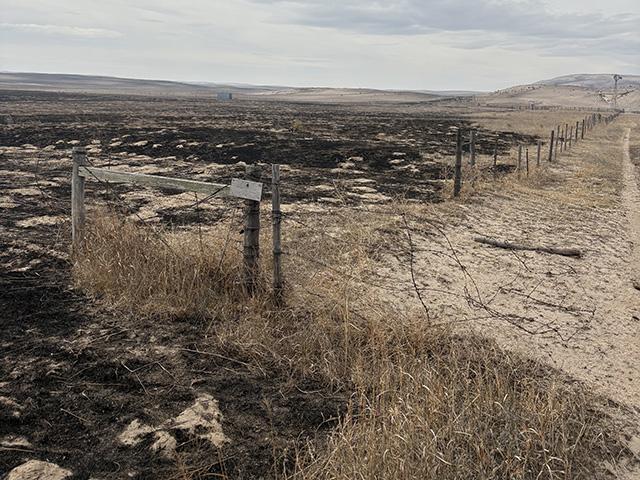
REDFIELD, Iowa (DTN) -- Just over one month ago, Nebraska experienced the worst series of wildfires in history, burning nearly 950,000 acres. Since then, assistance for farmers and ranchers affected has been rolling in.
The Nebraska Cattlemen's Disaster Relief Fund has raised over $1 million to help producers impacted by the fires. Marshall Hansen, member of the Nebraska Cattlemen's Association board of directors, told 1011 News that funds have come in from all 50 states to help. "Beef producers are resilient and proud, but they still need to apply for funds to help them recover," he said during an interview on Monday. Producers in the 11 counties impacted by the recent wildfires can apply for funds on the website: www.nebraskacattlemen.org.
FEDERAL PROGRAMS AVAILABLE THROUGH USDA
Government-based assistance is available through programs with the United States Department of Agriculture's Farm Service Agency (FSA) and Natural Resources Conservation Service (NRCS). Hilary Maricle, executive director of Nebraska FSA, said producer meetings in the affected areas have been well attended. "Our hearts and prayers go out to all affected. We want to work with you and to help with recovery," she said during a webinar hosted by the Center for Ag Profitability at the University of Nebraska Lincoln.
Maricle said four main programs will be helpful for these Nebraska farmers and ranchers -- Livestock Indemnity Program, Emergency Livestock Assistance Program, Livestock Forage Disaster Program, and Emergency Conservation Program.
Affected producers are encouraged to reach out to their local Farm Service Agency office for assistance and to determine which program or programs will be most beneficial for them.
Meghan Soderlund, program specialist for Nebraska FSA, said there are benefits available to both livestock owners and contract growers who have had losses from the recent wildfires. The losses must be caused by the wildfires and seen within 30 days of the containment date. She stressed the importance of documenting all losses well.
P[L1] D[0x0] M[300x250] OOP[F] ADUNIT[] T[]
DOCUMENTATION IS KEY TO COLLECTING BENEFITS
Acceptable beginning inventory records include vet records, balance sheets, loan or bank records, brand inspection records, sales purchase receipts, private insurance documents, ear tag records, trucking or livestock hauling records and certain producer records. Besides beginning inventory, it's important to have proof of death of livestock from rendering truck receipts, FEMA or National Guard records, veterinary statements, bank records and pictures with the date attached. "Documentation is crucial. Keep track of everything," Soderlund said. "Signed receipts are needed if a private purchase of feed is made."
Many things can be covered in one way or another. Transportation of feed, water, and livestock are eligible for coverage. Animal losses, value of grazing loss or feed replacement, and fencing losses all can be covered.
Soderlund said if drought continues in Nebraska, that too will have an impact on what programs are available to be collected on since that is a different loss than the wildfire losses. "The need for the funds and the timeline may be different for everyone. Stay in contact with your county office to work through that," she added.
The Emergency Conservation Program (ECP) provides cost-share assistance and technical support to farmers and ranchers restoring farmland damaged by natural disasters. It can help rehabilitate land, repair fences and implement emergency water conservation measures.
Jana Ingwerson-Laws is the conservation program specialist for Nebraska. She said the goal of ECP is to get the land back to what it was like before the wildfire. "If it wasn't functioning before the disaster, those items might not be eligible; but in most situations, fence was there and functioning. We are going to be able to pay cost-share to be able to get those back," she said. "We are going to be able to pay about 75% of eligible costs to replace those structures."
PROGRAM AVAILABILITY IS WIDESPREAD
This program is available for Arthur, Garden, Keith and Morrill counties for the Morrill Fire; Dawson and Lincoln counties for the Cottonwood Fire; Blaine and Thomas counties for the Road 203 Fire; and Cherry County for the Anderson Bridge Fire. She said some other fires, like the Ashby Fire will be included as well.
Some advanced funding is available for purchases to make the repairs as long as the proper paperwork is filled out. Ingwerson-Laws stressed the importance of keeping all receipts for proof of expenses.
Conservation Reserve Program emergency haying and grazing is available in designated D2 drought or higher or in a county where there is at least 40% loss in forage production. Local county FSA offices must be contacted before any action can be done on those acres. She said the Nebraska Grazing Exchange is a good resource to help find available rangeland at www.nebraskagrazingexchange.com.
Other funding is available through the Environmental Quality Incentives Program through the NRCS. This sign-up is also through an application with disaster initiatives available on a first-come, first-serve basis with sign-up available through May 31, 2026.
The final deadline for the FSA programs is March 1, 2027, but producers can collect if they have the proper documentation and the funds are available. That information is available through the county FSA office.
The Nebraska Farm Bureau also has a disaster relief fund built up for farmers and ranchers in the affected areas. For more information, visit www.nefb.org. Funds are also available through the Nebraska Sandhills Ranchers Fire Relief Facebook page.
Jennifer Carrico can be reached at jennifer.carrico@dtn.com
Follow her on social platform X @JennCattleGal
(c) Copyright 2026 DTN, LLC. All rights reserved.