


We'd Like To Mention
Corn's Blueprint
Sunday afternoon drives of my youth were taken so we could size up the corn crop. Today, I still routinely head down country roads to check the corn. Not even $4-plus gas can curb my curiosity about how the season is progressing.
But, it wasn't until I took a walk back in time at a seed company history plot and saw corn's ancestors that I realized how much the plant has changed. Corn tassels, stalks and stature are as telling of each era as if they donned a fashionable fedora or bell-bottom pants.
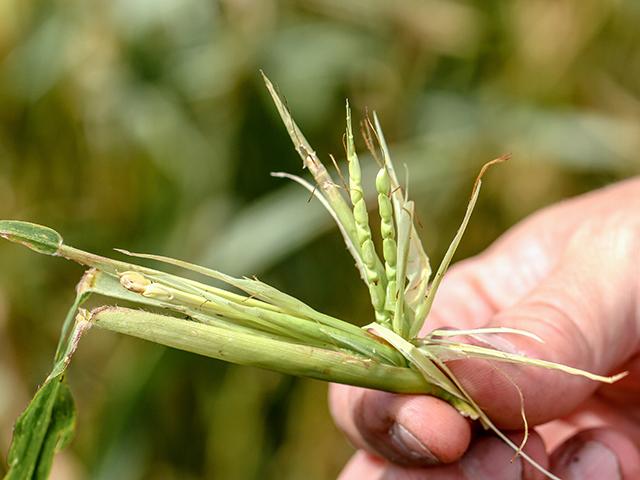
The unruly nature and spare sheathed seeds of teosinte, the Mexican grass that started it all nearly 9,000 years ago, seem an unlikely forefather to today's picket fence stands with kernel-filled cobs. Even single-cross hybrids such as the iconic B73 x Mo17, known for their yield stability and popularity in the early years of my ag journalism career, look funny today with their floppy tassels and sloppy appearance.
Time-traveling through historical plots gives one an appreciation of the consistency offered in modern-day genetics. The question of what further advances lie ahead for corn planted the seed for this issue of Progressive Farmer. You'll find articles that explore everything from the pollen within the tassel to the roots that feed the plant. You'll read about current efforts to reduce the size of the corn plant and more.
P[L1] D[0x0] M[300x250] OOP[F] ADUNIT[] T[]
When Burrus Seed Co. celebrated its 90th anniversary in 2025, a demonstration plot was planted containing early varieties such as Reid's Yellow Dent and hybrids that represented milestones for the company -- including the company's first hybrid, US 13, a double-cross resulting from the crossing of four parent lines (including Reid's Yellow Dent).
"Looking back on those hybrids provides a remarkable view of how far we've come since our company launched in 1935," says Todd Burrus, one of the owners of the Arenzville, Illinois-based family firm.
Root and stalk strength, and less lodging lead his list of improvements. Leaf structure has narrowed and become more upright, and spacing on the stalk is more uniform. Tassel size is much smaller. Tolerance to leaf diseases has dramatically improved, he notices. All of these things -- along with crop insurance availability -- allow today's farmers to plant with an eye more on yield rather than hedging against drought and other disasters.
Nature is never static. Corn is a product of domestication and continual evolution. There are even researchers returning to teosinte to investigate if there are traits that might have been left behind to improve how plant roots interact with soil.
Turns out, going back to our roots provides more than perspective -- it gives us a blueprint for the future.
**
-- Follow the latest from Pamela Smith, Senior Crops Editor, by following her on social platform X @PamSmithDTN or visiting the Production Blogs at https://www.dtnpf.com/…
[PF_0926]
(c) Copyright 2026 DTN, LLC. All rights reserved.