


Senators Target 20M Acres
RANCH Act Aims to Expand 20M Acres of Grazing Land, Rebuild Cow Herd
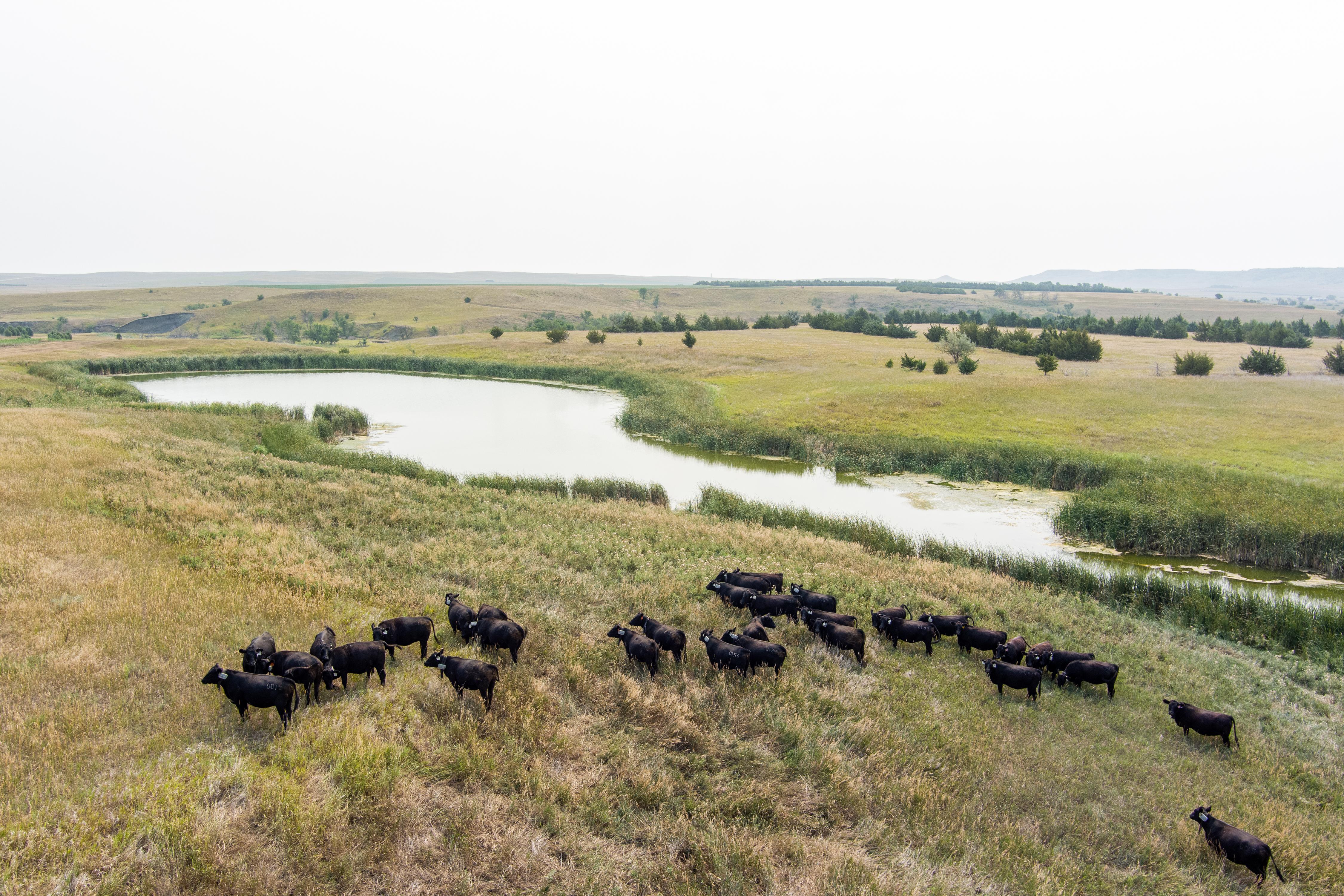
WASHINGTON (DTN) -- This week at Dakotafest, a pair of bipartisan senators introduced legislation to open 20 million additional acres through a voluntary grazing program to aid in rebuilding the nation's cow herd.
Introduced by U.S. Sens. Mike Rounds, R-S.D., and Amy Klobuchar, D-Minn., the Rebuilding America's National Cow Herd (RANCH) Act would provide enough grazing land to support an estimated two million to four million additional beef cows.
To help convert the acres back to grass, the program would pay landowners about 75% of the county's average rental rate for comparable land in commodity production in 10- to 15-year contracts.
"Anyone who has spent time around cattle understands one simple truth: No grass means no cattle," Sen. Rounds said.
American cattlemen in the West have been limited in their ability to maximize pasture grazing because of extreme weather, high land and production costs and strict federal land-use regulations. Cattlemen in the Midwest face another challenge -- competition with cropland.
The U.S. cattle and calf inventory stood at 94.2 million head as of July 1, 2026, according to USDA. Beef cows totaled 28.5 million head, down 1% from a year earlier, while the 2026 calf crop fell 2% to 32.5 million head. The January inventory of 86.2 million head was the lowest Jan. 1 total since 1951.
The RANCH Act seeks to lower barriers to entry for beginning ranchers through targeted cost-share and signing incentive payments, bringing the next generation onto the land.
"Expanding access to grass, keeping working lands in production, and creating opportunities to responsibly grow the nation's cattle herd can strengthen ranch families, rural communities, and the health of our natural resources," said Craig Bieber, president of the South Dakota Cattlemen's Association.
The legislation is also endorsed by the Society for Range Management, Pheasants Forever, the World Wildlife Fund, the National Audubon Society, Delta Waterfowl, Ducks Unlimited, the National Wildlife Federation and the Minnesota State Cattlemen's Association.
P[L1] D[0x0] M[300x250] OOP[F] ADUNIT[] T[]
THE NEWEST SOLUTION
The RANCH Act is the clearest new congressional bill specifically addressing herd rebuilding, but several other policy approaches are being pushed.
While it is unclear which states the RANCH Act would apply to, or how it might interact with CRP acres due to the bill text not being released yet, Midwestern producers have pushed for greater compatibility between the Conservation Reserve Program (CRP) and grazing to help young and beginning producers find land for cattle.
Specifically, cattlemen want to allow routine or expanded grazing on CRP acres, rather than limiting access primarily to emergency situations such as drought.
Read more about that here from DTN Senior Livestock Editor Jennifer Carrico: CRP Was Built to Protect Land. Cattlemen Say It Can Protect the Cow Herd, Too https://www.dtnpf.com/…
"We think this could help provide some much-needed grassland to help grow the cow herd and add some longevity for producers who may not see an option to keep their cows," said Kelli Klink, director of government relations and public policy for Iowa Cattlemen's Association, in an interview with DTN's Livestock Editor Jennifer Carrico.
One argument is that allowing grazing on CRP creates additional access to land for producers, particularly in states with intense competition for acreage.
CRP is the nation's largest or second-largest private-land conservation program by both acreage and expenditures. In 2024, 25 million acres were enrolled in the program, which cost roughly $1.77 billion annually.
Farm Action also released a white paper in June with similar recommendations.
The group called for establishing a pasture restoration program modeled after elements of CRP. It also identified mandatory country-of-origin labeling, expanded regional processing capacity, Packers and Stockyards Act revisions and checkoff reform as parts of its broader strategy to rebuild the cattle industry.
Addressing western grazing access in June, Agriculture Secretary Brooke Rollins directed the U.S. Forest Service to expand grazing opportunities on national forests and grasslands by prioritizing permits for vacant and closed allotments, maximizing existing grazing flexibilities and streamlining the permitting process. The effort builds on a broader USDA-Interior agreement to increase and stabilize access to federal grazing lands.
Legislation is a long-term solution in this Congress, while increasing beef supplies through trade and border openings has been viewed as a short-term supply measure. The reopening of the border at Douglas, Arizona, to Mexican cattle is scheduled for Aug. 24.
While the RANCH Act is timely legislation, inserting a new program into this year's farm bill could prove difficult now that core farm program revisions have been negotiated. If the legislation is not addressed this year, it would need to be reintroduced in the next session of Congress.
July Cattle Inventory Data: https://www.nass.usda.gov/….
Farm Action Offers a White Paper to Rebuild the Cattle Herd While Lowering Beef Prices: https://www.dtnpf.com/….
See: USDA Grazing National Forests: https://www.usda.gov/….
Jake Zajkowski can be reached at jake.zajkowski@dtn.com
Follow him on social platform X @jzajkow
(c) Copyright 2026 DTN, LLC. All rights reserved.