


Mount Vernon Reveals How George Washington Built One of America's Most Innovative Farms
America's Founding Farmer
Before he was the father of a nation, George Washington was a farmer -- a landowner who experimented with crops, soil and markets even as he led an undermanned army to defeat the world's strongest empire.
In the 250 years since the Declaration of Independence -- and 237 years since he became the first president -- Washington has become the standard by which each of his 46 successors is measured. His leadership helped establish a presidency not as a lifelong post but as a temporary office with a peaceful transfer of power.
Even as he secured his place in American history, Washington saw the nation's future rooted in agriculture. In 1788, a year before taking office, he wrote to the Marquis de Lafayette, "I hope someday or another, we shall become a storehouse and granary for the world."
As America celebrates its 250th anniversary, Washington's Mount Vernon estate reflects on how he embraced his role as a Virginia farmer and landholder, focusing on market diversification and "New Husbandry," what we might now call "regenerative agriculture." The estate, which is visited by more than 1 million people annually, also highlights Washington's complicated legacy, given that his agricultural operation relied on enslaved labor.
By the end of his life, Washington had built one of the most diverse farming operations in America. From 1759 until his death in 1799, Mount Vernon grew from 2,800 acres to more than 8,000.
WASHINGTON'S EVOLUTION AS A FARMER
Bruce Ragsdale, a fellow at the Washington Library at Mount Vernon, wrote "Washington at the Plow: The Founding Farmer and the Question of Slavery" in 2021. Ragsdale describes how a combination of policy and the president's interest in soil husbandry drove the evolution of his crop mix from tobacco to a diverse mix of crops and livestock.
Southern plantations relied heavily on tobacco, which colonists were only allowed to sell to English buyers. While that relationship gave Washington access to English merchants for farm equipment and household items, it also suppressed prices by cutting off more lucrative European markets.
Frustration with prices and government policy -- specifically the British Stamp Act of 1765 -- pushed Washington, then 33, to stop growing tobacco and expand wheat production, which he could sell to other parts of Europe.
"His identity as a farmer would involve far more than his choice of crops," Ragsdale explains. "The term connoted for him a commitment to experiment and innovation, and responsible stewardship of the land under his cultivation."
Washington believed in a civic responsibility for landowners such as himself to experiment with farm practices and focus on continual improvement of the land. He often sought new books and essays about New Husbandry farming practices being adopted by estates in England. Washington began implementing such practices on his farm while he was still in his late 20s. He would set up multiple test plots with different soil and fertilizer mixes to see how various combinations of wheat, barley and oats would yield.
In a 1788 letter to a fellow advocate of diverse crop rotations, Washington explained why large estate owners need to take the lead in adopting new innovations that increase productivity and fertility. Gentlemen, Washington wrote, have the wherewithal to experiment on their land without losing everything in the process.
"The common farmer will not depart of the old road till the new one is made so plain and easy that he is sure it cannot be mistaken, and that it will lead him directly to his object," Washington wrote.
P[L1] D[0x0] M[300x250] OOP[F] ADUNIT[] T[]
Over time, Washington developed a seven-year rotation to grow more than 60 crops while ensuring livestock remained a key part of the farm. He also built his own flour mill on the farm.
"New Husbandry advocates think that figuring out your rotation is the highest skill that a farmer can have," says Sara Marie Massee, manager of historic trades at Mount Vernon. "Typically, his rotation would have two fields of wheat, two fields of grain. One was always corn for rations, and then the other would be some kind of European cereal grain -- barley, rye or oats -- but it would be for both human consumption and livestock. Then, there would be two fields of pasture grass where they are going to be grazing sheep or cattle, so that the manure can be plowed in. Then, he would have a field going to green manures."
Washington typically planted buckwheat, clover or cowpeas and turnips to improve soil health.
He maintained a herd of Red Devon cattle that reached as many as 350 head after the Revolutionary War.
Living along the Potomac River at that time also created a seasonal cash machine for Mount Vernon. Every year, his labor force would spend time during spring runs to catch shad, herring and a variety of other fish. Slaves packed and stored processed fish in barrels both to sell and provide food for his large, enslaved workforce.
"Over the course of the season, they would catch anywhere from a million to a million-and-a-half fish," Massee says. "The income from selling the fish typically covered 40 to 60% of the operating costs for Mount Vernon for the whole year. So, this was a big business."
In the final years of his life, Washington also built a distillery to produce whiskey.
PRESERVING MOUNT VERNON
Many historic estates are operated by the National Park Service, but Mount Vernon is not. While he assembled more than 8,000 acres in his life, the estate rapidly fell into disrepair after his death. His heirs sought to sell the property to either the federal government or the state of Virginia, but both declined.
Instead, a group of women led by Ann Pamela Cunningham organized The Mount Vernon Ladies' Association in 1853. The group raised enough money to buy Washington's iconic home, surrounding buildings and roughly 200 acres of the estate in 1859 for $200,000, which would be about $8 million today.
The Mount Vernon Ladies' Association, considered the oldest preservation organization in the country, continues to own and manage the estate.
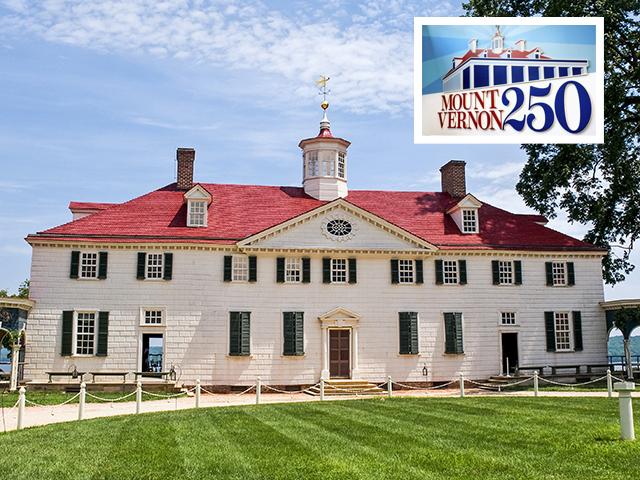
The mansion has been restored to its condition in 1799, though portions of the mansion are undergoing a major renovation. Inside, the home reflects Washington's role as a frequent host. Most of the outbuildings and gardens around the mansion are original, including a blacksmith's shop, living quarters for some house slaves and the horse barn.
Throughout the summer, the estate offers demonstrations of Washington's farming practices and rural life in the late 18th century. The farm includes a replica of his 16-sided barn that was created to separate wheat from chaff, as well as quarters that would have housed enslaved field workers.
In 2023, a group of workers excavating a cellar at Mount Vernon also found 35 glass bottles in storage pits that turned out to hold cherry pits and some other fruits such as gooseberries. The bottles were dated to sometime between 1740 to 1775. DNA testing by USDA's Agricultural Research Service identified most of the pits as tart cherries, and researchers are studying whether the unearthed cherries can be germinated.
ENSLAVED LABOR AT MOUNT VERNON
Hundreds of enslaved people worked from sunup to sundown at Mount Vernon, performing everything from field labor to skilled trades and domestic work.
There was a clear duality here with Washington, given his passion for New Husbandry. People had to learn new skills, but Washington also was a stickler for efficiency and strict labor management. He was meticulous in recording both daily work on his farm operations and long-term ambitions for Mount Vernon. He expected weekly production reports from his overseers.
"Washington does follow up when people do not meet expected work quotas," Massee says.
At the same time, the intellectual currents behind New Husbandry also influenced Washington's evolving views on slavery, even though his operations remained dependent on it.
"It's an enlightenment movement," Massee explains. "A lot of the same people who are writing about new farming ideas are also writing about freedom of man and liberty, and so Washington is absorbing all of these ideas. Unfortunately, New Husbandry also makes Washington more and more reliant on slave labor at the same time he's beginning to question the morality of the institution. And, that really comes down to labor economics."
He spoke little publicly about slavery, but in private correspondence, Washington suggested that slavery should be abolished over time. In one 1786 letter, he wrote, "I can only say that there is not a man living who wishes more sincerely than I do, to see a plan adopted for the abolition of it," while noting that any action abolishing slavery must come from the legislature.
On one of Washington's farms, an enslaved man named Morris served as overseer for nearly 25 years and was so trusted that Washington simply referred to the operation as "Morris's" farm.
At his death, 318 people lived and worked across Mount Vernon's five farms. In his will, Washington ordered the emancipation of 123 slaves he legally owned. Martha Washington carried out that provision in 1801, about a year before she died. But, nearly 200 "dower slaves" on the Mount Vernon farms remained enslaved because of inheritance laws from Martha's first marriage.
Today, Washington's tomb sits just a short walk from the slave memorial and cemetery. The area includes two markers, a 1929 marker and a 1983 memorial designed by students at Howard University.
**
-- Follow Chris Clayton on DTN at https://www.dtnpf.com/… or follow him on social platform X @ChrisClaytonDTN
[PF_061026]
(c) Copyright 2026 DTN, LLC. All rights reserved.