


Ask the Vet
What Causes Retained Placentas in Cows?
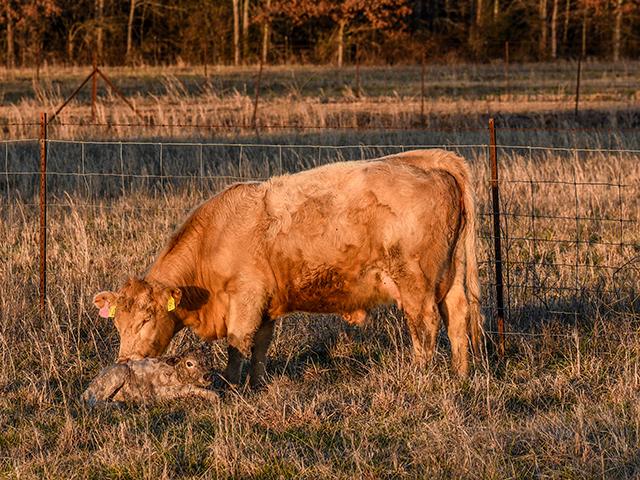
READER: We have had several cows with retained placenta this season. Do you have any idea what is going on? How do you suggest we treat them? Some say pull it out, and another person said to tie a stick on it to help slowly pull it out. So, I am confused.
DR. McMILLAN: This is a common question we have discussed here in the past, but it is never a bad topic to review. It is a common problem with lots of misinformation.
I do not consider a placenta to be retained for at least three days, and I do not recommend treatment unless the cow is visibly sick. I have infused many cows and used oxytocin and Lutalyse over the years, but there is little evidence that any of this is beneficial. A retained placenta needs a controlled infection within the uterus for the fetal tissues to release from the uterus. Antibiotics either injectable or intrauterine can slow this infection down and actually slow the release of the placenta. If the cow is sick, injectable antibiotics may be indicated. Please check with your veterinarian for his or her recommendation about which antibiotic to use. With very sick cows, I will occasionally infuse with warm dilute Betadine solution to remove the toxic fluids. Oral or intravenous fluids may also help if the cow is dehydrated.
The more important question is why does this happen? Retained placentas are more common if cows are too thin or too fat. Poor nutrition also can be involved. Make sure your cattle are getting adequate protein and energy, and are on a high-quality mineral. We know low vitamin E and selenium increase the risk of retained placenta. Low calcium or magnesium around birth can lead to weak or "downer" cattle, which increases retention. Twins, difficult birth and abortion are also factors.
P[L1] D[0x0] M[300x250] OOP[F] ADUNIT[] T[]
So, look at your nutrition program and the body condition of your cows. Select bulls to minimize dystocia. Investigate the cause of abortions. And, be patient. Most placentas will pass with time.
READER: We had a cow with a rectal prolapse. By the time we found her, it was old and black, and she couldn't even hold her head up. Our veterinarian could not get there until the next day, and we could not haul her in, so we decided it was best to put her down. Her calf was about 2 months old and seemed healthy. What could have caused this, and is there anything we need to do to prevent it in the future?
DR. McMILLAN: Prolapses are unfortunately a fact of life in cattle. Cattle can prolapse the vagina, uterus or rectum. In simple terms, these tubular structures get turned "wrong-side out". They are easy to identify by the exposed red tissue.
In many cases, a vaginal prolapse can lead to a rectal prolapse because of the straining. Rectal prolapses in calves infected with coccidia or severe diarrhea leading to straining is the most common reported cause of rectal prolapse. I have seen calves on high-concentrate feeds with rectal prolapse that I have attributed to excessive rumen fill or, in some cases, ruminitis leading to diarrhea and straining. In one farm, we were able to find what we think was a genetic link in some of the calves, so I will repeat that I think almost everything has some heritability to it.
In an adult cow, I would expect this could be from excessive rumen fill that could result from poor-quality hay or anything that could trigger diarrhea, including a sudden diet change such as lush forages or a large amount of feed.
Since this cow was so sick, acorn toxicity should be on the list. Acorns and oak leaves can lead to acute, severe and often deadly kidney disease. Affected cattle often go off feed, seem depressed, lose weight, are dehydrated and can be constipated or have dark, black diarrhea with excessive straining. Poor body condition and inadequate feed increase the potential for toxicity. Green acorns seem to be more toxic, so issues are more common after a storm that blows off large numbers of acorns or blows down limbs with green leaves.
Rectal prolapses are an emergency and must be corrected quickly before too much tissue damage is done. Most can be easily corrected by your veterinarian. Typically, we use an epidural to deaden the area and stop the straining, correct the prolapse and place a purse string suture around the anus to prevent recurrence. When a large amount is prolapsed or the tissues are damaged, the exposed portion must be amputated, but I have had good success with this in most cases.
**
-- Please contact your veterinarian with questions pertaining to the health of your herd. Every operation is unique, and the information in this column does not pertain to all situations. This is not intended as medical advice but is purely for informational purposes.
-- These are only my thoughts and general guidelines. Please get with your veterinarian and together develop the best program for your herd.
-- Email Dr. Ken McMillan at vet@dtn.com
[PF_0526]
(c) Copyright 2026 DTN, LLC. All rights reserved.