



Ask the Mechanic
Burning EGR Question
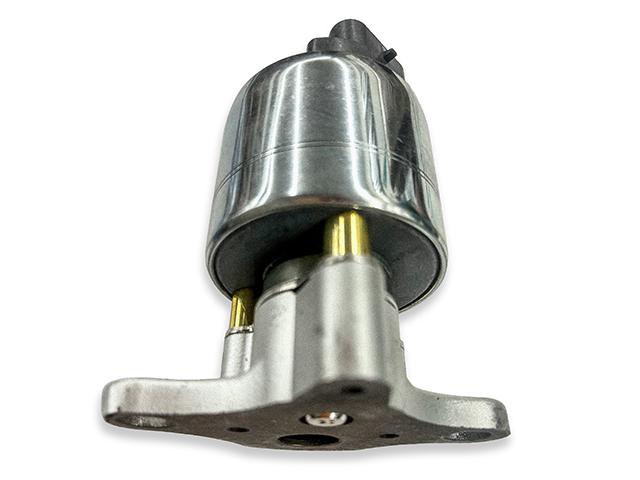
READER: Can you explain to me what an exhaust gas recirculation (EGR) valve does in an engine? I've had to replace it on a couple of pieces of newer equipment, and it's costly. Why do we need it on an engine? All my older trucks and tractors seem to work great without it. Am I trying to burn burned fuel again? Why do we need to send exhaust gases back through the engine?
P[L1] D[0x0] M[300x250] OOP[F] ADUNIT[] T[]
STEVE: The EGR valve (see photo accompanying this article) is a major component of the EGR system, and it is normally closed unless the engine is under load. The heavier the load, the more it opens. This valve connects the exhaust system to the intake manifold. It returns a small portion of the exhaust gas back into the engine's intake manifold, allowing for cooler combustion temperatures. This can happen because the burned exhaust gas replaces a small portion of the oxygen present during the burn. This makes for a cooler burn because it allows all the oxygen during the burn to be burned. Less oxygen in the burn lowers combustion temperatures, which lessens the amount of NOx (nitrogen oxides available for air pollution) emitted. The EGR valve can be controlled by a vacuum or an electric stepper motor. The stepper motor can turn just as needed. You can see a stepper motor in action when you put money in a snack machine and push the button for your bag of chips. The screw rod holding the bag is attached to a stepper motor that will turn just enough to drop one bag of chips.
**
-- Email Steve Thompson care of askthemechaniccolumn@gmail.com, and be sure to include your contact information and phone number.
[PF_0526]
(c) Copyright 2026 DTN, LLC. All rights reserved.