



Rural Broadband Coverage Has Many Solutions and Shortfalls
Connecting the Countryside
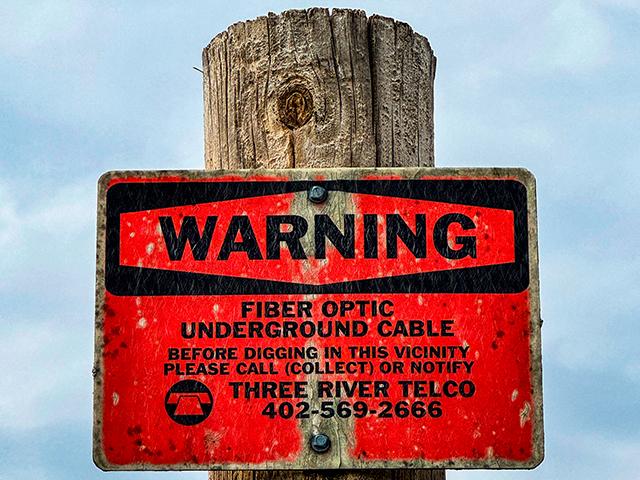
Five years ago, Kenny Reinke had to drive to town or sit in his pickup truck to get an internet signal at his Neligh, Nebraska, farm. Today, he has two high-speed providers -- a line-of-sight tower and buried fiber optic cable.
"We have a couple different options we didn't have back then," Reinke says.
His story illustrates the dramatic, if uneven, progress in rural broadband since the COVID-19 pandemic exposed how far behind rural America had fallen. While the crisis devastated communities, it also triggered unprecedented investment in rural internet infrastructure, fundamentally changing connectivity across much of the countryside.
The numbers tell the story: Rural home broadband subscriptions jumped from 58% in 2018 to 71% by 2025, according to Pew Research Center. Federal programs poured nearly $47 billion into expansion efforts, with the Broadband Equity, Access and Deployment (BEAD) program alone providing $42.45 billion to all 50 states.
Yet, the transformation remains incomplete. Inaccurate mapping continues to slow progress, and some rural residents remain disconnected despite living close to fiber-optic lines.
PROGRESS SINCE THE PANDEMIC
Pew Research showed that 65% of all U.S. adults subscribed to home broadband internet in 2018. By mid-2025, that number had climbed to 78%. When rural areas are broken out from urban and suburban areas, the data show slower adoption. Just 58% of rural residents subscribed to home internet in 2018 compared to 67% of urban residents and 70% of suburban residents. By 2025, suburban increased to 84%, urban held steady at 75%, and rural reached 71%.
Rural residents, however, utilize smartphones at higher rates than their urban and suburban counterparts. In 2019, 19% of rural residents relied solely on smartphones for internet access compared with 17% of urban and 13% of suburban residents. By 2025, rural smartphone dependence increased to 20%, while urban moved to 19% and suburban fell to 12%. In rural areas without broadband, many use their cellphone as an inexpensive way to access the internet.
Rural telecommunication companies "put their foot on the gas" to improve rural broadband in the years since COVID, according to Shirley Bloomfield, CEO of NTCA: The Rural Broadband Association.
The companies were aided by the Infrastructure Investment and Jobs Act signed into law in November 2021. The approximately $1.2-trillion federal statute aimed to upgrade U.S. transportation, utilities and broadband. Both the BEAD program and the ReConnect Loan and Grant Program -- run through USDA -- provided funding, with ReConnect spending roughly $4.4 billion to expand internet access in rural areas.
"These programs have provided billions of dollars to the states to improve their rural broadband," Bloomfield says. "Without this money, many in rural areas would never have been covered by high-speed internet."
MAPPING ISSUES SLOW EXPANSION
One major hindrance to expanding rural broadband has been the accuracy -- or inaccuracy -- of maps detailing which rural areas have high-speed internet coverage and which don't.
Bloomfield says efforts are being made to improve these mapping issues. The BEAD program was supposed to provide new mapping data to determine who is covered and which areas need to be prioritized. Carriers are self-reporting, and this process is more accurate than in the past.
Still, mapping is not completely accurate, and it's difficult to fully assess the expansion of internet access in rural areas. Some providers might exaggerate their coverage areas, while others might not report their actual coverage.
"It is far from a perfect system," Bloomfield says.
P[L1] D[0x0] M[300x250] OOP[F] ADUNIT[] T[]
Working with states can improve mapping accuracy. Many states have set up broadband offices to handle local mapping and distribute federal money. "This will certainly help the accuracy of the mapping process," she says.
Ray "Bubba" Sorensen is an artist, small-business owner and Iowa House Representative for District 23. He ran for office on the issue of rural broadband coverage in central Iowa in 2019 and was elected. He begged the state for $5 million to improve rural internet before COVID hit, and afterward, funding increased to $100 million. Sorensen says the federal money has helped considerably, but there's a lot of red tape. Many federal rules and regulations have slowed the flow of money to rural communications companies.
"Our telcos worked their butts off to improve our access to the internet," Sorensen says.
When first elected, Sorensen regularly received calls from constituents about not having access to high-speed internet. In the years following COVID, those calls have been much fewer.
UNEVEN ACCESS PERSISTS
The expansion of rural broadband is as varied as the residents who live, raise families and operate businesses in these vast regions.
Reinke, the northeastern Nebraska corn and soybean farmer, says his area has seen great advances in internet coverage since COVID, aiding both his family and his farming operation. His three school-aged children use the now-available internet at home without having to drive to another location. Having better high-speed internet has allowed him to use precision ag technologies, specifically real-time kinematic (RTK), in all aspects of crop production.
He can operate the technology without too many difficulties at various field locations. He does have one field in a valley with trees around it. "It [internet connection] does drop out there in spots," Reinke says. "Sometimes, I have to take over manually, and our planter still has markers, so I can still operate like normal."
One thing Reinke would like to see improve is better cellphone coverage. In many spots, it's difficult to make a basic phone call. The Reinkes have a cellphone booster in their house, which is needed just to hold a call. "The cell[phone] world is still lacking here," he says.
Four hundred and sixty-five miles straight south, Karen Eifert Jones has great cellphone coverage but limited options for internet service. The Waukomis, Oklahoma, farmer and cow/calf producer operates off the data from her phone. Fiber is available in her home area of north-central Oklahoma but not yet at her farm.
During COVID, to complete a state-mandated online training course, Eifert Jones had to drive a mile away to her elderly mother's driveway just to access the internet from her cell phone. Her daughter had to utilize her grandmother's basement for school. Eifert Jones' sister and brother-in-law wanted to move back to the area during COVID but couldn't because his job required high-speed internet to work from home. Instead, they moved elsewhere.
Fiber still hasn't been run off the main road. From talking to the local telecommunication company, the cost is too high to add one more mile of fiber.
Eifert Jones' farming operation doesn't use GPS technology for several reasons. The many issues with local internet access, several different brands of machinery and water limitations with their five-crop rotation don't allow them to utilize the technology. However, they do use spreadsheets for livestock recordkeeping. Her son, Weston, recently joined the operation and uses Google spreadsheets via their cellphones.
"Someday, we hope to get 'real' internet, especially as my son wants to use drone technology more. But, I guess you can't miss what you never had," Eifert Jones says.
MULTIPLE TECHNOLOGIES FILL THE GAPS
The different forms of rural broadband -- fiber, direct line of sight, satellite, cellular signal -- are potentially the keys to providing all rural areas with high-speed internet.
One area using different forms is western South Dakota, the "West River" area. More than half of the state's land area is located west of the Missouri River, but it has only about a third of the population.
Logan Vandermark, South Dakota State University Extension precision livestock technology field specialist, says quality internet is a major challenge for ranchers wanting to incorporate precision ag products. Newer technologies such as cameras, collars and virtual fencing are products producers want to add, but they need internet access to work.
There are some areas covered by fiber, but larger areas are not. Producers in areas without fiber utilize cellular coverage, satellite and direct line-of-sight systems.
Many producers utilize the "LoRa" system -- short for "long range" -- which can be thought of as a radio signal technology similar to Wi-Fi or cellular signal. Using a system of a base station and line-of-sight towers, an internet signal can be created.
"We have someone east of Wall [South Dakota] covering 3,500 acres with a base station and two towers who is using [livestock] collars," Vandermark says.
Livestock producers can use this precision ag technology, often called "smart collars," to monitor livestock movement, health and grazing -- all from a computer or smartphone. Virtual fencing, which creates invisible boundaries for livestock, is also technology livestock producers could utilize with high-speed internet access.
Other producers utilize services like Starlink and cellular phone coverage. Vandermark says what's most important is for the technology to be cost effective. How expensive internet access will be in the future will directly affect how well these newer precision technologies are adopted in western South Dakota.
LOOKING AHEAD
NTCA's Bloomfield believes "a bucket of technologies" is how underserved areas will see rural broadband in the future. The regions will be covered by different forms of service, and speed will also need to improve.
Both upload and download speeds matter in the different applications rural residents utilize. One survey showed that 26% of consumers want 1-gig internet (1 gigabit per second) -- ultrahigh-speed broadband service.
Some rural residents will see the addition of rural broadband in the future, while other areas could see an upgrade in speeds. The increase in speeds could help both households and rural businesses.
As one example, Bloomfield specifically pointed to rural medical clinics that already utilize telemedicine practices. In the future, rural residents could have procedures done over the internet and not have to travel several hours to larger community hospitals. This type of telemedicine is being done today in Tennessee with Vanderbilt University.
For farmers, broadband could help them monitor livestock welfare and the condition of their crops more accurately, thus boosting their efficiency with improved rural broadband. Artificial intelligence will be another tool that rural residents will use more in the future.
"The internet can help solve day-to-day tasks for rural residents," Bloomfield says. "I'm excited to see it.
**
-- Follow the latest from Russ on social platform X @RussQuinnDTN
[PF_0426]
(c) Copyright 2026 DTN, LLC. All rights reserved.