

Follow Health Plan for Cattle To Thrive
An Opportunity To Thrive
Cattle prices are at an all-time high because of low supply and high demand for beef. With the high value of cattle, herd health is even more important to keep all animals performing and thriving.
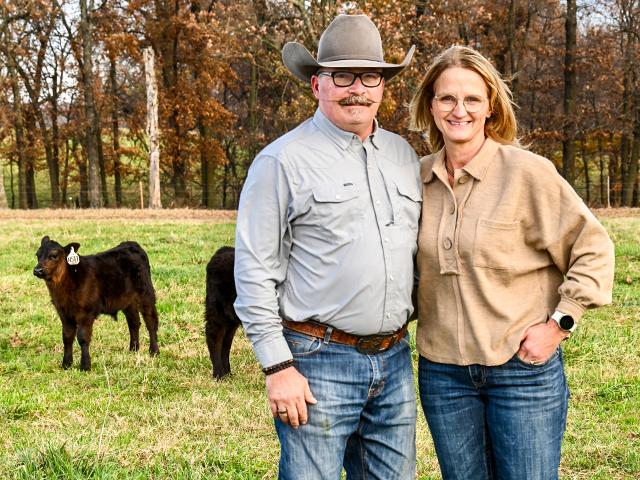
For Anderson, Missouri, cattle producers Vance and Jennifer Keaton, herd health starts at the birth of a calf. Making sure a calf gets a good start sets up how well it will perform throughout its life regardless of whether its purpose is as a breeding animal or a market animal.
"Herd health is vital to performance with our cattle no matter what the end point is for the calf," Vance says. "It starts at birth but really also is about how that calf's mother was cared for and the immunity she passes down to the calf in utero." Vance and wife, Jennifer, who is a practicing veterinarian, will change their program if needed to get the results they want. If they hear of a vaccine or feed that is helping with gains, for example, they will try it.
Since Jennifer is a veterinarian, the Keatons have the advantage of her care for their own animals. Still, it's important for producers to have a good relationship with their vet. "If the herd veterinarian is familiar with what a producer has in their operation, then they can help manage the challenges much more easily," explains Pippa Gibbons, associate professor of food animal medicine and surgery at Texas Tech University School of Veterinary Medicine.
She suggests having a whole-herd written plan, which is a "living" document as to what to do with all classes of cattle on a cow/calf operation. This includes calving, calf management, breeding cows, bull management, weaning time, pregnancy-checking time, etc. Gibbons says this is considered a living document, as it may change from month to month or year to year according to changes in herd goals, disease protocols and updates of available medicines. It's something that should be reviewed every year.
KNOW YOUR VACCINES
Various vaccines are available to use in different situations to keep your herd health plan on track, according to Texas Tech veterinarians. A modified live vaccine is a weakened, living virus that can multiply in the animal without causing the disease. It provides strong immunity and quicker, broader and longer-lasting protection. It requires careful handling and, once mixed, has a short shelf life. Modified live vaccines are also not typically safe for pregnant cattle because of the risk of abortion.
A killed vaccine is inactivated and has dead pathogens or parts of them that are chemically or heat-inactivated and contains no live organism. These vaccines are primarily antibody-based, focusing on pathogens' outside cells, and are thought of as immune boosters. These are safe for any animal, including pregnant cows. Killed vaccines do have a slower time to build immunity and require a booster shot.
Gibbons says internasal vaccines have become more common. These are typically used to fight respiratory diseases and can stimulate quick immunity in the nose and throat while reducing injection sites and stress. These vaccines are commonly used in calves and can be administered at a very young age. Autogenous vaccines are custom-made and can be herd-specific -- made from bacteria or viruses isolated from a sick animal. These are commonly made from pink eye in beef herds.
The Keatons have herd vaccination protocols for calves, cows, replacement heifers, steers and bulls. Their diversified operation consists of both spring and fall calving. They use artificial insemination before turning bulls out. "I guess we are both a seedstock operation and a commercial operation, because we have cows that would fit in both categories," Vance says. "We sell some bulls and show heifers, but we also feed out some of our calves and sell the beef. We raise replacement heifers for our herd, as well." The herd of just under 150 cows is mostly Angus and Simmental genetics.
The couple likes to get their calves processed within 24 hours after birth. Both spring and fall herds calve on pastures but can be brought to barns, if needed. Newborn calves are weighed, tagged and given shots. They weigh the calves for performance records, alerting them to any calving difficulties from either the sire or dam. The calf tag has its own identification number but also has the mother's number above it in case another family member is unsure of the matching pair. It also lists the calf's sire.
The Keatons give calves a rota-coronavirus vaccine; a respiratory vaccine that prevents diseases caused by bovine respiratory syncytial virus and aids in the prevention of infectious bovine rhinotracheitis and parainfluenza virus type 3; and a multivitamin shot.
"We hope the calves get immunity from their mothers in utero and from the colostrum, but these vaccines also get them started off right," Jennifer says. At approximately 4 months of age, the calves are vaccinated while still on the cow right before they decide what bull calves to castrate and all the calves receive respiratory vaccines. Calves receive a second round of the vaccines about two to three weeks before weaning, which is usually at 6 months of age.
REPRODUCTIVE MANAGEMENT
The Missouri cattle producers keep heifer calves to use as replacements in their herd if they meet quality and performance specs. Those females are treated the same as current breeding females. About 30 days prior to breeding, the females are given a bovine viral diarrhea vaccine, a Lepto Vibrio vaccine and a multiple mineral shot. These shots are also administered to breeding bulls. All cattle receive a clostridial vaccine that protects against pink eye caused by Moraxella bovis.
P[L1] D[0x0] M[300x250] OOP[F] ADUNIT[] T[]
FOCUS ON DISEASE PREVENTION
The Keatons are adamant about keeping disease at bay. Disease can be spread by flies and ticks, as well as other internal parasites. They deworm cattle on a regular basis. Using dewormers not only reduces diseases and strengthens immune systems, but also helps improve profitability by boosting weight gain, feed efficiency and milk production.
Fly control is important, too. "We will use fly tags during the warming months when flies are biting, and we rotate which kind we use in order to prevent resistance," Jennifer explains. Flies can cause diseases like anaplasmosis or pink eye, both of which can lead to weight loss, sickness and death in serious cases.
When bringing new cattle into the herd, Texas Tech's Gibbons says it's important to quarantine those animals to be sure they aren't bringing diseases or health issues with them. This is a practice the Keatons use in their own herd and Jennifer also recommends to her veterinary clients. "Isolating new animals for about 30 days before introducing them into the rest of the herd can prevent problems," she says.
Vance says even if the purchase was made from a reputable herd, it's still a good idea to quarantine the animals. "When we were first starting our herd, we purchased a few from several places. Having a core health program in place will prevent problems," he says.
GOOD NUTRITION MEANS GOOD HEALTH
Even with mineral injectables available, the Keatons have a good feed mineral accessible for consumption in each pasture. Quality grasses, hay and supplemental feed are used to keep cattle in a good body condition score.
An intensive-grazing system is used on their southern Missouri operation, and cattle can easily be rotated to a new paddock. The paddocks are configured in different sizes to accommodate different groups in different situations. They may keep a group smaller in number for closer management of yearlings or a particular group of cows at breeding time.
"Our cows are bucket-trained and will follow us just about anywhere when we have feed. It's a great way to be able to move them to different paddocks," Vance adds. Hay is cut in some of the paddocks to be stored for feeding during the winter months.
A BIOSECURITY PLAN
While the pork and poultry industries have very specific biosecurity plans, the beef industry hasn't historically had one. Gibbons says having a biosecurity plan can help prevent diseases from entering your herd. "It's important to know what you're looking for when it comes to diseases," she says. "The plan should include knowing what to do during a natural disaster or a foreign animal disease outbreak."
Along with a biosecurity plan is knowing how to manage animals with a health issue -- whether they are downed or need to be euthanized -- and to have a strategy for carcass disposal.
There are so many things to think about when looking at herd health, but the most important part is having a good health plan and following it to ensure your animals are given every opportunity to thrive. "We know we need to be responsible cattle producers and continually educate ourselves about new products and health requirements," Vance says. "In the end, if we take care of the cattle, they will thrive."
BEEF QUALITY ASSURANCE PROGRAM INCREASES HEALTH AND CONSUMER CONFIDENCE
Dating back nearly 50 years, veterinarians and producers set ideas for improving the quality and safety of beef for consumers. The industry identified challenges facing beef consumption and determined changes needed to rebuild consumer confidence in the product.
The Beef Quality Assurance (BQA) program was started in several states to address the challenges facing the beef industry. "Beef-quality assurance is a science-based program that provides continuing education to show producers what principles need to be implemented on their operation in the name of producing a nutritious, wholesome product," says Casey Anderson, director of industry relations with the Iowa Beef Industry Council.
All these production methodologies contribute to a safe product. BQA is a nationally coordinated, state-implemented program that provides systematic information to U.S. beef producers and beef consumers about how commonsense husbandry techniques can be coupled with accepted scientific knowledge to raise cattle under optimum management and environmental conditions.
As a veterinarian, Jennifer Keaton wants to prevent any potential carcass problems when vaccinating or treating cattle, stressing proper syringe and needle selection and use. "We want other producers to understand the importance of being BQA certified to know how to properly handle cattle to ensure a good end product," she says.
Lindsay Runft, director of producer communications for Certified Angus Beef (CAB), says recognizing the growing importance of animal welfare and sustainable practices to consumers is why CAB has a vested interest in cattle care and its role in continuing to build consumer trust in how beef cattle are raised. "BQA is a national program designed by leading animal welfare and cattle care experts, and is recognized for its credibility in educating farmers and ranchers on the best and most current beef-production practices," she says.
The National Beef Quality Audit is a tool used to measure just what success training has supplied producers in improving the overall commitment to producing high-quality beef.
"It's really about being responsible. If we are responsible on the farm, then consumers can be confident in the product they buy," Keaton says.
**
-- To learn more about CAB's commitment to cattle care and its Raised With Respect campaign, visit https://cabcattle.com/…
-- For more information on Beef Quality Assurance, visit https://www.bqa.org/…
-- Jennifer Carrico can be reached at jennifer.carrico@dtn.com
-- Follow Jennifer on social platform X @JennCattleGal
[PF_0226]
(c) Copyright 2026 DTN, LLC. All rights reserved.