



Ag Weather Forum
Beneficial Mid-May Rain for Central Crop Areas
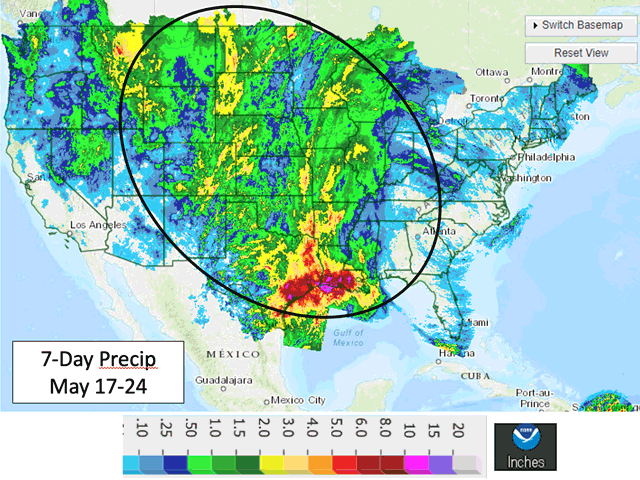
For the first time this spring, I was able to talk about widespread rain over the central United States over a given seven-day period when I produced the DTN Market Impact Weather video on May 24.
The past seven days had rain over almost the entire central U.S. from the Rockies to the Great Lakes. Amounts were damaging along the Texas-Louisiana Gulf Coast with up to 8 inches of rain causing heavy flooding. Farther north, the rains were a bit less; many Midwest and Plains locales recorded 1 to 2 inches or more.
Of special note, the northern and western Midwest along with the Northern Plains shared the bounty of 1 to 2 or more inches of much-needed rain. The timeliness of this moisture is significant; almost all of North Dakota, northwestern South Dakota and eastern Montana had at least Extreme Drought (D3) in effect as of May 18; central North Dakota slipped into Exceptional Drought (D4) in this time frame.
For the Northern Plains, it is the driest in four years. There is also a swath of the northern third of the Midwest from the Great Lakes west to the Missouri River with some phase of drought in effect.
P[L1] D[0x0] M[300x250] OOP[F] ADUNIT[] T[]
Rainfall in the Upper Midwest was lifesaving for many individual crops. South-central Minnesota producer Mark Nowak is already penciling in a reduction in his corn yield because of germination being affected by a double hit of cold and dry conditions during the past few weeks. Nowak estimated his corn plant population is down 10% from his optimum. "Our top-end yield is already down 20 bushels per acre," Nowak said, using a guide of seven bushels of yield per acre decline for every drop of 1000 plants per acre.
The balance of the week ahead promises to bring more precipitation into the central U.S. as well. "Two more systems will bring moderate rain ... through the coming weekend," DTN Ag Meteorologist John Baranick noted Monday morning. He said that rain of another 1 to 2 inches could total up again in the Plains and Midwest during this last full week of May.
This rainfall pattern has notably bypassed much of the western and the southeastern U.S. For the southeastern U.S., crops are using up residual soil moisture. That's not the case in the western U.S. with widespread Extreme to Exceptional Drought.
In addition, one week of rain does not take a crop's moisture needs through an entire season. Nowak in Minnesota is nervous about summer rainfall showing up at the right time when crops go through their various flowering and fill stages.
"We'll still need about 15 inches of rain through September to make (a) trend line crop," Nowak said.
Bryce Anderson can be reached at bryce.anderson@dtn.com
Follow him on Twitter @BAndersonDTN
(c) Copyright 2021 DTN, LLC. All rights reserved.