



Control Flies To Protect Cattle Herd Performance
Shoo Fly!
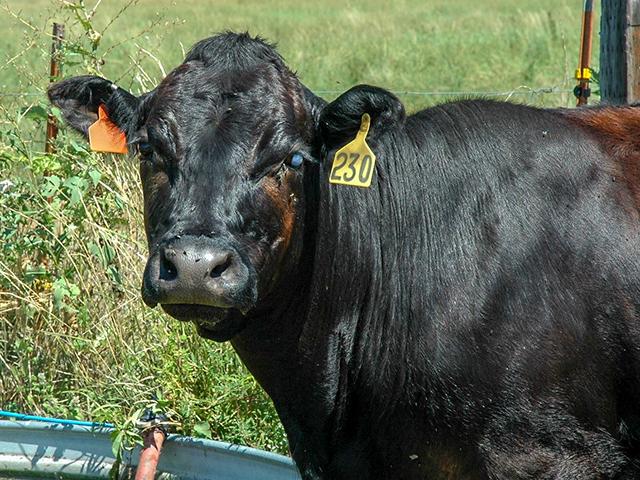
Fly control does more than keep cattle comfortable; it plays a direct role in a herd's performance and health, and can significantly affect an operation's bottom line.
David Boxler, a University of Nebraska Extension livestock entomology educator, says the three main fly species that annually cause more than a $1-billion impact on grazing cattle are the horn fly, the face fly and the stable fly. All flies are a nuisance and can drive economic losses by reducing grazing efficiency, slowing weight gain, spreading disease and lowering milk production in cows.
"Horn flies are small in size and are usually found on the backs, sides and poll area of cattle. During a warm summer afternoon, they can also be found on the belly," Boxler says. "Both male and female horn flies acquire more than 30 blood meals per day."
Boxler explains that the entire life cycle of a horn fly can be completed in 10 to 20 days depending on the weather. The female horn fly will deposit eggs in fresh manure after mating. The eggs hatch within a week. The larvae then feed on and mature in the manure. Newly emerged horn flies will search for a host, and the cycle continues.
Face flies are another annoying pest similar to a house fly but slightly larger and darker. "The face fly is a nonbiting fly that feeds on animal secretions, nectar and dung liquids," he adds. "These are the main source for pink eye and other eye inflammations." Peaking in the hottest summer months, face flies cluster around an animal's mouth, eyes and muzzle. These flies are more abundant near waterways, especially in areas with abundant rainfall.
A face fly's life cycle lasts about 14 to 21 days, with females laying eggs in fresh manure where the larvae hatch and feed, going through several growth stages before transforming into adult flies.
Stable flies are a blood-feeding pest found mainly on the front legs of cattle, causing painful bites. Boxler says cattle often react by stomping their legs, bunching at pasture corners or standing in water to avoid being bitten.
P[L1] D[0x0] M[300x250] OOP[F] ADUNIT[] T[]
Female stable flies lay eggs in spoiled organic matter mixed with animal manure, soil and moisture. The life cycle of a stable fly is typically 14 to 24 days, depending on weather conditions. "Developing sites for stable flies are around feedbunks, under fences and along haystacks," he says. "Winter hay feeding sites where hay rings are used can be a source for larval development through the summer if proper moisture is present."
Cleaning up these areas helps with control. Boxler says annual economic losses can add up in a herd if flies are not controlled. The irritation from fly bites can lead to less grazing, lower milk production and reduced weight gains. He notes that studies show weaning weight loss of up to 15% if flies, especially horn and stable flies, are not controlled.
FLY CONTROL IMPROVES CATTLE COMFORT
Numerous methods can be used for controlling flies in pasture cattle. Boxler suggests back rubbers and dust bags soaked or filled with insecticides as an effective way to reduce fly numbers, if cattle use them.
"Insecticide ear tags and strips are a convenient method of fly control, but some fly populations have a degree of resistance to the pyrethroid class of insecticides used in tags," he explains. "It's recommended to rotate insecticide classes to avoid resistance."
Animal sprays and pour-on products are effective for 7 to 21 days, depending on the product, and must be reapplied throughout the fly season. It is important to treat both cows and calves to ensure proper efficacy with most methods.
ORAL FLY-CONTROL OPTIONS
Chris Cassady, director of technical sales and research for BioZyme Inc., says if you have an adult fly population, you already have a problem, but it's not too late to prevent more flies. "We want to interrupt the life cycle of the fly," he says. "Flies reproduce quickly and thrive in manure-rich environments, so it's important to get started on a fly-control plan early on."
The use of an insect growth regulator larvicide in loose mineral supplements or mineral and protein tubs targets all types of flies causing problems for cattle. Cassady says it's important to keep cows grazing. "If we can get cows to social distance, then we will see fewer flies on them. This is acquired through good fly control. Ideally, this is started early on, but regardless, a producer should see coverage in three weeks or sooner by feeding the fly-control line of VitaFerm minerals," he adds.
Cassady says these minerals can reduce the number of flies that reach adulthood and keep populations lower throughout the season as the larvicide affects larvae in the manure before they become adult flies. This helps reduce the number of flies in loafing areas, around water sources and across grazing locations.
"Lower fly pressure improves cow comfort," he continues. "If the cows are consuming the right amount of fly-control mineral, you will really see a difference in fly numbers, and in most cases, you won't see flies at all."
Reducing the overall stress of flies on cattle will provide animals with the best opportunity to thrive in a pasture environment by preventing disease, increasing weight gain and improving conception rates. Effective control measures are a key part of maintaining a healthy herd, Boxler adds.
**
-- Jennifer Carrico can be reached at jennifer.carrico@dtn.com
-- Follow Jennifer on social platform X @JennCattleGal
[PF_061026]
(c) Copyright 2026 DTN, LLC. All rights reserved.