



Cattle Company Innovates To Grow and Build Legacy
From Ranch to the Table
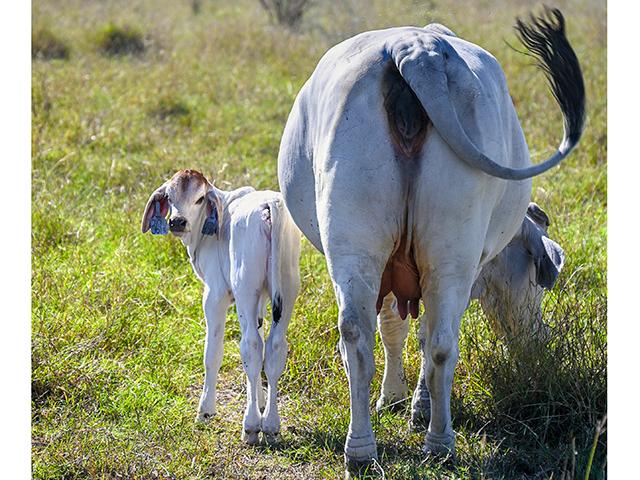
Ranchers in the Rio Grande Valley have dealt with many challenges through the years. To survive the difficult times, they have to be creative in expanding their operations to remain in agriculture. That is certainly true at England Cattle Co., located in Mercedes, Texas.
As a top Brahman breeder in the U.S., England Cattle Co. has about 200 registered cows and an additional 500 Brahman-influence cattle. They focus on producing top-quality, functional and dependable cattle that excel in the pasture, in the show ring and on the plate. Founded by Mike and Elizabeth England, the operation has grown on the ranch settled by her grandparents. Son, Benton, his wife, Brooke, and their son, Burton, are full-time operators of the ranch.
"We want our genetics to have the competitive advantage but have always had the cow man in mind," Benton says. They want excellence in maternal and performance traits for their cattle customers; style, eye appeal and soundness in the show ring; and beef quality traits that lead to a good eating experience for their customers.
CHANGE FORTIFIES A FUTURE
England Cattle Co. started in 1907 and has endured through several generations. The first Brahman cattle came to the ranch in the early 1950s when Elizabeth's grandfather purchased a registered Brahman bull and a small herd of cows from J.D. Hudgins. Mike also grew up around Brahman cattle in South Texas. He and Elizabeth met and were married in 1982. The two mainly focused on raising commercial Brahman-influenced cattle. The farming operation started to grow in the mid-1990s. The family has continued the commercial cow herd and started adding a registered herd about 15 years ago. They wanted to do something different, however, by having polled Brahmans. This was a major change to their herd and the breed, in general.
"Since the polled genetics were very limited, especially with females, we invested in good horned females to breed to the polled bulls to produce our own polled females," Benton explains. The Englands purchased a polled herd sire, LMC Polled Authority 115/0, which was a major foundation of their polled herd. Polled cattle provided better animal husbandry, as horned cattle needed to be dehorned. Reducing the need for dehorning also saved money from the veterinary bill and cattle performance lost during recovery.
Yet, the Englands never lost sight of their first priority -- producing quality cattle -- and producing quality polled cattle sought after by other breeders. As a result, England Cattle Co. has grown to be the largest polled Brahman breeder in the U.S. This has provided them market opportunities to export semen and embryos to nine countries and 15 U.S. states.
The farming side of the operation has seen its challenges -- and changes -- too, mostly stemming from water-availability issues in the Rio Grande Valley. Originally, the family primarily grew sugar cane, but those acres are now planted to cotton, as it requires less water. Flood irrigation is used on all the crop and hay ground as well as some of the pastures, with water sourced from reservoirs on the ranch.
"Cotton is our money crop. And, we raise our own hay," Benton says. Corn is also raised to help feed the cattle. They feed cotton seed as a protein source but must be cautious to not feed it long term or overfeed, as it can cause blindness and severe heart and liver damage because of gossypol toxicity. "Feeding a ration of mostly what we raise here on the ranch works for us. We do purchase a show ration for the cattle in the show string," he adds.
P[L1] D[0x0] M[300x250] OOP[F] ADUNIT[] T[]
The Englands have both spring and fall calving herds, and all cattle must meet their standards for efficiency, performance, heat tolerance and fertility. These are measured through weights, doability and fertility testing. Brahman cattle are later maturing, but Benton says they also have long stayability. "It's not uncommon for us to have cows in the herd that are well over 10 years old and still do what they are expected," he says.
Ensuring their cattle are strong overall in several categories helps provide a market for bulls and females sold each spring in a production sale. Their first sale was in 2020 during the COVID-19 pandemic. "We had done all the planning and were ready to have the sale. The week of it, we decided to add an online broadcast for those who didn't feel comfortable coming to the ranch," Benton adds. "I prefer the live auction to help build a relationship with the customer and let them know we want their success, but this was a great addition that we have continued."
The May production sale features bulls and females, as well as tours of the herd and meals of the Brahman beef they sell to consumers. Private-treaty cattle sales begin the Monday after the annual sale.
FARM-TO-TABLE EXPANSION
Another change to the Englands' operation occurred in 2021. Seeing a need for locally sourced beef in their area, they launched England Cattle Co. Beef, a farm-to-table beef program. "Our local community, now more than ever, wants to know where their beef comes from," Brooke points out, adding that "the food they are putting on their plate for their family is a healthy source of protein."
This added value to their cattle, which at times had been discounted by the packer because of the breed. Brahman cattle have been thought of as having meat that was a lower-quality grade and less tender, but the Englands have proven otherwise. Benton explains feeding Brahman cattle can be different than other beef breeds, and finding the correct diet to help develop the meat quality is important. This diet generally consists of corn, cottonseed meal and high-quality forages. "We know we have to utilize all of the animal to maximize our profits," he says. "We sell everything from tongue to tail."
Beef was first sold at a local farmers' market. The product's popularity now has them attending up to seven farmers' markets each weekend. Their beef is processed at a USDA certified facility and carries high Choice and Prime grades. It is grass-started and grain-finished.
Processing in vacuum-sealed packages happens after dry-aging for a minimum of 14 days for ideal tenderness and flavor. Research shows meat from Brahman cattle (Bos indicus) has lower saturated fat when compared to some of the Bos taurus beef breeds.
"Most people don't think of Brahman beef having high marbling, but some of the cuts, like the hump roast, will have as much marbling as Wagyu beef," Benton says with a laugh.
England Cattle Co. Beef is sold as individual cuts or bundles, or in bulk or subscription bulk orders. Delivery to the farmers' markets they attend is available, or beef can be shipped. Benton says one of their newest additions is a subscription beef option where customers get a certain amount of beef in several deliveries throughout the year. "If people don't want to buy a big freezer but still want to know they will have our beef available for their family, this is a great option," he says. "We are up to 60 subscriptions, and that keeps growing. Our beef business has grown at a rate of 30% each year for the last few years."
ENGLAND CATTLE CO. BEEF
More than 300 cattle are processed each year. Beef cuts start at $10 per pound depending on the cut of steak, roast or hamburger. Special beef bundles are mostly available for the holidays, including cuts like prime rib roast or Tomahawk rib eyes, and vary in cost, starting at $32 per pound.
Subscriptions and one-time purchases of one-quarter or one-half beef, including steaks, roasts and ground beef, are available on their website and vary in cost depending on delivery selection.
Benton England says the family loves selling bulls but now has a great option for the cattle that don't make the cut to be sold in the production sale. These animals are sent to the feedlot and used for the beef business. "We have to be able to guarantee we have meat in the freezer, too," he says. "We have talked to others who have a similar beef business, and we all know that ranch-sourced beef is better and usually cheaper in the long run than the grocery stores."
Making important changes and additions to continue the legacy and success of the ranch is important to the entire England family. "You always try to leave the land better than you found it," Brooke England says. "We want to be good stewards of the land first and stewards of the cattle. I hope the legacy I'd like to leave for my son is that he can see Mom and Dad and his grandparents, and their love for the land, the cattle and their family."
**
-- Jennifer Carrico can be reached at jennifer.carrico@dtn.com
-- Follow Jennifer on social platform X @JennCattleGal
[PF_0526]
(c) Copyright 2026 DTN, LLC. All rights reserved.