



Ask the Vet
Chronic Diarrhea and Weight Loss in Cows: Could It Be Johne's Disease?
READER QUESTION:
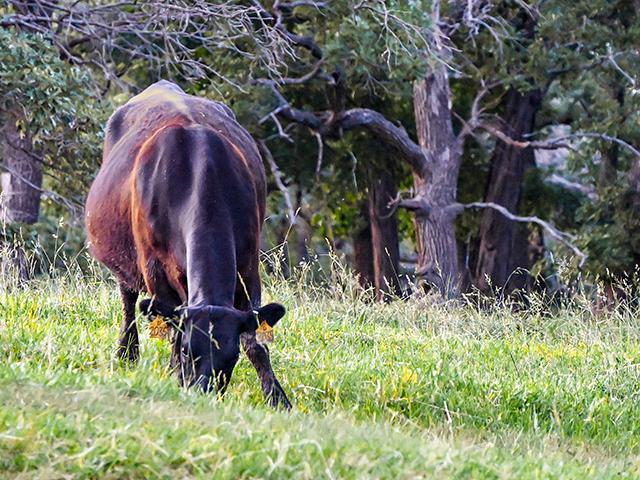
I have an older cow that has had severe diarrhea for several months. I have wormed her with Ivomec injectable, Cydectin Pour-On and Safe-Guard paste, and she still has diarrhea. She eats great but keeps losing weight. We don't have a vet close by, so I sent a sample to a lab to check for worms, and they didn't see anything. What could this be, and how can I treat it?
DR. KEN MCMILLAN'S ANSWER:
P[L1] D[0x0] M[300x250] OOP[F] ADUNIT[] T[]
I think you need to find a way to get a veterinarian to examine her. Many diseases could be involved, but when an older cow has these signs, my first thought is Johne's disease (pronounced YO-neez).
Johne's disease is a chronic, progressive and incurable disease caused by Mycobacterium avium subspecies paratuberculosis (MAP), a bacterium related to those that cause tuberculosis and leprosy. In most cases, it progresses slowly. It is more common in dairy cattle than in beef cattle, but its incidence in beef cattle may be underreported, because many infected cows are probably culled for poor performance. That said, I have also diagnosed it in a 2-year-old Brangus bull.
The organism is shed in manure, colostrum and milk, and can survive for more than a year in some environments, especially moist areas contaminated with manure. MAP is spread primarily by fecal-oral transmission. Feces from infected animals contaminate pastures, water and teats. Young animals are much more susceptible to infection than older animals. Calves can also be infected in utero or through infected colostrum or milk. Nursing dirty, contaminated teats is an extremely common route of infection.
There is no treatment for Johne's disease. Management and sanitation are the keys to preventing infection. Eliminating muddy, manure-contaminated areas is essential to preventing this disease and many other problems. Calving on clean pasture will go a long way toward preventing Johne's and other diseases, such as calf scours.
Your veterinarian should test any animal with chronic, nonresponsive diarrhea. Testing is an important tool for identifying and removing infected animals, but false negatives can occur, especially early in the disease process. Knowing that you have Johne's on your farm is an important step toward controlling it.
It may not be Johne's, but that is the first place I would start in your case.
**
Editor's Note: Please contact your veterinarian with questions about the health of your herd or other animals. Every operation is unique, and the information in this column does not pertain to all situations. This is not intended as medical advice but is purely for informational purposes. Email Dr. Ken McMillan at vet@dtn.com.
(c) Copyright 2026 DTN, LLC. All rights reserved.

