



UNL Report: Cow Costs Cloud Growth
Replacement Heifer Costs Rise as Producers Rebuild Cattle Herds
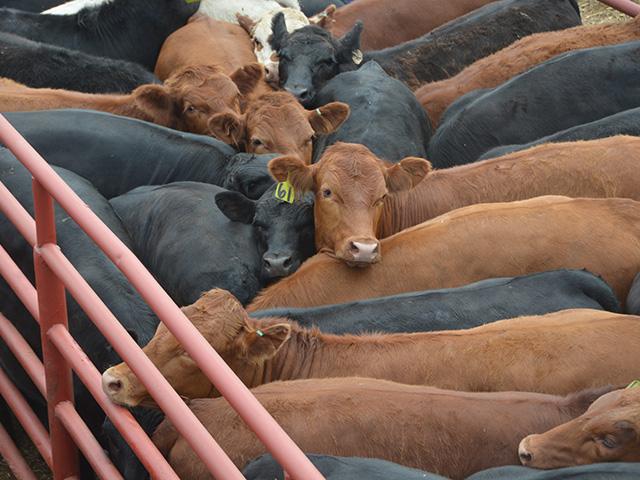
REDFIELD, Iowa (DTN) -- As cattle producers weigh herd expansion, rising replacement female costs could make rebuilding more challenging, according to University of Nebraska-Lincoln (UNL) Extension beef economists.
UNL's annual Beef Cow Replacement Forecast reported cow costs have increased as much as $300 per head on average, raising the investment required to purchase replacement females.
"Profitability depends on having a positive difference between all revenues and costs," said Randy Saner, UNL livestock systems extension educator. "So, we want to make sure that a cow pays for herself, so when the revenues come, we're not pulling from them."
The U.S. beef cow herd continues to be affected by drought, high production costs and pressure on producers to rebuild herds while cattle prices remain strong. The Jan. 1, 2026, USDA inventory report showed 27.6 million beef cows, down 1% from 2025 and the smallest since 1961. Beef replacement heifers increased 1%, following a 2% decline the previous year.
Saner said producers need to avoid spending too much on replacement heifers or cows because those purchases can affect profitability for several years.
UNDERSTANDING REPLACEMENT COSTS
P[L1] D[0x0] M[300x250] OOP[F] ADUNIT[] T[]
The use of UNL's budget calculator can help cattle producers understand cost of production for evaluating profitability, marketing decisions and herd management strategies. Producers can utilize the program by creating an account at https://agbudget.unl.edu/…. Determining what a producer can afford to pay for a replacement female all starts with what it costs to raise an animal.
Brock Ortner, UNL livestock systems extension educator, said producers could also use a partial budget to see how price changes can affect their bottom line and then make changes applicable to their own operation. He pointed out the importance of realizing prices can change from year to year, which was apparent with the change in cow costs from 2025 to 2026.
"People think we make a lot of money when we sell a $2,800 calf. We do make some, but not as much as everybody thinks," said Saner. "Cow cost levels are almost at $2,000 on the high end and that's a cost we need to work on getting down."
Ortner agreed that costs are a big driver in what producers can pay for replacements. He also said it's important to take into account a producer's income expectations as well as their risk tolerance. "There's more inherent risk in thinking that our prices will stay the same for the next 10 years roughly, with some fluctuation in the national cow herd," he said.
Lower production expenses improve breakeven projections, while lower replacement rates allow cows to remain productive longer. Operations with higher overhead often struggle to recover replacement investments even during strong cattle markets.
Beyond managing expenses, producers should also consider market expectations and their own tolerance for risk when evaluating replacement purchases, Ortner said.
BALANCING RISK AND OPPORTUNITY
Ortner said watching costs can really make a difference when raising cattle. Lower-cost operations consistently support high replacement values. Improving reproductive efficiency with higher weaning rates can also increase cow values. Longer productivity by a cow can help improve the cow's value. The UNL team also said it's important to avoid excessive borrowing against the herd.
Replacement cow values remain highly dependent on cattle prices, production costs, herd productivity and financing costs, but Ortner cautioned producers against assuming today's favorable market conditions will last indefinitely.
"Use your own perspective on the market outlook and risk," he said. "Everything could look radically different in a month."
The full report can be found at: https://cap.unl.edu/….
Jennifer Carrico can be reached at jennifer.carrico@dtn.com
Follow her on social platform X @JennCattleGal
(c) Copyright 2026 DTN, LLC. All rights reserved.

