



Ask the Vet
New World Screwworm: Look Hard, Act Fast
READER QUESTION:
I've heard about New World screwworm. Should I be concerned?
DR. KEN MCMILLAN'S ANSWER:
As of this writing, New World screwworm (NWS) has been detected in New Mexico and Texas.
NWS is the larval stage of a fly that lays eggs in open wounds or body openings. After hatching, the larvae feed on living tissue, unlike most other fly larvae, which feed only on dead tissue. This makes NWS especially dangerous to cattle and other warm-blooded animals, including horses, sheep, goats, pets, wildlife, birds and, in rare cases, humans. If not treated quickly, it can cause severe tissue damage, reduce performance and even be fatal.
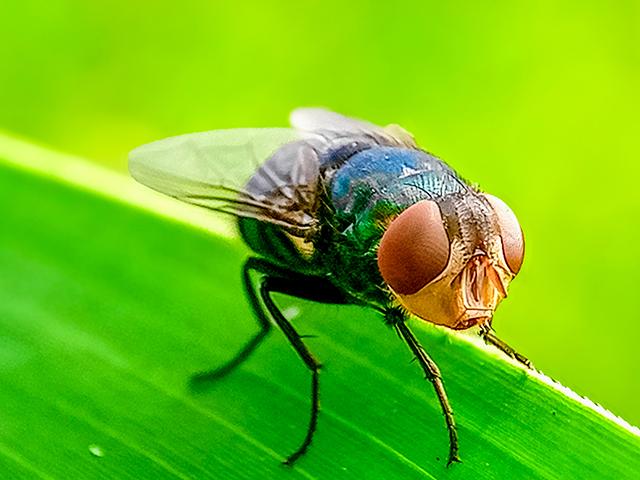
Adult flies are 3/8-inch (9.5 millimeters) long, about the size of a housefly, and have a distinctive metallic blue sheen and large orange eyes. The larvae are typically pale green to blue in color and can be up to 2 centimeters long, larger than other larvae. They have raised spiracles or breathing holes, and more pronounced body segmentation.
Cattle are especially vulnerable when they have:
-- Fresh wounds.
-- Branding, castration, dehorning, ear-tagging or surgical sites.
-- Navel/umbilical areas in newborn calves.
P[L1] D[0x0] M[300x250] OOP[F] ADUNIT[] T[]
-- Vulva/perineal tissues after calving.
-- Tick bites, barbed-wire cuts and other skin breaks.
You should look for:
-- A wound that gets bigger instead of healing.
-- Bloody or foul-smelling discharge.
-- Maggots/larvae deep in the wound, often not just on the surface.
-- Swelling, irritation, pain, head-shaking, licking, isolation, reduced appetite.
-- Suspicious lesions around the umbilicus/navel (in calves).
If you suspect NWS, please contact your veterinarian or your state veterinarian's office or animal health board immediately. Isolate the animal as much as practical. Do not move the animal. Your veterinarian or animal health official will typically assist with sample collection, submission, reporting and developing a treatment plan.
If you do not already have a veterinarian, this is a good reminder of how important a valid veterinarian-client-patient relationship (VCPR) is. Beyond your obvious needs for a relationship with a veterinarian, one of the new and very promising products for treatment of NWS is Exzolt Cattle-CA1 (fluralaner topical solution). It is a prescription drug requiring a VCPR to obtain it. The CA1 refers to its conditional approval by the U.S. Food and Drug Administration. This puts an increased obligation on the veterinarian to ensure it is used only according to that conditional approval.
For now, these are the most important steps to take:
-- Inspect cattle frequently, especially calves and animals with recent wounds.
-- Treat wounds promptly, and keep them clean.
-- Time cattle-working procedures carefully, especially castration and dehorning.
-- Control flies as part of an overall herd-health program.
-- Watch high-risk groups closely: newborns, post-calving cows, recently worked cattle.
-- Maintain strong biosecurity around animal movements and purchased animals.
One of the great animal health victories of the 20th century was the eradication of NWS from the country. This program relied on producer vigilance and a coordinated federal/state response, including surveillance, quarantines and sterile insect technique programs. Because the female screwworm only mates once, sterile males are produced by the millions and are released in high-risk areas. Once the female mates with a sterile male, all her eggs will be sterile, slowing and eventually stopping reproduction. This program will remain a central tool in this current response.
For the most current and accurate information on NWS, please visit the USDA/APHIS website at https://www.screwworm.gov/….
For now, look hard, act fast and report immediately.
**
Editor's Note: Please contact your veterinarian with questions about the health of your herd or other animals. Every operation is unique, and the information in this column does not pertain to all situations. This is not intended as medical advice but is purely for informational purposes. Email Dr. Ken McMillan at vet@dtn.com.
(c) Copyright 2026 DTN, LLC. All rights reserved.

