



Cattle Producers Beware of Ticks
Asian Longhorned Tick Spreads Disease to Cattle Across the Country
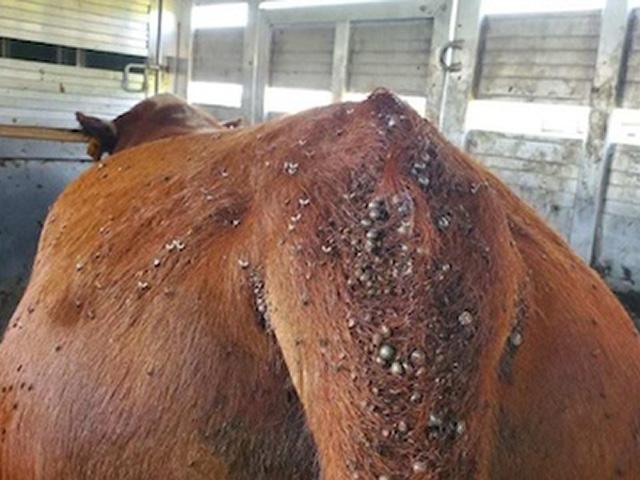
REDFIELD, Iowa (DTN) -- The Asian longhorned tick (ALHT) is the culprit for carrying pathogens causing distress or disease to the host, with the latest being theileriosis in cattle.
Cattle in Nebraska were recently identified with theileriosis, caused by Theileria orientalis Ikeda, a blood-borne parasite that the ticks can transmit.
According to the Nebraska Department of Agriculture (NDA), these cattle were imported into the state. The ALHT is not present in Nebraska but has been reported to have established populations in 26 other states.
USDA first identified ALHT in the United States in 2017, but it's thought to have arrived in the U.S. around 2010 or earlier.
IDENTIFYING THE ASIAN LONGHORNED TICK
According to USDA's Animal and Plant Health Inspection Service, the ALHT is light brown in color and very small, around the size of a sesame seed. The adult female is only about the size of a pea when filled with blood. Female ticks can reproduce without a male, producing up to 2,000 eggs at a time.
P[L1] D[0x0] M[300x250] OOP[F] ADUNIT[] T[]
NDA said the parasite is most commonly spread through the bite of an infected tick. Less commonly it can be spread through equipment such as needles injected into an infected animal and then into a non-infected animal or other vectors such as lice or biting flies. Theileriosis can cause anemia, jaundice, loss of appetite, exercise intolerance, weakness, and in some cases death. The disease can be confirmed with a diagnostic test.
"The best method of prevention is tick control and good management practices for your herd including external parasite control," said Nebraska State Veterinarian Roger Dudley. "If Theileria is suspected, it should be reported to a veterinarian immediately."
In addition to cattle, theileriosis can also affect sheep and deer. If cattle producers suspect Theileria or see ALHT, they should contact their veterinarians to collect the appropriate samples for testing. This disease is not a threat to humans.
TICK PRESENCE ALL YEAR
Since there are no current vaccines or approved treatments for Theileria available, it is recommended that producers use external parasite control to keep ticks off cattle. Inspecting ears, under the tail, axillary regions, flanks, and udder skin folds is important as these are common sites for tick attachment.
Iowa State University Extension Beef Veterinarian Grant Dewell said ticks can be prevalent in the summer but tend to have a surge of infection on cattle who are put on a new pasture. "The presence of a preferred host generates a surge in new ticks, as females will begin to lay thousands of eggs," he said.
Dewell recommended cattle producers closely observe animals on pasture for tick infestation. He said this disease is like anaplasmosis in that younger animals often display more severe signs than mature cows or bulls.
Dewell said controlling external parasites this summer will be important. In addition to insecticide ear tags, he suggested incorporating an insecticide-soaked backrubber or regularly applying pour-on. The products used should include tick control for preventative care, which is found on the label. "If an increase in tick infestations is observed, an avermectin pour-on may be the best intervention," he said.
After recovery, cattle infected with Theileria orientalis Ikeda -- the form of bovine theileriosis associated with the ALHT -- are usually lifelong carriers of the parasite. Stress can cause a reoccurrence of the disease.
For more on theileriosis, and tips on tick control and good management/biosecurity practices see https://nda.nebraska.gov/… and https://www.aphis.usda.gov/….
Jennifer Carrico can be reached at jennifer.carrico@dtn.com
Follow her on social platform X @JennCattleGal
(c) Copyright 2026 DTN, LLC. All rights reserved.

