

Fall Forage Look Could Aid Next Year
KSU: Fall Pasture Evaluations Could Help Prepare for the Next Grazing Season
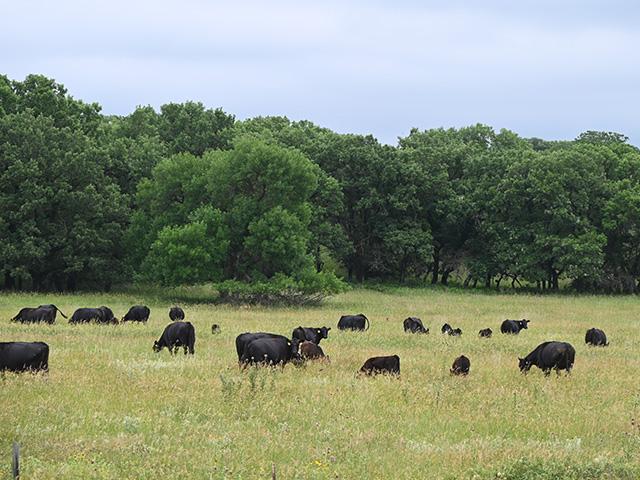
OMAHA (DTN) -- With the growing season coming to an end, livestock producers should take advantage and evaluate their pastures and rangeland and make decisions that could improve forage production for next year.
Kansas State University (KSU) Extension rangeland management specialist Molly Reichenborn and range scientist Keith Harmoney said that the fall is an important time to do some grazing management review in a recent news release (https://extension.k-state.edu/…). This could include assessing remaining forage, identifying areas of overgrazing and monitoring unwanted plant species.
"Now's a really good time to take inventory of your forage resources," Reichenborn said.
WATCH FOR RESIDUAL FORAGE
Harmoney, who works at the KSU Agricultural Research Center in Hays, said grazers should pay close attention to the amount of vegetation remaining after grazing. Different species require different amounts of residual leaf material to maintain healthy growth and recover the following spring.
For short grasses, including buffalograss and blue grama, Harmoney recommends leaving approximately 2 to 4 inches of vegetation. Midgrasses, such as sideoats grama and little bluestem, should have 4 to 6 inches remaining. Taller grasses, including big bluestem, should retain at least 6 to 8 inches.
"Not enough residual is always a concern because that means that our forage demand and our forage supply probably was not balanced during the year," Harmoney said.
When pastures are grazed too much, plants may enter winter with fewer energy reserves. This could potentially limit their ability to recover when growing conditions improve.
P[L1] D[0x0] M[300x250] OOP[F] ADUNIT[] T[]
"When we have more leaf removal than what we desire, those plants are going to be lower in energy going into winter and potentially could start off next spring slower," he said.
LOOK FOR GRAZING PATTERNS
Producers should evaluate how evenly livestock utilized available forage throughout the pasture or range.
Harmoney said identifying underutilized areas can help producers make changes to improve grazing distribution during the next growing season. This time of year is a great time to scout pastures to look for those areas that were underutilized, he said.
Placing salt, mineral or protein supplements in underutilized areas might encourage cattle to graze these locations they have previously avoided. Other management options include prescribed burning, adjusted fencing and improved water access.
For areas experiencing excessive grazing, Harmoney recommends allowing additional recovery time before livestock return.
"You want them to have an adequate amount of leaf material produced in their recovery in order for them to get back to photosynthesis," he said.
Reichenborn adds that producers should also pay attention to changes in plant populations, particularly when undesirable species begin appearing in heavily used areas. Plants, such as ironweed, ragweed and snakeweed, may indicate uneven grazing distribution rather than an overall stocking rate problem.
"It's possible that it might be a grazing distribution problem and not necessarily a stocking rate problem," Reichenborn said.
MONITOR INVASIVE PLANTS
Fall can also provide an opportunity to identify invasive and problematic plant species before they become more difficult to manage.
Reichenborn said biennial plants, including musk thistle and teasel, can be easier to control during their early growth stages. These plants typically spend their first growing season developing low-growing leaves known as rosettes before producing flowering stems during their second year.
"The upside is now, if you noticed a population of say like musk thistle or teasels this summer, there's likely rosettes coming up there that are vulnerable to herbicide," she said.
Returning to areas where those plants were previously identified can help producers locate new rosettes, which are generally more susceptible to herbicide applications than mature plants.
As pastures and rangeland enter dormancy, producers could also notice differences in vegetation color, which could help identify invasive grasses. Old World bluestem, which is not native to Kansas, often appears lighter than surrounding native vegetation during the winter months.
"I like to say they look like bleach spots," Reichenborn said. "It's similar to getting bleach on a T-shirt, they kind of stick out like lighter color patches of vegetation."
Russ Quinn can be reached at Russ.Quinn@dtn.com
Follow him on social platform X @RussQuinnDTN
(c) Copyright 2026 DTN, LLC. All rights reserved.

