

Fertilizer Supply Push Faces Hurdles
Fertilizer Expansion Gains Momentum, But Finance, Competition Hurdles Remain
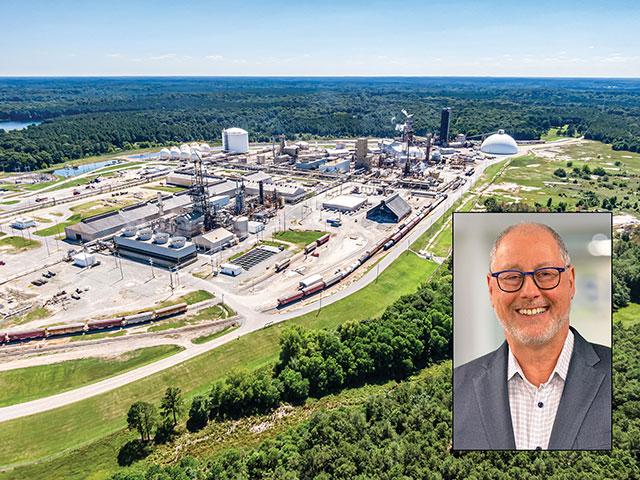
OMAHA (DTN) -- Companies trying to build new nitrogen fertilizer plants or expand operations face financing, regulatory and market-access hurdles even as pressure grows on the Trump administration to boost domestic production and lower prices for farmers.
Firms with nitrogen projects at various stages of development say they have seen more focus on ramping up production, especially since Trump administration officials announced a strategy at the end of April to build out more fertilizer production as quickly as possible.
Joshua Westling, CEO of Omaha-based J. Westling & Co., credited Agriculture Secretary Brooke Rollins and Trump administration officials for announcing a framework at the end of April to incentivize fertilizer production, saying "it signaled an intent that wasn't visible six months ago."
He added, "The framework has created real momentum on the engagement side. Counterparties are taking these projects more seriously, and the conversations we're having with technology providers, contractors, lenders, and investors reflect that shift."
Westling & Co. is planning to build a plant in Gothenburg, Nebraska, that would produce as much as 365,000 tons of ammonium nitrate and 140,000 tons of ammonium thiosulfate, as well as 50,000 tons of diesel exhaust fluid.
While officials talked about easing regulatory requirements, Westling said real momentum for fertilizer expansion has to translate into deploying actual capital, which hasn't fully happened yet.
"The hard variable is capital," he said.
Institutional investors will remain on the sidelines until they see actual federal capital flowing to projects, Westling said. "When the capital starts moving, that's when the framework becomes real."
UREA EXPANSION NEEDED
After watching the Trump administration's announcements last month, Josh Linville, vice president of Fertilizer at Stone X, said he hoped there would be more actions taken to reduce some reliance on imports. "We can't fix today, but we can fix tomorrow. But I'm not seeing the signs just yet that makes me feel all warm and fuzzy," he said.
New projects also should put more emphasis on building out domestic urea production, Linville said. About half of U.S. urea supplies come from imports, he said. Stone X models showed it would take about 5.1 million metric tons of urea to meet demand this year. "Urea is the one where we're still highly dependent on imports," he said.
Linville added, "From a nitrogen standpoint, there is more nitrogen production on its way, but it's focused primarily on anhydrous. I don't know of anything that really expands urea production, which is where we really need the help."
Still, Linville said current supplies are actually in good shape. The U.S. has adequate supplies of fertilizer, but it has just become more expensive.
"There's a big difference between availability and affordability. That's where a bit of a gray line starts to come up."
Linville questioned some farmer surveys showing a percentage of producers can't afford fertilizer.
"We're not seeing demand down nearly as much as what some of these surveys are showing," he said.
LESSONS FROM FERTILIZER PRODUCTION EXPANSION PROGRAM
After fertilizer prices spiked in 2022, the Biden administration created the $778 million Fertilizer Production Expansion Program (FPEP). Critics of the program say too many awards went to smaller-scale projects that were unlikely to significantly expand domestic fertilizer capacity.
P[L1] D[0x0] M[300x250] OOP[F] ADUNIT[] T[]
A lot of the smaller grants involved small compost or manure projects, but a few of the awards were as much as $80 million.
"The program supported a number of projects, but the structure ended up distributing relatively small awards across many smaller applicants rather than supporting the scale of capacity expansion the country actually needs," Westling said.
Corey Rosenbusch, president and CEO of The Fertilizer Institute, said TFI has been working closely with the USDA to review the original FPEP recipients to see which ones have the best potential to add domestic supply.
"We've gone through and kind of given them our analysis of those grants," Rosenbusch said. "I know they are looking at the current status of projects and looking at unused grant dollars. They are asking if there are opportunities to use those funds for projects that truly add to the domestic supply for the U.S. farmer."
Earlier this month, USDA sent out a survey to all FPEP recipients asking for suggestions on topics such as what kind of support from USDA or other agencies could effectively accelerate their projects.
Greenfield Nitrogen LLC, a recipient of a $40 million FPEP grant, has been trying to get to the construction phase for its project in northern Iowa to build a facility that could produce up to 300,000 tons of low-carbon ammonia. The project has slowed because investors want proof federal dollars will flow, while USDA wants financing commitments lined up before grant money can be released.
Developers cannot access FPEP grant money until they have all of their other financing secured. That becomes a problem because lenders then require extensive engineering work, permits and guaranteed sales contracts before committing capital, said Linda Thrasher, one of the partners at Greenfield Nitrogen.
"So, it is the proverbial chicken or egg problem," she said. "The only way you get to the finish line is if you have someone financing who will fund the whole thing, 100% equity, which is very expensive and hard to do unless you are dealing with a wealthy person. Otherwise, you have to think of some sort of workaround."
HOW MARKET CONCENTRATION STEPS IN
The significant barrier for federal grants and credit financing involves lining up "offtake contracts" -- long-term agreements guaranteeing fertilizer purchases that banks want as collateral for loans. Greenfield Nitrogen's Thrasher said those contracts are a struggle for new market entrants to secure because dominant fertilizer companies control much of the supply chain and distribution network.
"A co-op, let's just say ABC Co-op, does not want to engage with Greenfield for just one product when they're buying multiple products from one of the major fertilizer firms, for example, and they risk retribution," Thrasher said.
Greenfield launched a program last year to lock up some demand for loan obligations. That included offering an incentive to co-ops, such as paying a handling fee. Farmers were supportive, but cooperatives didn't want to participate. They are unwilling to diversify their supplies and risk losing supplies of other products in the process.
"Not a single co-op would participate, and worse yet, they told their farmers not to," Thrasher said. Talking about a recent discussion with a trade group, she said, "Everyone's complaining about high fertilizer prices. The question you have to ask is, what are you doing to support new entrants? We need competition."
A Texas A&M study in 2024 highlighted that four fertilizer companies -- CF Industries, Nutrien, Koch Industries and Yara International -- controlled 75% of domestic nitrogen production in 2019. Globally, however, the market is significantly less concentrated than in the U.S.
Since at least early March, the Justice Department has reportedly been examining whether fertilizer companies colluded to raise prices. DOJ was reportedly looking at CF, Koch, Mosaic, Nutrien and Yara in its investigation.
CURRENT MARKET OFFERS INCENTIVE TO BUILD OUT PLANS
LSB Industries is expanding anhydrous production at its plant in El Dorado, Arkansas, where the company was initially offered a $77 million FPEP grant, one of the largest in the program. LSB then cut its plans to build a new urea-ammonium nitrate plant and opted to focus primarily on expanding anhydrous ammonia. The FPEP grant was then cut to $23 million.
The current pricing environment is going to generate more revenue, so LSB has been in discussions with the Trump administration to look at building out the urea expansion, said Mark Behrman, chairman and CEO of LSB Industries.
"We are in discussions with the administration to look at projects to increase our fertilizer production," he said. "And I think we'd like to put that full project back on the table."
LSB, which is the fifth-largest nitrogen fertilizer company in the country, is in the final phase of its engineering study before the company makes a final investment decision to move ahead on construction. Ideally, LSB will add 100,000 tons of ammonia production in 2028 or 2029.
"We expect that to happen early next year and then once we greenlight the project then we will start to undertake the expansion," Behrman said. "The timing is such that we'll have to take some plant downtime to do that."
The problem with expansion is that it will also force LSB to idle its current production for construction. "That's not good for us, but not good for the market either," he said.
The capital costs of a fertilizer plant have also soared over the past decade. When LSB built its Arkansas plant more than a decade ago, the costs were about $1,200 per ton to build. Now it's about $3,300 per ton. That makes it more challenging to invest in an expansion.
"So, the costs have gone up so much more that either prices have to be really high, which obviously the farming community doesn't want, or somehow there has to be subsidies to bring down the cost of constructing new facilities," Behrman said.
SULFUR: THE NEXT BIG CRISIS
While there may be some momentum to build nitrogen plants, the phosphate market has another, more immediate problem.
Disruptions to fossil-fuel production and shipping in the Strait of Hormuz have sent sulfur prices sharply higher, threatening phosphate production globally. A byproduct of fossil-fuel plants, sulfur prices have surged 69% since the end of February. S&P Global reports China, the world's largest sulfuric acid exporter, banned exports at the beginning of May.
Sulfur prices directly affect phosphate fertilizers, which led Mosaic Co. to announce earlier this week it is scaling back phosphate production in both the U.S. and Brazil. S&P Global noted the lack of phosphate comes as Brazil is entering its peak time for importing fertilizer for its planting season.
"That's going to be the next big crisis," Rosenbusch said. "Half of the world's sulfur comes from the Middle East and all of those refining operations are shut down. Sulfur, of course, is the byproduct from fossil fuel production. They can't get through the strait. That is having a big impact on global supply. And we are simply one of the users of sulfur for sulfuric acid, which is the raw material used to make phosphate fertilizers."
A ton of DAP or MAP fertilizers is priced at $914 to $942 a ton, which makes spending $1,100 to $1,300 a ton for sulfuric acid impractical right now. China, in the meantime, also uses sulfuric acid for the more lucrative mining of copper and nickel. With a ton of nickel worth $18,000-$19,000 a ton, Rosenbusch said China's mining industry can afford to pay for expensive sulfur.
"The Chinese mining operations will pay the premium because there is still significant profitability for those mining operations," Rosenbusch said. "We don't have that same luxury when it comes to phosphate."
USDA COMMENTS
Asked for comments on FPEP and whether there are any announcements on funding, a USDA spokesperson responded with comments about President Donald Trump being "the most pro-farmer president in our lifetime" and cited the $12 billion Farmer Bridge Assistance payments and tax cuts in the One Big Beautiful Act.
"We are putting fertilizer companies on notice -- don't use the Iran conflict to exploit our American farmers. President Trump has farmers' backs and will not put them in the crosshairs of bad actors," said Secretary Rollins.
Also see, "Senators Question Fertilizer Supplies, Profits as Farm Economy Struggles Continue," https://www.dtnpf.com/…
See, "DAP Leads Fertilizer Prices Higher in First Week of May," https://www.dtnpf.com/…
Chris Clayton can be reached at Chris.Clayton@dtn.com
Follow him on social platform X @ChrisClaytonDTN
(c) Copyright 2026 DTN, LLC. All rights reserved.

