


New Trading Tools Meet Old Market Risks
At AgCon, CFTC Explores New Trading Markets as Agriculture Weighs Risks

OVERLAND PARK, Kan. (DTN) -- From trading contracts that never expire to markets operating around the clock, the Commodity Futures Trading Commission (CFTC) is exploring financial innovations that could reshape agricultural trading, even as traditional commodity market participants question whether some of those changes would benefit farmers and agribusinesses.
The discussions Thursday at the CFTC's agricultural conference highlighted a widening debate over how emerging financial technologies could fit into futures markets built around the seasonal production, storage and delivery of physical commodities.
The CFTC event, co-hosted by Kansas State University, also highlighted the agency's interest in opening commodity markets to possible new forms of trading, including perpetual contracts, 24/7 markets, event contracts and tokenized collateral.
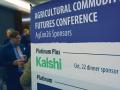
Reflecting that shift, AgCon's sole "platinum plus" sponsor wasn't an agricultural company or a longstanding board of trade, but the prediction-market platform Kalshi, whose CEO also was scheduled to speak at the conference Friday.
For farmers, grain companies and livestock producers, the central question is whether the new financial products would improve price discovery and risk management or introduce additional complexity and costs into markets already challenged by volatility.
NEW PRODUCT INNOVATIONS, OLD MARKET NEEDS
Gabe Afolayan, vice president of soybean merchandising at Cargill, questioned whether perpetual futures contracts would provide meaningful benefits to grain producers. Afolayan offered a cautionary message about changing markets that have served farmers and commercial hedgers for generations.
"Price discovery and risk management -- that's the ultimate utility," Afolayan said. "And if it's not broken, don't fix it."
Unlike traditional futures contracts, perpetual contracts have no expiration date. Popular in cryptocurrency trading, they generally track prices through mechanisms designed to keep the contracts aligned with underlying markets.
Afolayan explained that farmers need futures contracts tied to specific delivery periods to manage the risks associated with planting, growing and marketing crops.
"When you think about a grower trying to manage their production planning, that's not a spot interest," Afolayan said.
Convergence between the futures contract and cash price also requires physical delivery of a commodity, Afolayan noted. "You can't bluff your way out of it."
With a perpetual contract, there's no understanding of whether convergence can happen.
He stressed that traditional futures contracts help producers and processors manage prices months into the future, something perpetual contracts tied to current market values cannot necessarily accomplish.
Afolayan also questioned the benefits of expanding agricultural trading to seven days a week, warning that additional hours could dilute market liquidity when commercial buyers and sellers aren't participating.
For soybeans, he noted, much of the world's production and consumption occurs in the Western Hemisphere, limiting the potential benefits of extending trading throughout weekends.
But Afolayan suggested perpetual contracts could have applications in agricultural inputs where farmers lack effective risk-management tools.
"Could you be thinking about a perpetual on fertilizer, perpetual on diesel fuel, or perpetual on fuel surcharge that would help them manage some of those input costs on a rolling basis?" he asked.
P[L1] D[0x0] M[300x250] OOP[F] ADUNIT[] T[]
Jake Chervinsky, CEO of the Hyperliquid Policy Center, also cautioned against rushing perpetual contracts into agricultural markets.
"I don't think that it is appropriate at this point to advocate for bringing agricultural perpetuals into the U.S.," Chervinsky said.
He added, "We don't yet understand what their impact would be on the agricultural industry."
Panelists also discussed potential agricultural applications for tokenized collateral, which uses blockchain technology to digitally represent assets that can be pledged to secure trading positions. The technology could eventually allow agricultural businesses to meet margin requirements with a broader range of eligible assets rather than tying up cash.
QUESTIONS AROUND EVENT CONTRACTS
Known more for sports and political events than trading physical commodities, there are similar questions around event contracts for agriculture and whether they could provide effective hedging tools for farmers.
"I have yet to see how event contracts are going to work here," said Joe Barker, senior director of brokerage services at CHS Hedging.
Barker suggested smaller producers could benefit from contracts that allow them to manage risk on smaller volumes than traditional futures contracts. However, he questioned the nature of event contracts, which generally pay out based on whether a specific outcome occurs.
The panel also examined how futures exchanges are adapting to changing agricultural markets.
Fred Seamon, executive director of commodity research for CME Group, discussed efforts to develop new contracts that help grain merchants manage differences between cash and futures prices, including a sorghum basis contract.
Panelists stressed that new contracts ultimately depend on sufficient trading volume and liquidity to allow commercial hedgers to enter and exit positions efficiently.
LIVESTOCK MARKETS FACE CHANGING RISKS
Seamon also said CME is reviewing its feeder cattle index and plans to survey market participants about potential changes. One problem is that the number of cattle represented in the index has been declining steadily.
"There is a real need and a desire for more head in our feeder cattle index," Seamon said.
Among the options under consideration is expanding the weight range of cattle included in the index. CME also is examining how direct cattle sales affect the index and whether changes could increase the number of cattle represented.
Seamon said USDA has been exploring the use of artificial intelligence and cameras to capture livestock sales data, potentially allowing more sale barns to contribute information used in the feeder cattle index.
Lance Zimmerman of Rabobank said higher cattle prices and heavier animal weights have dramatically increased the financial exposure producers face.
Before the pandemic, a 10% cattle market move represented roughly $100 per head, he said. Today, a similar percentage move can exceed $300 per head.
Those larger dollar swings create additional challenges for cattle feeders who rely on operating credit to finance both their livestock and futures positions.
"When all of a sudden margin calls start working against them in the magnitudes that we're talking about today, it can be a severe limiting factor to just keeping the lights on," Zimmerman said.
It was also noted the Intercontinental Exchange will start trading new contracts for livestock in December as well. Panelists questioned whether the new contracts would attract enough trading activity to provide reliable liquidity.
USDA, CFTC EXPAND COOPERATION
Agriculture Secretary Brooke Rollins also announced a memorandum of understanding between USDA and the CFTC to improve cooperation and information sharing between the agencies.
Deputy Agriculture Secretary Stephen Vaden, who spoke at the conference's dinner Thursday evening, said the agreement establishes procedures for sharing market information while protecting confidential data under federal law.
Responding to a question from DTN, Vaden said the arrangement would eliminate the need to negotiate separate agreements whenever one agency needs information held by the other.
The agreement reflects the shared interest of USDA and the CFTC in improving agricultural market transparency, although the agencies have different regulatory responsibilities.
USDA QUESTIONS INPUT MARKET COMPETITION
Vaden also brought a different perspective to the conference, questioning whether competition is functioning properly in markets where farmers purchase equipment and fertilizer.
Vaden said USDA is working with the Federal Trade Commission (FTC) to gather evidence of potentially anticompetitive practices by agricultural equipment manufacturers and dealers.
He argued that while agricultural commodity prices fluctuate, the costs of fertilizer and other farm inputs have become increasingly resistant to declines.
"This has led farmers to understandably question whether the price signal that they are receiving for these vital inputs is the result of free and fair competition, or something else," Vaden said.
Vaden described complaints from farmers about equipment manufacturers and dealers, including allegations of threats involving machinery trade ins and restrictions on independent sales.
"They're getting calls, literally getting calls, making threats about what happens if they don't bring their equipment back to a particular dealer and trade it in," he said.
USDA and the FTC have issued a joint request for information asking farmers to describe their experiences with equipment companies. Vaden said farmers can submit information confidentially, including the companies involved, dates and details of potentially anticompetitive conduct.
"If farmers can provide us with evidence, then we can take action," he said.
Also see, "Why Farm Groups Are Worried About Around-the-Clock Futures Trading," https://www.dtnpf.com/…
Chris Clayton can be reached at Chris.Clayton@dtn.com
Follow him on social platform X @ChrisClaytonDTN
(c) Copyright 2026 DTN, LLC. All rights reserved.