


Production Blog
Enroll in Cover Crop Program and Get Paid to Improve Your Soil
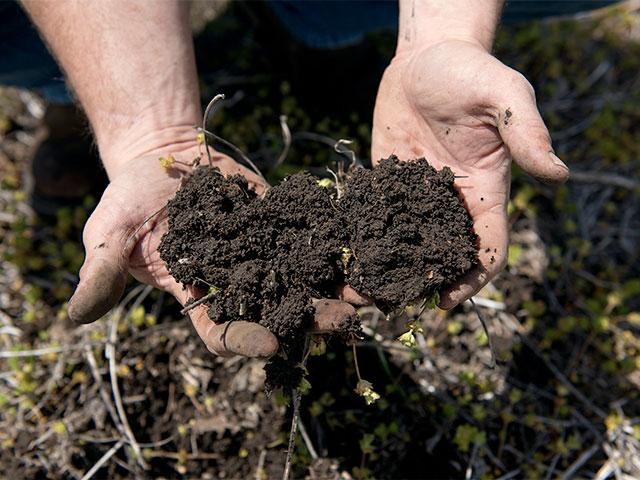
JEFFERSON CITY, Mo. (DTN) -- Whether you're a seasoned cover crop veteran or a relative newcomer, there's a USDA-funded initiative offering financial incentives to help offset the costs.
Farmers for Soil Health, a program launched in 2022, has reopened enrollment through Aug. 31, 2026, with increased per-acre payments and a simplified one-year contract designed to remove barriers for growers.
"Cover crops aren't just good for the soil. They're good for the bottom line," said Jim Douglas, farmer-adviser for Farmers for Soil Health and a soybean and corn grower from Flat Rock, Indiana, in a press release announcing the enrollment period. "On our farm, we've seen the difference that cover crops make in soil health and long-term productivity.
"A program like Farmers for Soil Health makes it easier for farmers to take that first step by helping offset the startup costs, and the $35-per-acre payment on a simplified one-year contract removes a lot of the risk that keeps people on the fence," he said.
P[L1] D[0x0] M[300x250] OOP[F] ADUNIT[] T[]
The 2026 enrollment introduces several updates designed to make participation easier and more financially viable for growers. First, the contract period has been reduced from three years to a single year. Farmers have the option to renew annually for the duration of the program, giving them flexibility to participate on their own terms at a consistent payment rate.
The program's original tiered payments that decreased with each year of the contract have been eliminated. Now, there's a flat payment rate of $35 per acre, per year. Up to 2,000 acres may be enrolled.
State-based technical advisers remain available to help farmers understand eligibility, navigate enrollment and successfully implement cover crop practices.
"These updates more accurately reflect on-farm costs and the agronomic value of cover crops," said Ben West, executive director of Farmers for Soil Health. "By offering financial assistance that better mirrors those costs, simplifying the contract structure and maintaining technical support, the program aims to make participation more accessible for growers interested in practices that improve soil health and long-term farm resilience."
There are 20 states participating in Farmers for Soil Health, including Delaware, Illinois, Indiana, Iowa, Kansas, Kentucky, Maryland, Michigan, Minnesota, Missouri, Nebraska, New York, North Carolina, North Dakota, Ohio, Pennsylvania, South Dakota, Tennessee, Virginia and Wisconsin. Any corn, soybean, wheat, grain sorghum or cotton farmer operating in these 20 states is eligible, regardless of prior cover crop experience.
Farmers for Soil Health is led by the Soy Checkoff, Pork Checkoff and National Corn Growers Association in partnership with state commodity groups and conservation organizations. Launched in 2022 with a goal to double cover crop acres on U.S. farmland by 2030, the farmer-led initiative has helped farmers get more cover crop acres established by providing technical resources and cash-share dollars.
According to the Soil Health Institute, hitting that acreage target could increase carbon sequestered in soils by approximately 7 million metric tons (mmt), reduce erosion by 105 mmt and reduce nitrogen leaching by 272 million pounds.
Incentive payments are supported through a $95 million USDA Advancing Markets for Producers initiative. Farmers can learn more about eligibility and enroll here: https://farmersforsoilhealth.com/….
Jason Jenkins can be reached at jason.jenkins@dtn.com
Follow him on social platform X @JasonJenkinsDTN
(c) Copyright 2026 DTN, LLC. All rights reserved.
Comments
To comment, please Log In or Join our Community .