


Commodities Market Impact Weather
Chilly Temperatures Next Few Days, Pattern Change Next Week
MINNEAPOLIS (DTN) -- Recent drought-reducing rainfall across the southern U.S., more cold air causing frosts in the Central Plains and Midwest, but a change coming next week, and dryness in Australia are the weather factors driving the markets Thursday.
COLD AIR PRODUCING FROSTS IN THE MIDWEST
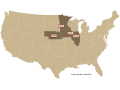
Cold air settling into the Midwest this week has been bringing areas of frosts and freezes, which have been more concentrated across the north, but have also found their way into Iowa, Illinois and Indiana. The extent to crop damage is uncertain, though some has likely occurred. Below-normal temperatures continue into early next week that may cause a few more areas of frosts. Periods of isolated showers will move through the region in the cooler air with a bigger system moving through on Tuesday, followed by warmer temperatures for the rest of next week and especially next weekend, ending the risk of frost for the year.
FROST THREAT ENDING FOR CENTRAL AND SOUTHERN PLAINS
Heavy snow in Colorado did get some accumulation into far western Kansas as well. Temperatures in this area are below freezing this morning, and may happen in Colorado on Friday morning too, which may be causing more damage to advanced wheat and emergent other crops. The precipitation was notable though as drought continues to be a major issue for a lot of the region. Small disturbances will bring through some periods of isolated showers and thunderstorms through next week, but most areas are going to remain dry. Temperatures rising above normal next week could cause additional stress.
OCCASIONAL SHOWERS AND COLD IN NORTHERN PLAINS, WARMER NEXT WEEK
Pockets of isolated showers will be possible in the Northern Plains through Monday. Overall though, conditions should be dry enough for fieldwork. The lack of rain is not all that favorable as a lot of areas are dealing with drought or increasing dryness. Temperatures have not been favorable this week with frosts and freezes being fairly widespread. But the western ridge pressing into the area should gradually bring temperatures up next week. Regardless, prospects for good planting conditions are increasing as we get deeper into May, though there are some immediate concerns about enough moisture.
P[L1] D[0x0] M[300x250] OOP[F] ADUNIT[] T[]
COLD AIR SLOWLY EASING IN THE CANADIAN PRAIRIES
Frosts and freezes have been common in the Canadian Prairies this week, especially in the east. Western areas are warming up, though some cold may linger in the east into next week. Overall, the cold has been leading to more delays in spring planting. Even though precipitation has slowed down significantly, and showers will be spotty through next week, soil moisture is very good in most areas and will help for early growth once the crop is planted. With temperatures rising next week, planting activity will be quite rapid.
PERIODS OF HEAVY RAIN AND THUNDERSTORMS EASING DROUGHT IN DELTA
A front pushed through the Delta on Wednesday with more areas of moderate rainfall. Recent heavy rain has been improving drought conditions, but large deficits remain. Additional showers and thunderstorms will develop on Friday and over the weekend. Though these chances will be lower for heavy, drought-reducing rain, they will still continue the trend of reducing drought in the region. The process will take a long time to reduce these long-term deficits, even if the pattern remains busy through the month of May.
FRONT MOVING THROUGH BRAZIL THIS WEEKEND, FROSTS POSSIBLE SOUTH
Some showers are possible from a front moving into southern Brazil on Thursday night that continues through Sunday. Only a small portion of southern safrinha corn areas are expected to get rain. Hot and dry conditions are unfavorable for filling corn in most areas, but cold air moving in behind the front may cause some patchy areas of frost across the far south Sunday through Tuesday.
NORTHEASTERN EUROPE GETTING MORE RAIN
Scattered showers are spreading eastward through Europe this week, getting some needed rain into the dry northeast. Another system will move into the west on Friday, spreading showers eastward this weekend and especially next week. Overall, conditions are favorable for wheat on most of the continent or improving like areas in the northeast. Though showers may disrupt spring planting a bit, the overall effect is positive.
PERIODS OF SHOWERS CONTINUE IN THE BLACK SEA REGION
Periods of showers continue in the Black Sea region over the next couple of weeks. Rains are coming at a pace that is favorable for most areas, though western portions of Ukraine and Belarus could use more frequent rain. These areas seem to be the target of more of the systems coming out of Europe both this week and next, leading to overall good conditions.
BUILDING EL NINO UNFAVORABLE FOR AUSTRALIA
Even though there has been some rain recently, rainfall deficits in much of Australia are still large and conditions are still dry. Drier weather is expected through next week, as well. Overall conditions are poor for winter wheat and canola planting and establishment. The developing El Nino in the Pacific has a correlation with poor winter crops in Australia.
SOME DRYNESS CONCERNS FOR CENTRAL AND NORTHERN CHINA
The North China Plain and the northeast continue to be drier, which may be favorable for corn and soybean planting, but not for development of wheat. Very limited showers over the next 10 days is not favorable either. Canola areas in the south-central are in better shape from more consistent precipitation this spring, but those have been diminishing lately as well.
John Baranick can be reached at john.baranick@dtn.com
(c) Copyright 2026 DTN, LLC. All rights reserved.