



Q&A With New USB CEO Courtney Knupp
New USB CEO Courtney Knupp Outlines Vision to Increase Soybean Demand and Value
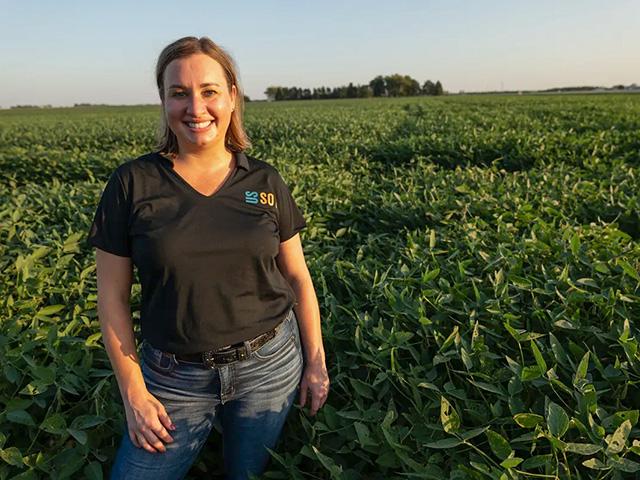
ANKENY, Iowa (DTN) -- Driving demand and increasing the value of U.S. soybeans are the top priorities of Courtney Knupp, the new CEO of the United Soybean Board (USB).
The organization and its 77 farmer-leaders work on behalf of U.S. soy producers to increase demand, drive on-farm resilience and achieve maximum value of soy checkoff investments. USB creates value through strategic partnerships across research, promotion and education investments -- spanning food, fuel, feed, industrial uses, exports and sustainable production market segments.
Raised on a grain and pig farm in southeast Iowa, Knupp assumed leadership of USB on Oct. 1. She said her nearly 20 years of experience in agriculture, international trade, public policy and market development have prepared her to build on USB's efforts to create new opportunities for U.S. soybean farmers.
Most recently, Knupp served as director of global supply chain at the National Security Council, coordinating U.S. policy to strengthen the resilience of the agriculture and food sectors. Her checkoff experience includes previously serving as vice president of international market development at the National Pork Board, director of global animal and aquaculture nutrition at the U.S. Soybean Export Council and leader of trade policy for the National Pork Producers Council.
DTN recently met virtually with Knupp to discuss her vision to help drive the soy industry's continued growth and competitiveness.
Here is the Q&A, slightly edited for brevity and clarity.
Q: What attracted you to this position, and what excites you most about the opportunity?
A: I really enjoy working for farmers and helping rural communities. Checkoff programs are unique and valuable to American agriculture. The soy checkoff has done a lot to create new markets, and we have plans in place to create the markets of the future. I'm excited about the versatility of soybeans and finding new uses. We need to create more diverse markets, so farmers are not just price takers.
**
Q: During your first month on the job, what have you heard most from USB farmer-leaders and soybean producers?
A: USB leaders want to reiterate to their peers and customers that they are making strategic decisions to do good work on their behalf. Farmers are in the middle of harvest, and there's a lot of angst with the economy and high input prices. We are focused on making sure we utilize farmer dollars to help.
**
Q: Soybean farmers are facing continued pressure from volatile markets, high input costs and uncertain trade opportunities. How can USB help producers be more productive and profitable in challenging economic times?
P[L1] D[0x0] M[300x250] OOP[F] ADUNIT[] T[]
A: We're going to focus on things in our control to influence things that aren't in our control. We will analyze markets, growing conditions and the ability to operate under current realities. We will build and adjust plans accordingly to maximize checkoff investments. Ultimately, that's finding new markets and uses, strengthening relationships with current customers and supporting biofuels.
**
Q: What emerging opportunities for soybeans are you most optimistic about, whether in food, feed, fuel or industrial uses?
A: All four of those uses are still extremely important to maximize the value of soybeans as market dynamics shift. Aquaculture is an excellent growth opportunity. We want to grow the volume of soy used in fish rations, which lends to more opportunities for us to compete.
**
Q: What are the USB's greatest strengths?
A: The USB Board is very strategic. We have a strategic plan, as most organizations do, investing in the future. A great example is biofuels. Twenty years ago, when we were first thinking about this market, we needed to provide education, resources and analysis so that policy could be derived by our partners at the American Soybean Association. Twenty years ago, biofuels used fewer than 100 million bushels of soy. Today, it's 1.2 billion bushels.
**
Q: What are the USB's weaknesses? What are your plans for improvement?
A: Technology is advancing quickly with the use of AI (artificial intelligence). How do we help farmers navigate that? Farms are evolving at different paces, and we need to make sure to provide resources that will be most helpful and communicate effectively. That needs to be thoughtful, daily communication via social media platforms. We need to evolve with our farmers and consumers to maintain and maximize relevance because soy is in everybody's daily life.
**
Q: How do you plan to ensure that soybean farmers see a clear return on their checkoff investment?
A: Clear and intentional communications ... so, farmers continually know how their money is spent and what it means to them. USB has a number of working groups for each type of use for soybeans. We need to ensure we're communicating with farmer-leaders, staff and industry partners so they can all link arms and get more done.
**
Q: What are your top priorities during your first year as CEO?
A: I want to focus on good governance, ensuring farmer-leaders and staff know their roles and responsibilities. Strategic partnerships are key, ensuring we maintain and maximize the right ones. And finally, just learning and making sure all key deadlines and deliverables are met -- running a solid organization just like the last 35 years.
**
Q: Looking ahead five years, what would success look like for USB, and how would soybean farmers know the organization achieved it?
A: In five years, we will be able to look back to fiscal year 2027 projects to measure results. For example, did a nutrition study help add more soy components to livestock rations? We're seeing more use of high oleic soybeans in dairy rations, so that's exciting. We are always looking forward, but we also look back to see if our work is successful. We need to continue to communicate that good work with farmers.
**
Learn more about the United Soybean Board at https://www.soycheckoff.org/….
Matthew Wilde can be reached at matt.wilde@dtn.com
Follow him on social media platform X @wildeagwriter
(c) Copyright 2026 DTN, LLC. All rights reserved.

