


Wet Pattern Fuels Corn Ear Issues
Corn Grain Quality Concerns Mount With Variable, Wet Weather
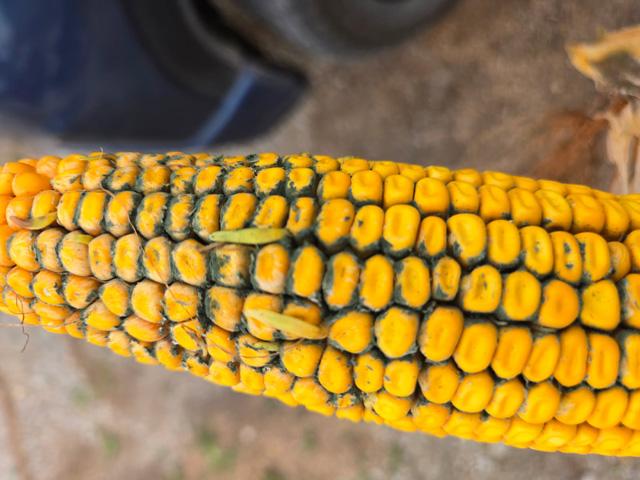
ANKENY, Iowa (DTN) -- Reports of corn ear mold, ear rot and kernel sprouting are mounting across the Corn Belt and Southern Plains as wet and hot conditions take a toll on maturing crops. Farmers and agronomists fear another week of forecasted rain and heat will further threaten grain quality.
DTN Ag Meteorologist John Baranick said a cold front has stalled over much of the Midwest this week, stretching from the Nebraska-Kansas border to the southern Great Lakes. Repeated rounds of rain, ranging from less than an inch to more than 4 inches in isolated areas, are predicted to fall through Thursday, Sept. 17.
Rain in the Southwestern Plains is also possible, but not widespread. Areas south of the front, from eastern Kansas through the Ohio Valley, are likely to remain hot, with temperatures climbing into the 90s.
"The persistent wet pattern will do little to ease concerns about corn ear quality, which could worsen in some areas where crops are already showing signs of damage," Baranick said.
EAR ROT AND EAR MOLD
In Kansas, ear rot and ear mold are the primary problems as corn matures and harvest begins. Logan Simon, a southwest area agronomist at Kansas State University (KSU), said his phone has been blowing up recently as farmers discovered Fusarium ear rot, Aspergillus ear mold and Diplodia ear rot in fields.
"I've been getting a lot of calls on a variety of ear molds that are progressing," Simon said. "With the rain and hot and humid weather, that is only going to increase the mold."
Variable weather can cause ear rots in corn, according to KSU agronomists. Fusarium ear rot and Diplodia ear rot thrive in warm and wet conditions after silking. Aspergillus ear mold development is driven by hot and dry conditions.
P[L1] D[0x0] M[300x250] OOP[F] ADUNIT[] T[]
"July was hot and mostly dry (in the Corn Belt), and August was very wet from Nebraska to Ohio. Kansas was mostly dry and regularly topped 100 degrees in recent weeks. There was a lot of weather-related stress," Baranick said.
Simon stressed that scouting fields before harvest is essential to identify grain quality concerns early, allowing farmers to adjust harvest priorities before problems worsen and to segregate affected grain when necessary. Many of the fungi responsible for ear rots produce mycotoxins, which can harm livestock when fed as silage or distillers grains, according to KSU. Grain contaminated with mycotoxins can be difficult to market and may be docked in price, if not rejected.
Ear molds can lower corn test weights, while also contributing to higher grain moisture. For corn destined for storage, Simon urged farmers to quickly dry grain to 15% moisture or less to curb further mold growth. Depending on the severity of the problem, affected grain may also need to be segregated.
CORN EAR SPROUTING
Sprouting occurs when kernels on the ear begin to germinate before harvest. The primary causes are delayed silking, hail damage, insect injury, late-season rains, warm temperatures and upright ears. Sprouting is also more likely to occur when dry grain (less than 20% moisture) is re-wetted, according to KSU agronomists.
Dave Walton, who farms in southeast Iowa near Wilton, scouted about 200 acres of corn on Sept. 12 and found several ears with sprouting and mold issues. While neither problem is common, he's concerned corn quality could deteriorate as harvest approaches.
"It's something to watch, especially with the wet week ahead," he said.
Ryan Gentle, Wyffels Hybrids agronomy manager for western Illinois, is closely monitoring corn grain quality as reports of ear sprouting, ear rots and mold continue to surface in his area. While he has not observed widespread issues in the fields he has inspected, Gentle agrees that recent weather patterns have created conditions favorable for problems to develop and spread.
Corn husks are drying down and opening, increasing the risk of mold and sprouting, he said. "When you get an inch or two of rain after that happens, you can start having problems. Scout now, and not just the end rows."
Kernel sprouting can lead to mold growth, storage problems, and compromised market value. Gentle encouraged farmers to harvest fields with substantial sprouting as soon as possible to prevent further germination. If corn is stored, dry it at slightly higher temperatures to 15% moisture or less to prevent further seedling growth.
CROWN ROT
Gentle said crown rot is the primary concern in corn in his region. Read this DTN story to learn more: https://www.dtnpf.com/….
"We had fields (with substantial crown rot) that yielded less than 200 bushels per acre (bpa). Otherwise, they would be in the 230- to 260-bpa range," he said. "The corn planted in early April with an early maturity got hit the hardest."
Learn more about corn grain quality concerns at https://www.agronomy.k-state.edu/….
Matthew Wilde can be reached at matt.wilde@dtn.com.
Follow him on social media platform X @wildeagwriter
(c) Copyright 2026 DTN, LLC. All rights reserved.

