



Lawsuit Seeks Atrazine Water Standards
Atrazine Lawsuit Could Lead to New Water-Quality Regulations Affecting the Corn Belt
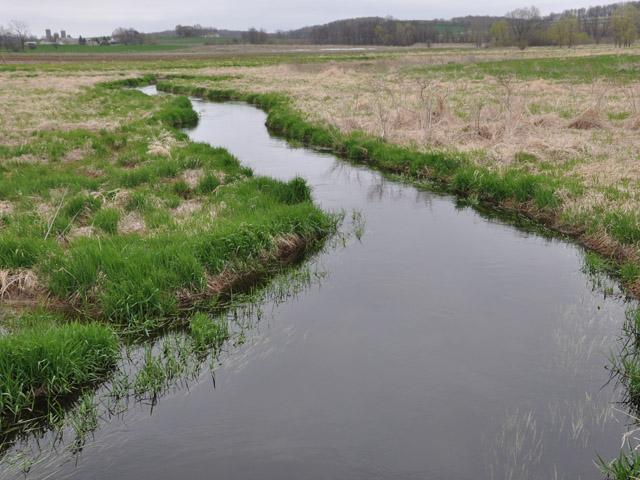
LINCOLN, Neb. (DTN) -- Environmental groups are seeking a court order that could ultimately lead to new federal and state water-quality restrictions on atrazine, arguing in a lawsuit filed on Wednesday that the U.S. Environmental Protection Agency failed to complete Clean Water Act standards for one of the most heavily used herbicides in U.S. corn production.
A complaint filed in the U.S. District Court for the Northern District of California asks the court to declare that the EPA violated a mandatory duty in the Clean Water Act by not establishing water-quality criteria for atrazine.
The lawsuit filed by the Center for Biological Diversity, Center for Environmental Health and the Pesticide Action and Agroecology Network asks the court to rule that EPA has unlawfully delayed action under the Administrative Procedure Act.
The lawsuit alleges the agency was to have completed atrazine water quality standards more than 20 years ago.
Atrazine is especially important in corn production, and about 70 million pounds are applied to crops in the U.S. annually, according to the lawsuit, including on sorghum and sugarcane.
"If EPA had developed water-quality criteria for atrazine based on accurate, current scientific data, states would have likely adopted those criteria," the lawsuit said. "This, in turn, would have led to regulatory restrictions on activities that result in atrazine entering and contaminating waterbodies."
The plaintiffs point to the Corn Belt, and specifically Nebraska, as one of five regions reporting some of the highest atrazine contamination levels. The complaint specifically also names Kansas, Iowa, Missouri, Illinois, Indiana and Ohio as having some of the highest concentrations of atrazine in water.
If the environmental groups win the case and EPA were to develop standards for atrazine, those criteria could become the basis for state water-quality standards, impaired-water listings, total maximum daily loads, or TMDLs, and other possible runoff controls.
P[L1] D[0x0] M[300x250] OOP[F] ADUNIT[] T[]
"States rely on (Clean Water Act) criteria," the lawsuit said. "They must review, establish, and revise water quality standards in light of these criteria. Despite EPA's initial steps two decades ago, there are currently no water quality criteria for atrazine. In the absence of this information, states are left in the dark, unable to set standards that reflect the scientific knowledge from EPA."
EPA started developing atrazine water-quality standards in 1999, according to the complaint, then released draft aquatic-life criteria in 2001 along with revised drafts in 2003, the lawsuit said. In 2005, the EPA indicated it was developing human-health criteria that reflected the most recent science.
"EPA has stalled progress for more than 25 years since it first initiated the process to set water quality criteria pursuant to the Clean Water Act in 1999," the complaint said. "EPA has never developed or published final atrazine criteria for the protection of aquatic life or human health."
Atrazine currently is regulated through pesticide-registration, drinking-water, ecological-risk and mitigation programs, the lawsuit said, but not through final Clean Water Act water-quality criteria.
The groups point to EPA's own finding that atrazine may affect more than 1,000 endangered species as a reason why water-quality standards are needed.
In September 2026, the Center for Biological Diversity released the results of a study on atrazine in watersheds.
That report estimates that about 860,000 miles of U.S. rivers are contaminated by atrazine, or about 25% of all river and stream miles in the U.S.
"Analysis from the Environmental Working Group's tap water database finds that atrazine is commonly detected in drinking water, especially in areas where drinking water comes from corn fields or other agricultural runoff," the lawsuit said.
"Atrazine has been detected in drinking water in at least 36 states, at over 2,000 utilities, serving approximately 40 million people, with 12 states having more than one million people exposed."
The EPA is currently in the process of reviewing atrazine's registration for renewal.
Atrazine was banned for use in the European Union beginning in 2004 because of groundwater contamination concerns, as well as in Saudi Arabia, United Arab Emirates, Qatar, Kuwait, Oman and Bahrain. Atrazine is still used in the U.S., Canada, Australia and Brazil.
Last week, a failure-to-warn lawsuit was filed against atrazine maker Syngenta AG and Syngenta Crop Protection LLC, on behalf of a California resident who claims that decades of exposure to atrazine-based herbicides caused his non-Hodgkin lymphoma.
Read more on DTN:
"Lawsuit Targets Syngenta Over Atrazine," https://www.dtnpf.com/…
"NCGA: Farms Need Glyphosate, Atrazine," https://www.dtnpf.com/…
Todd Neeley can be reached at todd.neeley@dtn.com
Follow him on social platform X @DTNeeley
(c) Copyright 2026 DTN, LLC. All rights reserved.