



The Parasite Outbreak That Tested FDA
Cyclospora Outbreak Exposes FDA's Communication Gaps
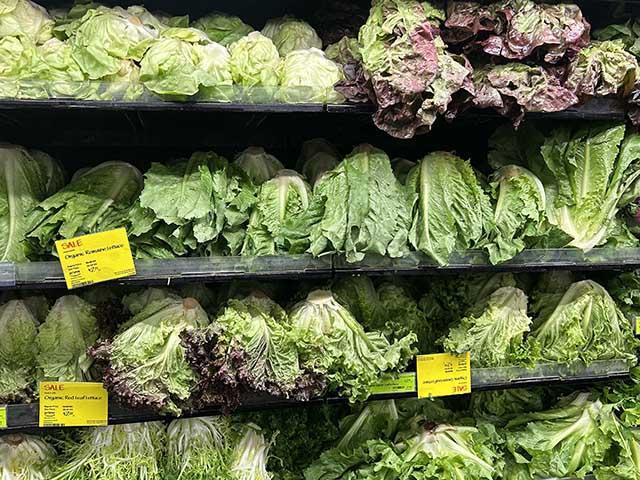
PORTLAND, Maine (DTN) -- A record cyclospora outbreak linked to iceberg lettuce from central Mexico is forcing the Food and Drug Administration (FDA) to rethink how it communicates with consumers and monitors produce imports.
The outbreak, caused by cyclospora, a parasite that can spread through contaminated food or water, sickened 12,883 people in 21 states, resulting in 570 hospitalizations and two deaths, according to the Centers for Disease Control and Prevention.
After closing the investigation Oct. 2, FDA found two positive samples positive for cyclospora.
Investigators sampled water, soil, and sediment from Taylor Farms de Mexico lettuce fields and found one sample from a tank holding outgoing wastewater at the processing facility and another in a drainage ditch.
But the Friday, Oct. 2, update is the first positive confirmation of the pathogen -- and it is still not conclusive.
"While there is currently not enough evidence to conclusively determine how contamination occurred in this outbreak, the positive samples show that cyclospora was present in the environment where lettuce was grown and processed," the Friday statement said.
Since the July 16 outbreak announcement, FDA has faced criticism over a false positive sample, communication with states and consumers, staffing and research delays, gaps in foreign inspections and the timing of field testing in Mexico.
That uncertainty left state agriculture and health officials struggling to communicate with consumers about what was known -- and what wasn't.
At the National Association of State Departments of Agriculture (NASDA) meeting in September, state officials openly discussed gaps in public messaging, consumer certainty and imported produce oversight with FDA officials.
"In Michigan, we experienced for days and weeks ... not much was able to be said about this," said Tim Boring, director of the Michigan Department of Agriculture and Rural Development. "We weren't at a point of having positive evidence."
Other officials told FDA they wanted to receive information first, rather than learn about developments at the same time as the public. Karen Ross, secretary of the California Department of Food and Agriculture, told DTN, "At the federal level, what's unusual about this is just some of the limitations on being able to share (information)."
Ross said she understood the public's demand for answers but also recognized FDA's reluctance to release information before verification. "You cannot act on conjecture, assumption," she explained, who has dealt with numerous outbreaks in California.
Donna Garren, the newly appointed director of the Office of Produce Safety within the Human Foods Program at FDA, attended the meeting to outline ideas for improving surveillance and communication.
"When the public can see where problems are coming from, when bad actors know that they will be named, when the data is open and accountable, behavior changes, markets respond, and compliance improves," she told state farm leaders.
WHERE COMMUNICATION FAILED
When asked about FDA preparedness for cyclospora at the meeting, Ross said the FDA has faced a loss of institutional knowledge prior to the outbreak.
In 2025, FDA lost 3,500 employees apart of a 20,000 Department of Government Efficiency (DOGE) trim in the Health and Human Services Department.
In June 2026, FDA announced its plan to hire 2,200 back.
Garren's role, intended for industry communication, had been left empty until June 29, as the outbreak confirmed its first case June 14.
Included in the layoffs were FDA staff that coordinated foreign inspections and sampling, which the FDA has since confirmed were reinstated, The New York Times reported. Politico also wrote in September, the defunding or relocation of two of three USDA cyclospora research projects, shuttering the solutions during a crisis.
P[L1] D[0x0] M[300x250] OOP[F] ADUNIT[] T[]
Federal authorities notified Taylor Farms on July 15 that traceback and epidemiologic evidence linked its iceberg lettuce to the outbreak. The company made the recall decision on July 17, prompting stores to pull lettuce and Taco Bell and other chains to stop using Taylor Farms de Mexico.
On July 18, the FDA reported a Taylor Farms lettuce sample tested positive for cyclospora. The next day, the agency said the result was a false positive, creating a public dispute over what could be confirmed.
Until Friday, Oct. 2, no confirmed positive product sample had been publicly reported. Yet traceback and epidemiologic evidence continued to point to shredded iceberg lettuce from Taylor Farms de Mexico, leaving consumers, retailers and producers without a definitive answer about the source of the outbreak.
The uncertainty had consequences in the marketplace.
The Consumer Price Index showed a 16.4% drop in retail lettuce prices from June to July, the largest decline for the product on record.
Farm groups such as Western Growers in California responded by pointing to what they believed the FDA could have done beforehand: provide greater surveillance of imported produce and the pathogens it may carry.
The FDA did not inspect Taylor Farms de Mexico's fields in Guanajuato until one month after the outbreak was identified, the Associated Press reported. It was the agency's first visit to the farm since 2019.
"For the food industry, the absence of specificity is especially damaging. When investigators cannot identify the source, pathway or scope of an outbreak, entire commodities, regions and sectors may be broadly implicated," Western Growers said in a statement.
Produce advocates also pointed to a 2025 Government Accountability Office (GAO) report that found only 11 foreign inspections on imported produce occurred per 100 domestic inspections.
While the 2011 Food Safety Modernization Act initially mandated FDA ramp up foreign facility inspections to 19,200 annually, the agency has said reaching that number would require hundreds of millions of dollars in additional funding.
"FDA previously has said that conducting this number of foreign food facility inspections was not achievable," they reiterated said in a 2021 roadmap document, representing a long dispute with the produce industry.
WHAT FDA IS DOING DIFFERENTLY
Garren told DTN she presented internal tools that the agency hopes to use to increase surveillance capabilities, inspection transparency and access to outbreak data.
"I am looking at those proactive tools, even like using satellite imaging. If there is flooding in a particular area that could lead to contamination, should we do something before there is an outbreak? I'm excited to use tools that are not just looking backward," Garren said.
While no public document was produced, she pointed to efforts involving import surveillance, traceable supply chains, risk-based inspections and expanded national data-sharing networks. She also acknowledged the agency has not always moved quickly enough to adopt new technologies or communication systems.
"We have an opportunity to transform how FDA uses information," she assured state leaders at NASDA.
In her speech to NASDA members, Garren also spoke at length about the value of a formal FDA social media strategy to rebuild consumer trust.
"We need to share the good, bad and the ugly. I think that's important for us as public health servants to be willing to share when things are working and working great, but also when we didn't hit the mark," she said.
Garren said her team will hold future work meetings with state officials and NASDA to implement new ideas.
WAITING FOR ANSWERS
Elizabeth Bihn, director of the Produce Safety Alliance at Cornell University, said the cyclospora outbreak highlights the communication challenge around fresh produce.
Unlike illnesses such as norovirus that can spread from person to person, cyclospora is a parasite generally spread through food or water contaminated with feces. Bihn trains specialty crop growers on on-farm water safety and the Produce Safety Rule under the Food Safety Modernization Act (FSMA).
She said fresh produce will never carry zero risk, but decades of regulation, research, buyer requirements and FDA guidance have helped reduce that risk.
"Especially when you're talking about fresh produce, you're never going to get to zero risk," she said.
Under the Produce Safety Rule, growers covered by the requirements must assess risks associated with water used on covered produce, although not all farms or commodities are covered, and growers are not required to test the water.
Despite the CDC declaring the outbreak "over" on Sept. 11 and the investigation concluded on Oct. 2, Bihn said the research community and FDA should continue to discuss how consumers and growers understand those risks.
"If you look at previous outbreaks, even once the outbreak ends, it's not like the lessons are immediate. It takes time to fully understand what exactly happened," Bihn said.
REMEDY: COMPENSATION
When DTN asked Garren whether affected consumers should pursue compensation, she said those sickened have a right to seek support following an outbreak.
"Obviously, in light of the summer, it's right to seek some kind of support after an outbreak," she said.
Under the Federal Tort Claims Act, the federal government generally cannot be held liable for claims arising from certain regulatory decisions, including discretionary functions.
Marler Clark, a food safety law firm, has filed five lawsuits on behalf of people sickened in the outbreak, naming Taylor Farms, but recently dropping fast food chain operators.
In a blog post, attorney William Marler also questioned whether the investigation should be considered closed while state data remains disputed and 16 congressional letters have gone unanswered.
At a Sept. 24 Senate confirmation hearing for FDA Commissioner nominee Heidi Overton, cyclospora was raised as one question. Marler said a congressional subpoena could force greater accountability.
"The nearest thing to an answer under oath is a confirmation hearing where the parasite was a question. One subpoena would change that," he said.
For additional information, see:
-- GAO Report: FDA Should Strengthen Inspection Efforts to Protect the U.S. Food Supply https://www.gao.gov/…
-- FDA Investigation Website: https://www.fda.gov/…
-- Western Grower's Statement: https://www.wga.com/…
-- Marler Clark: Food Safety Law Firm https://marlerclark.com/…
Jake Zajkowski can be reached at jake.zajkowski@dtn.com
Follow him on social platform X @jzajkow
(c) Copyright 2026 DTN, LLC. All rights reserved.