



Ask the Vet
Dog Worms: Why Prevention Is Key
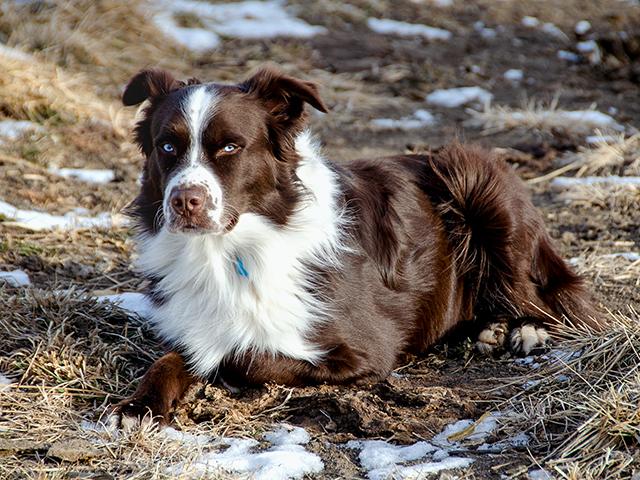
READER: Our dog keeps getting worms. We see them in her stool and worm her, but they keep coming back. What can we do to keep this from happening?
DR. McMILLAN: I am going to assume what you are seeing are tapeworms. They are very different from other worms. Many of the commonly used dewormers do not control tapeworms.
Tapeworms are flat, segmented worms with mouth parts that attach to the intestinal wall like other worms. Their biology, however, is very different. Segments break off and pass out in the stool as they mature. They also have an intermediate host essential in their development. For the most common tapeworm (Dipylidium caninum), the flea is the intermediate host.
What you probably saw were tapeworm segments. Inside these segments are eggs. Fleas lay eggs on your dogs or cats, and then the eggs fall off into the environment. They hatch into larvae that crawl through the environment and eat organic material including the tapeworm segments. Then, while inside the larvae, the eggs develop into the infective stage. The larvae spin a cocoon and develop into a flea. Then, it emerges from the cocoon and hops on your pets. Your pet consumes the flea as they bite and lick at irritated skin from flea bites, thus completing the life cycle.
The intermediate host for another tapeworm (Taenia sp.) are small mammals and birds. Ruminants, pigs and rodents serve as the intermediate host for yet another tapeworm (Echinococcus). As with Dipylidium, infection occurs when your pet eats an infected host. Echinococcus is particularly serious because it can infect humans and lead to severe and potentially fatal disease. However, it is confined to the north-central United States, Alaska and Canada. Even there, human infections are rare.
The first step in controlling tapeworms is for a veterinarian to examine segments under a microscope to determine the species. Fecal examination, including DNA testing, can also help identify infected animals and know the species. Once you know the species, you can prevent future infections. Since the most common tapeworm comes from the flea, flea control is essential.
P[L1] D[0x0] M[300x250] OOP[F] ADUNIT[] T[]
Fortunately, excellent flea and tick control products are available. Bravecto, Simparica, Credelio and Nexgard are very effective. Combination products -- such as, Simparica Trio and Credelio Quattro for dogs, and Revolution Plus, Bravecto Plus and Nexgard Combo for cats -- add heartworm, hookworm and roundworm control. Credelio Quattro and Nexgard Combo also control tapeworms.
The only prevention for Taenia and Echinococcus infection is to not allow your pets to hunt and eat wild animals.
In addition to the preventives discussed above, tapeworm can be treated with pills, injections or topicals that contain praziquantel or epsiprantel. Interceptor Plus and Sentinel Spectrum are heartworm preventives that also control hooks, rounds, whipworms and tapeworms.
Fortunately, most tapeworm infections in pets are not dangerous, but the even better news is they are easy to treat and to prevent.
READER: Our dog's eyes stay matted up all the time. A friend told me it could be dry eye like people get. Is there anything that can be done to help her?
DR. McMILLAN: Dogs do get dry eyes, also called keratoconjunctivitis sicca (KCS). This occurs when the tear glands do not produce enough tears, leading to inflammation, redness and thick mucus discharge. Left untreated, dark pigment changes can develop on the cornea and impair vision. If ulcers form, dogs can lose one or both eyes. This condition is very painful.
The most common cause is an autoimmune process where the body attacks its own tear-producing tissues. Other causes include infections like canine distemper, diseases like hypothyroidism and diabetes, certain drugs (especially sulfa drugs) and trauma.
Your veterinarian can measure your dog's tear production using a simple test called the Schirmer Tear Test. If caught early, this disease can be managed with topical immunosuppressive ointments, drops containing cyclosporine or tacrolimus, or in some cases, a combination of both. Artificial tears can also be helpful. Antibiotic drops or ointments are needed if there's an infection, and any underlying diseases must also be addressed.
The good news is most affected dogs can be managed well with ongoing medication. The two keys to success, however, are starting treatment early and understanding that ongoing means for life. If the tear-producing tissues are destroyed, the only options are frequent artificial tears or a very complex and expensive surgery.
**
-- Please contact your veterinarian with questions pertaining to the health of your herd. Every operation is unique, and the information in this column does not pertain to all situations. This is not intended as medical advice but is purely for informational purposes.
-- These are only my thoughts and general guidelines. Please get with your veterinarian and together develop the best program for your herd.
-- Email Dr. Ken McMillan at vet@dtn.com
[PF_1026]
(c) Copyright 2026 DTN, LLC. All rights reserved.