


USDA: Oregon Sheep Has Fatal Disease
First US Scrapie Detection in 5 Years Found in Oregon
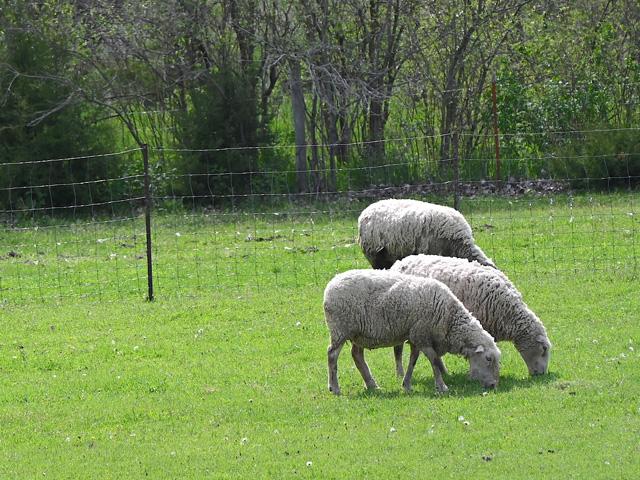
REDFIELD, Iowa (DTN) -- Federal animal health officials have confirmed a case of classical scrapie in a sheep slaughtered at an Oregon facility, the first U.S. detection in more than five years, the USDA's Animal and Plant Health Inspection Service (APHIS) announced.
The National Veterinary Services Laboratories completed final diagnostic results and genotype analysis, with confirmatory testing indicating classical scrapie. This is the first detection of the fatal disease in the U.S. since 2021, according to the American Sheep Industry Association (ASIA), which says scrapie has cost the sheep industry millions of dollars.
SCRAPIE ERADICATION PROGRAM HAS HELPED
The National Scrapie Eradication Program was launched in 2001, and since then, the incidence of the disease has decreased immensely. To become officially scrapie-free, a country must prove that a testing program has been in place and the U.S. sheep flock has not had any scrapie for seven years, according to ASIA.
The U.S. had been on track to meet the World Organization for Animal Health's seven-year benchmark for self-declared scrapie freedom in January 2028. USDA is unsure if this confirmed case will reset that clock, potentially pushing the earliest date for national scrapie-free status to around 2033.
P[L1] D[0x0] M[300x250] OOP[F] ADUNIT[] T[]
INVESTIGATION UNDERWAY
APHIS and state animal health officials have launched an epidemiological investigation to identify the flock of origin. A key complication is that the affected animal had no ear tag, limiting traceability.
The U.S. scrapie health regulation requires that most sheep be identified with a tag to trace them to their flock of birth. This is needed when they leave the property of origin for a sale, show, event or place where they could be mixed with other sheep, according to ASIA.
APHIS said to aid the investigation, NVSL will conduct tissue-matching and parentage testing on the affected sheep and two additional animals from the same slaughter accession.
Little disruption is expected with trade, according to USDA. Most countries restrict live animal exports only from affected flocks or premises, and products such as wool are not affected. This does not pose a human health risk, as this is a disease that only affects sheep and goats.
WHAT PRODUCERS SHOULD KNOW
APHIS does urge sheep and goat producers to reinforce core scrapie management practices by tagging all animals with a scrapie tag so exposed animals can be tracked quickly.
Those with sheep and goats on their farm should monitor these animals for signs of the disease if they think their flock may have been exposed. Since this is a disease that affects the central nervous system, signs include incoordination, weakness, behavioral abnormalities, significant weight loss and eventually death.
There is no treatment for the disease, but APHIS said the use of scrapie-resistant genetics significantly reduces disease susceptibility and limits depopulation needs if an infected flock is identified. If disease is suspected, producers should contact their veterinarian, state and APHIS animal health authorities to assist with further testing.
More information on scrapie and APHIS' eradication program is available at https://www.aphis.usda.gov/….
Jennifer Carrico can be reached at jennifer.carrico@dtn.com
Follow her on social platform X @JennCattleGal
(c) Copyright 2026 DTN, LLC. All rights reserved.