

Rollins: Farm Aid Buys Time for Ag
Rollins Points to Ag Consolidation as Reason for Aid; Senators Seek Disaster Funds
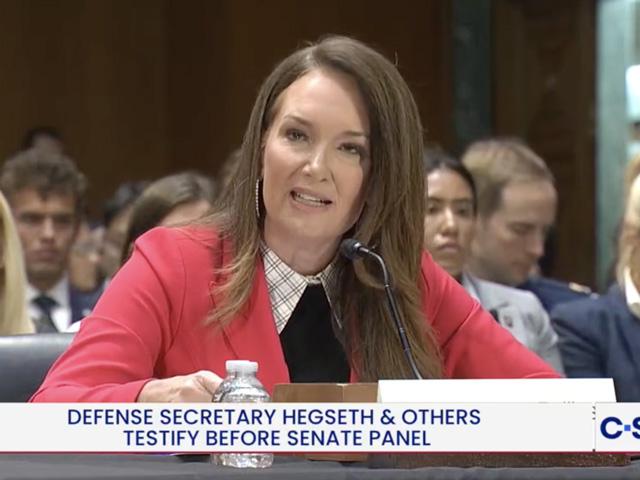
WASHINGTON (DTN) -- Agriculture Secretary Brooke Rollins joined military leaders on Tuesday to urge Senate appropriators to pass an $87.6 billion supplemental spending package, arguing the farm aid portion would give the administration time to overhaul U.S. agriculture policy while the military funding represented a "generational investment" in national defense.
The hearing before the U.S. Senate Appropriations Committee focused on President Donald Trump's supplemental funding requests announced the day after the president welcomed farmers to the White House in late June.
"We are confident that the direction of American agriculture is changing for the better, but many producers continue to face economic pressure as we build that economic intro out," Rollins said.
The $11.1 billion agriculture aid request -- $10 billion for crops and $1.1 billion for Florida disaster relief -- "buys the nation the security that we need and it buys us time to deconstruct and reconstruct a new system," she said. "It provides a bridge and extends a hand to Americans who need it."
Rollins attributed the need for additional farm aid primarily to consolidation in the agricultural economy and pressures from foreign and hostile countries.
A similar effort is moving through the U.S. House of Representatives as part of "reconciliation 3.0" that could provide $12 billion in agricultural aid. But from the perspective of the cabinet officials testifying Tuesday, the agriculture funding request has little to do with the war in Iran.
In the hearing, Sen. Dick Durbin, D-Ill., asked U.S. Secretary of Defense Pete Hegseth, "Does it have to do with the war in Iran?"
He responded, "No, this is rebuilding our military from what was not funded in the mass of the Biden administration."
Sen. Patty Murray, D-Wash., expressed concerns that the president's request was not meant to cover the war anymore. "This request is chock full of asks to fund unrelenting DOD priorities, which should be considered through our annual appropriations process," she said.
DISASTER AID
Similarly, senators questioned Rollins about why the administration's $11.1 billion agriculture request was characterized as a national security need rather than disaster assistance.
P[L1] D[0x0] M[300x250] OOP[F] ADUNIT[] T[]
Sen. Susan Collins, R-Maine, asked why the administration was focusing on the 2026 freeze rather than disasters declared in 2025.
Rollins responded by saying the administration is being flexible with its approach.
"There's a lot of farmers, a lot of producers who are really hurting, not just in Florida and not just from the freeze," she said. "So, it's important that we work together to solve for that."
In 2025, 1,012 counties were declared secretarial designated for crop loss disaster, compared with 1,152 counties so far in 2026, according to USDA data.
Other senators urged the secretary to expand the list of potential beneficiaries to include forestry producers, shrimpers and fishermen in Alaska.
It is ultimately the decision of the committee to determine how much money will be appropriated for the agency to use and how far to deepen the spending deficit.
CAUSE AND EFFECT
Between senators and administration officials testifying, there were clear differences over exactly what the proposed aid was intended to address.
Sen. Jack Reed, D-R.I., responding to Rollins' testimony, said: "I just want to reiterate a point that Sen. (Alex) Padilla (D-Calif.) made. We have a $10 million request for Midwestern farmers who are struggling because of the interruption of fuel and fertilizers because of President Trump's war."
Sen. Cindy Hyde-Smith, R-Miss., said the purpose of the aid was to ensure the next generation of farmers can remain on the land.
"If we want the next generation to stay on the land, Congress, we're going to have to take this opportunity to provide this critical market assistance for our farmers," she said.
The war still looms over the farm economy.
Input costs have been affected by the closure of the Strait of Hormuz. Rollins, however, placed much of the blame for elevated input costs on consolidation among major agribusiness companies rather than the war itself.
"We are doing these supplementals and these bridge payments, which we have to do for these farmers to survive," she said.
"But what we're seeing is just survival, and we're seeing a lot of the input companies -- equipment, seed, fertilizer -- make record profit. So, we've got to be able to dig into that as well."
Watch the Senate Appropriations hearing here: https://www.c-span.org/…
Find USDA Disaster Designation Information here: https://www.fsa.usda.gov/…
Jake Zajkowski can be reached at jake.zajkowski@dtn.com
Follow him on social platform X @jzajkow
(c) Copyright 2026 DTN, LLC. All rights reserved.