


Under the Agridome
A Different Kind of Spring, A Different Kind of Risk
Editor's Note: Today DTN is sharing content by that is normally reserved for paying customers. Not a subscriber? Check here for a trial: https://www.dtn.com/…
**
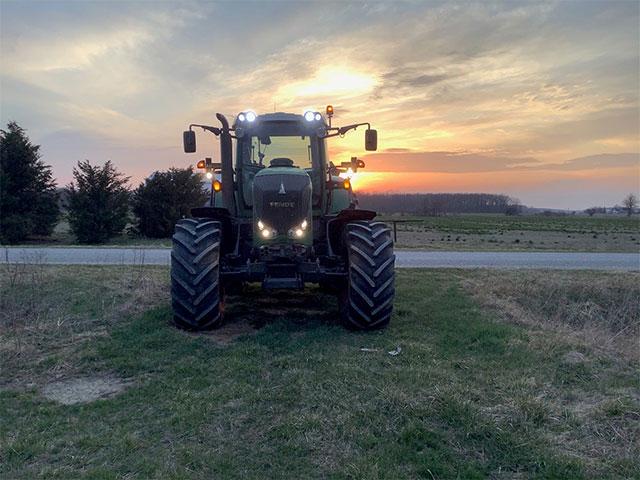
This is a different type of spring in Ontario. I been out in my fields lately doing my due diligence early in the spring. The fields are dryer than normal, but that really doesn't mean too much in southwestern Ontario. We spend millions of dollars on our farms putting tile in. The rain will come, it's just a matter of time.
It's not the dryness that makes it different. It's the uncertainty we're facing as we look out into 2026.
Last week we talked about grain market uncertainty during a time of war. Of course, that continued this week when we actually saw a limit drop in the price of soybeans last Monday. It was a tall drink of water for some of us who were expecting prices just to keep going up and up and up. There is much uncertainty this spring on our farm input horizon as we get ready to put this crop in the ground. Whether it is fertilizer or fuel, logistics or transportation, the war in Iran is certainly causing a lot of insecurity which makes this spring also different.
P[L1] D[0x0] M[300x250] OOP[F] ADUNIT[] T[]
This next week we will get the USDA Prospective Plantings Report which is always one of the big three reports of the year. In it we will get the USDA's latest guesses on how many corn and soybean acres will be planted this spring. Last year, of course, we had over 99 million acres of corn planted; this figure was increased throughout the year. This year, what I find interesting is that so many analysts are guessing less and less corn. It is based on the fact November soybeans rallied to a large extent but also everybody knows it costs more for you to plant an acre of corn. Many people are guessing that farmers will plant less. I know this doesn't mean much to anybody, but I find it hard to believe that we'll have less corn acres than we had in 2025.
We will see this week. In the meantime, I have talked fertilizer with my crop supplier since I stopped spreading it last fall. In Ontario and Quebec, we are in a bit of a unique position in Canada because there is not much storage of fertilizer on farms, unlike in Western Canada. Our climate is not as conducive to that as it is in Western Canada. Some of us might have arrangements with suppliers to lock in prices, but really, many of us take it as it goes. We just expect fertilizer to be there and let's hope we aren't wrong. The war in Iran and the problems in the Strait of Hormuz certainly influence the fertilizer supply chain.
Nitrogen is always one of the biggest price considerations on the farm when it comes to fertilizer. Urea and UAN are the most sensitive to global supply swings. Production outages, export decisions, and shipping logistics all ripple quickly into North American markets. Even when product is technically available, it may not be sitting where and when you need it. On my farm this year, I'm using both nitrogen products partly out of necessity going on corn and wheat, but also because of the technical way that I prepare my stale seed beds. Side dressing corn with liquid nitrogen is much more practical than doing anything else in the stale seed bed environment. I priced nitrogen earlier, but maybe now I just want to close my eyes and wince!
The bottom line is wheat and corn especially don't do very well without nitrogen, so I don't have a lot of options. However, we should keep in mind that there have been years before, not too far in the distant past, where we did cut back on fertilizer. For instance, I can remember in the COVID years we had somewhat similar trade shocks in the industry where many people cut back on nitrogen because of price. I can also remember times in the past where potash application was cut back greatly based on higher prices. I even remember a time in 2019 when I was unable to get fertilizer application on for soybeans because it got too late in the season. The rain never stopped. I'm not anticipating that in 2026 but depending on what the fertilizer prices do, everybody will have to make their own decision.
Keep in mind we still have tariffs on Russian fertilizer coming into eastern Canada which according to Farm Credit Canada is adding costs of $100/metric ton more than our American counterparts. Add in the war in Iran with gas and oil plants going up in flames every day and it is not a growth industry for fertilizer production or moderate to lower prices.
What's that mean? Well, hopefully it'll not be a case of fertilizer availability. Likely not. There will probably be fuel availability, too, but then it comes down to price. This will make it all about an agricultural economic equation. Can we produce that additional marginal output at a profit for the additional marginal input? The events on the world stage are certainly clouding that scenario. Each of us individually will just have to find a way.
**
The views expressed are those of the individual author and not necessarily those of DTN, its management or employees.
Philip Shaw can be reached at philip@philipshaw.ca
Follow him on social platform X @Agridome
(c) Copyright 2026 DTN, LLC. All rights reserved.