


DTN Ag Weather Brief
DTN Ag Weather Brief
There is a ridge across the East with a big trough in the West and Central.
The trough will continue to move eastward through the weekend, while another will build back into the Pacific. That will allow a ridge to form in the West.
EXTENDED OUTLOOK:Part of the Pacific trough will move eastward across Canada early next week while a trough from starts to take over Canada for next week and weekend. That should send multiple pieces of energy through the U.S. and Canada, keeping us in an active pattern going into March.
The U.S. and European models are fairly similar, but develop systems differently next week. I will use a blend, but favor the European.
A couple of systems will move through next week and models need to do better with regards to timing and impact, but they are likely to move through early next week and mid-late next week. We could see an additional one moving through next weekend as well. Primary impacts are currently forecast from the Northern Plains through the Midwest. Despite the activity, temperatures are forecast to be above-normal for most of the country since the air is sourced from the Pacific. However, we could see some colder air returning to western Canada late next week that could move through the country in early March.
NATIONAL TEMPERATURE/RAINFALL EXTREMES:HIGH THU...98 AT 7 MILES EAST SOUTHEAST OF HIDALGO, TX
LOW THU...22 BELOW ZERO AT 4 MILES SOUTH OF SUN RIVER, MT
24-HOUR PRECIPITATION ENDING AT 7PM CDT THURSDAY...LEXINGTON, KY 1.27 INCHES
US OUTLOOK AND MODEL DISCUSSION:There is a ridge across the East with a big trough in the West and Central.
The trough will continue to move eastward through the weekend, while another will build back into the Pacific. That will allow a ridge to form in the West.
Part of the Pacific trough will move eastward across Canada early next week while a trough from starts to take over Canada for next week and weekend. That should send multiple pieces of energy through the U.S. and Canada, keeping us in an active pattern going into March.
The U.S. and European models are fairly similar, but develop systems differently next week. I will use a blend, but favor the European.
A couple of systems will move through next week and models need to do better with regards to timing and impact, but they are likely to move through early next week and mid-late next week. We could see an additional one moving through next weekend as well. Primary impacts are currently forecast from the Northern Plains through the Midwest. Despite the activity, temperatures are forecast to be above normal for most of the country since the air is sourced from the Pacific. However, we could see some colder air returning to western Canada late next week that could move through the country in early March.
MAJOR WORLD HIGHLIGHTS/IMPACT:NORTHERN PLAINS (LIVESTOCK/WHEAT): Snow moved across the south on Thursday. It will be quieter and colder through the weekend, but temperatures will rise early next week. A couple of storm systems will move through next week with scattered showers. Heavy precipitation is not in the forecast. Drought increased on Thursday's drought monitor, but the more active storm track should help to raise snowpack and soil moisture.
P[L1] D[0x0] M[300x250] OOP[F] ADUNIT[] T[]
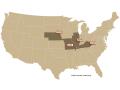
CENTRAL/SOUTHERN PLAINS (LIVESTOCK/WINTER WHEAT): Strong winds and dry soils have made for some wildfires in a couple of states since Tuesday. Though some good rain fell across parts of the region over the weekend, and some heavy snow fell in Nebraska on Thursday, soil moisture is not all that favorable for winter wheat, especially across the west, and drought is a big problem across Nebraska, Oklahoma, and Texas prior to spring planting. Another storm will bring some showers through on Friday, with potential for snow across Kansas. A couple of storm systems are likely next week, too, but will favor northern areas of the Plains instead of the Central and South. Instead, strong winds could dry soils quicker, especially with temperatures rising again next week.
MIDWEST (LIVESTOCK/WINTER WHEAT): Snowpack is extremely low across most of the region and we will need to see significant precipitation prior to spring planting to feel good about soil moisture. Streaks of drought, especially from Missouri to northwestern Ohio, are the major issues heading into spring. However, the pattern has become more active this week with two storms moving through. The second will linger light snow across the east this weekend. Two more storms are likely for next week with widespread precipitation.
DELTA/LOWER MISSISSIPPI RIVER (RIVER TRANSPORTATION): There has been some boost to the water levels along the Mississippi River since this past weekend, but more will be needed to ease the drought that is very widespread through the Delta prior to spring planting. Multiple larger storms this week have not produced much precipitation to the Delta, but have to the Midwest and Ohio Valley, which will provide some benefit to the rivers. A couple of storm systems will move through next week as well.
BRAZIL (CORN/SOYBEANS): Showers have been very isolated over central Brazil over the last week, which may have allowed fieldwork to progress more rapidly as the country continues to harvest soybeans and plant corn. Waves of showers moving up from Argentina will continue to expand across the country this weekend and next week. The country needs the rain as subsoil moisture continues to be low for this time of year and will be counted on for the coming safrinha corn crop.
ARGENTINA (WINTER WHEAT/CORN/SOYBEANS): Waves of showers will continue to move through the country through Monday, but have been and continue to be spotty in nature and favor areas that are not in the deepest need of rainfall. Rain has stabilized corn conditions, but soybeans continue to fall and are now rated similar to last year's disappointing campaign. It is getting too late for much of the early-planted crop and is continuing to exert pressure on the later-planted crop as well. With drier conditions forecast for next week, that could be a larger problem, since February is now coming in with lower-than-normal rainfall like January for many areas.
EUROPE (WINTER WHEAT): An active weather pattern for Europe continues, but has given a break to Spain, which had been inundated for the last couple of months. Poland has not had the precipitation it needs for spring, but there is still time and the pattern has been more favorable over this last week. The active pattern continues through at least the end of February and is both favorable for winter crops, and the coming spring planting season. Some areas may be too wet to work properly though, which may delay fieldwork if it extends too far into March.
BLACK SEA (WINTER WHEAT): The weather pattern is becoming much more active and chances for frequent precipitation will continue through the end of February. Temperatures remain mixed, but without threat from arctic bursts that would be damaging to wheat.
AUSTRALIA (COTTON/SORGHUM): Northern Australia has seen a marked increase in precipitation in 2026, but primary agricultural areas, particularly in the east, have not. Models do have an active front that will move into the southeast this weekend and stall, which may provide more beneficial rainfall for cotton and sorghum that is largely in the fill stage.
CHINA (WINTER WHEAT/CANOLA): Winter wheat and canola are in dormancy in largely good condition, but precipitation has been limited over the last couple of months, especially across the North China Plain. Shower chances are relatively frequent for the rest of the month, but with low amounts. The region will need much more before wheat and canola awaken from dormancy in the next month or two.
EXPANDED SUMMARIES FORECASTS:Midwest (corn, soybeans and winter wheat)
Summary:
West: Scattered showers. Temperatures above normal.
East: Scattered showers. Temperatures above to well above normal.
Forecast:
West: Scattered showers exiting Friday. Mostly dry Saturday-Monday. Scattered showers north Tuesday. Temperatures near normal Friday, below normal Saturday-Monday, near to above normal Tuesday.
East: Isolated to scattered showers through Tuesday. Temperatures above normal Friday, near to above normal Saturday, near to below normal Sunday-Monday, near normal Tuesday.
6- to 10-day outlook: Isolated to scattered showers Wednesday-Thursday. Mostly dry Friday-Saturday. Isolated to scattered showers Sunday. Temperatures near to above normal Wednesday-Sunday.
Central and Southern Plains (winter wheat/corn/livestock)
Summary: Scattered snow north. Temperatures falling below normal.
Forecast: Isolated showers Friday. Mostly dry Saturday-Tuesday. Temperatures below normal through Sunday, near to below normal Monday, above normal Tuesday.
6- to 10-day outlook: Isolated showers Wednesday-Thursday. Mostly dry Friday-Sunday. Temperatures above normal Wednesday-Sunday.
Rio Grande do Sul and Parana...
Summary: Isolated showers. Temperatures above normal.
Forecast: Isolated to scattered showers through Tuesday. Temperatures near normal through Tuesday.
Mato Grosso, MGDS and southern Goias...
Summary: Isolated showers. Temperatures near to above normal.
Forecast: Isolated to scattered showers through Tuesday. Temperatures near normal through Tuesday.
John Baranick can be reached at john.baranick@dtn.com
(c) Copyright 2026 DTN, LLC. All rights reserved.