



South America Calling
Rainfall Starting to Increase in Argentina
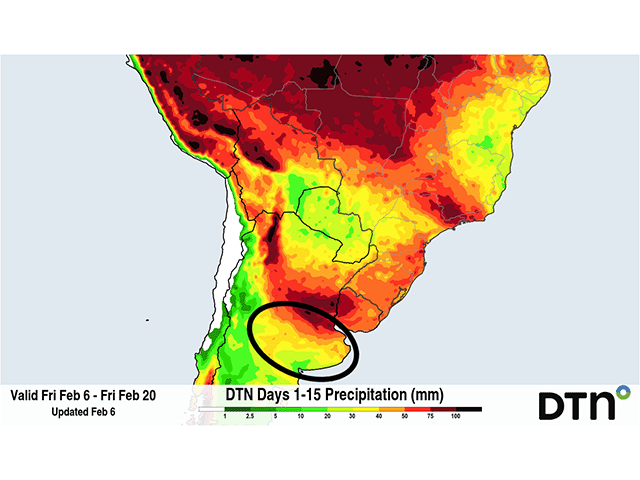
Rainfall has been very limited over key growing areas in southern and central Argentina for quite a while now. Soil moisture and crop conditions have been falling for weeks, and pictures on social media are cropping up that showcase some fairly harsh conditions for both corn and soybean plants in various stages of growth.
Now that we are in February though, the weather pattern is opening up and offering more opportunities for rainfall. It may be too late for some areas, but just in time to avert disaster in others.
The Buenos Aires Grain Exchange (BAGE) sent out another report on Feb. 5 that indicated a fifth-straight week of falling soil moisture and crop conditions, punctuating the harsh weather in January. Good-to-excellent ratings on both corn and soybeans are at the lowest levels of the season, with corn at 44% and soybeans at 40%. Corn ratings only dropped one point, but soybeans dropped 7 as conditions have really started to hurt the beans that are getting into their more sensitive blooming and pod-setting stages of growth. What's more is that the percentage of the crop rated poor-to-very poor is at 13% for corn, but now 25% of soybeans, a weekly increase of 9 points for soybeans. Four of the 15 divisions in Argentina are riddled with expansive drought, and cover portions of much of the rest across the central and south as well.
P[L1] D[0x0] M[300x250] OOP[F] ADUNIT[] T[]
Despite these poorer conditions, rain has started to fall again this week. It was likely too late to show up in this week's report, but areas of heavy rain hit parched areas of Cordoba and Buenos Aires earlier this week. A moderate-sized cell dropped 20-40 millimeters (0.80 to 1.6 inches) of rainfall over a decent area of the areas in highest drought. That is a good start for producers down there, but they are way behind in precipitation. Most areas down there have rainfall deficits of more than 100 mm (more than 4 inches) during the last two months, so much more rain is needed to bring conditions back up to adequate.
The region will get its chance moving forward through February. Several waves of showers are forecast to move through the country next week. I count four fronts from Feb. 8-14 and each of them is forecast to produce scattered showers. Adding up each of them amounts to 40-100 mm of rainfall in total, which would be a life-saving amount of rain for these areas. Even heavier rain is forecast for areas across northern Argentina.
That is not necessarily enough to bring a poor crop into good standing, especially for those areas that are too advanced. The earliest-planted soybeans are setting pods and BAGE reports that 40% of them are under stress, causing aborted pods and plant losses. Even a portion of the late-planted soybeans are entering that stage as well. They will need this rain to hold off further losses.
Corn has been dealing with the developing drought for a long time. Corn is planted in two phases in Argentina, with the first crop filling kernels in January while the second crop still in early development. The early crop has been reduced after a critical month of limited rainfall. More of the corn is headed toward being used for silage instead of grain. BAGE estimates a 1 million metric ton (mmt) reduction in corn based on this dryness so far. If the coming rain does not hit all areas equally, that could cause further reductions for that early crop. The rain should encourage better growing conditions for the second-phase corn, but the country is not out of the woods yet. More reductions may be coming if the current forecast cannot be sustained beyond next week. Models are mixed on the prospect for more rain for the second half of February and will be a critical factor to watch for moving forward.
To find more international weather conditions and your local forecast from DTN, visit https://www.dtnpf.com/….
John Baranick can be reached at john.baranick@dtn.com
(c) Copyright 2026 DTN, LLC. All rights reserved.