


Call the Market
Understanding the Cash Cattle Market's Nature of Timing
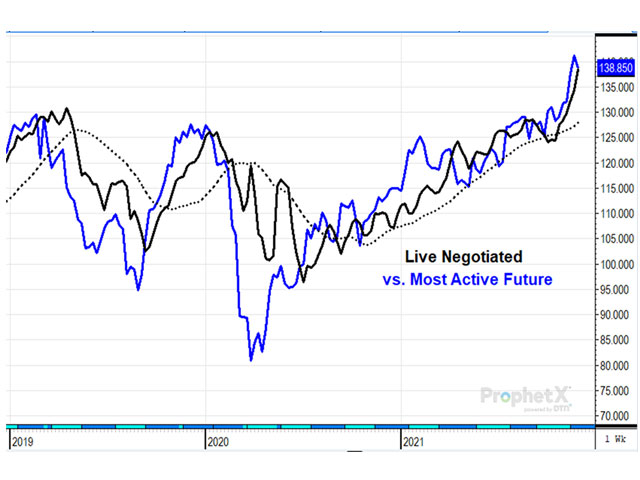
It's hard to say that anything has been more invigorating than the recent rally that's taken place in the cash cattle market. In the last month, fat cattle prices blew through the long-time resistance of $130 and then quickly advanced to $140, which hadn't been achieved since 2014.
However, as the market traipses through the last few weeks of 2021, it won't be a surprise to see the futures market become stagnant from its recent rally and the cash market could follow suit.
With traders likely to be absent from the marketplace during the holidays (both Christmas and New Year's), the market could see a slower pace blanket the marketplace. While traders are enjoying long weekends with their families -- taking the time to sip on eggnog and making multiple trips to the snack tray to grab another piece of peanut brittle -- the market likely could see some pullback from its recent rally.
Not only is it likely that the futures market will see lackadaisical trade, but the cash market will could see pullback for multiple reasons.
P[L1] D[0x0] M[300x250] OOP[F] ADUNIT[] T[]
First, packers have gotten used to the ginormous margins that the last two years have given them and, with the downtrend in boxed beef prices, they could grow reluctant to push cattle as vigorously through their plants. Second, thus far throughout 2021, steer carcass weights have averaged 904 pounds; last year at this time, steers carcass weights only averaged 1 pound heavier at 905 lbs.
The leverage that feedlots have regained in the last month has been powerful and has helped clean up front-end supplies, but feedlots will have to be cautious of carcass weights moving forward if slaughter speeds dip at all.
Lastly, while the cash cattle market has seen tremendous demand -- seeing more than 100,000 head trade during the last four weeks -- this past week packers were able to commit 24% of the cattle they bought for deferred delivery. This means they're building up their supplies and will lessen their need to support the cash market in the weeks ahead.
In the past year, the way that we analyze and understand the relationship between the cash and futures market has changed significantly in the cattle and hog contracts. While it's normal for the cash market to spark a rally and help ignite excitement in the sector, the market heavily relies on the follow-through support of the futures complex to keep its rally thriving.
While we've grown to warmly welcome the market's recent rally, don't get caught off guard if the market trends steady to somewhat weaker through the holidays and into the first part of 2022.
It's important to understand the typical nature of the market's timing. Historically, we've seen great support for the live cattle and cash cattle markets as the year rounds out the fourth quarter; then the market faces a little push back through January and February before charging into March and April looking to make its seasonal high, then dragging its feet through the dog days of summer. What's incredibly exciting about this year's market is the price point that the fourth quarter has reached. With the tremendous rally that the market has recently concurred, and the leverage that feedlots have regained, the market sits in a prime position to capitalize on the spring rally once we get past the lull of the holidays.
ShayLe Stewart can be reached at ShayLe.Stewart@dtn.com
(c) Copyright 2021 DTN, LLC. All rights reserved.