

Georgia Cattleman Shares Leasing Lessons
Leasing Lessons
Whether the need for land comes from drought or expansion plans, leasing pastures can beat buying. "It is significantly cheaper," Dalton Tankersley says. "For someone who doesn't have a lot of money or doesn't want to go in debt, leasing is a lot less risky."
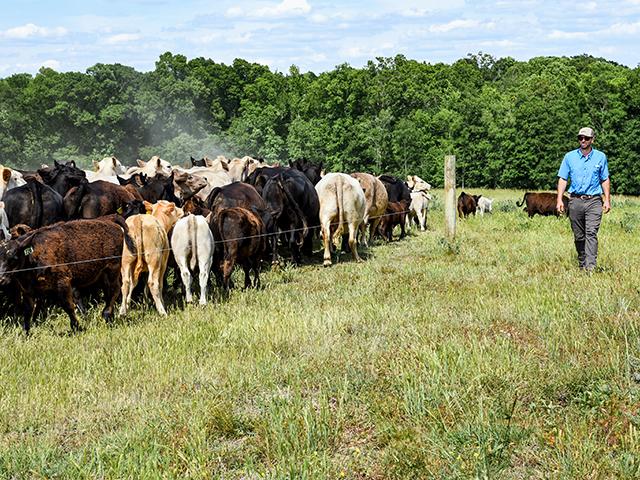
In his case, leasing seven tracts of land gives him more flexibility for his intensive-rotational-grazing system. In addition to the 700 acres he owns with his father, Stan, he estimates he has another 500 acres of leased pastures and hayfields.
The 35-year-old cattleman is fortunate. Unlike in some parts of the country, competition for pastures isn't cutthroat. He says there are only three other producers near his Lincolnton, Georgia, operation, and they don't have plans to expand. Although the population is exploding in the area thanks to nearby Augusta, as well as the popular Clarks Hill Lake area, he feels his leases are generally safe from urban sprawl.
"The thing that saves us is the relationships we've had with these families," Tankersley says. Part of the leases go back to his late grandfather, who leased land from extended family. "More often than not, they'll give us first right of refusal, and they're willing to take a fair amount of money." He says most of the tracts are small, so the cash outlay isn't prohibitive. "We maybe could make it work. The exception is one large place. It's around the lake, so it probably could be subdivided."
WRITE IT DOWN
Tiffany Dowell Lashmet, Extension agricultural law specialist, agricultural law, agrees that leasing rather than buying allows a producer more flexibility. However, it does come with the fear of losing the place, especially with short-term leases. "Then, you have to figure out what to do with your livestock."
In Tankersley's case, all his leases are year-to-year. Every year, he and his father divide the no-frills leases between them and take a day to visit the landowners and get them signed.
Lashmet says Tankersley's leases do meet at least one key criteria. "Leases need to be in writing."
P[L1] D[0x0] M[300x250] OOP[F] ADUNIT[] T[]
"The lease should have basic information, including who the parties are, what parties are involved, how many acres and when the payment should be made," Michael Langemeier, Purdue University agricultural economist, adds.
Both specialists agree the next step is to think about what issues could come up, including water sources and fences, and deal with them when writing the lease.
"That's probably one of the hardest things," Tankersley explains. "I only have to use ponds on 30 acres. On one of my leases, the landlord just lets me hook onto her well at her house so I can use fresh water there. On another lease, we put a waterline from one of our wells through a pipe, under the road, so the cattle can have fresh water."
Fences are another concern on leased land. Lashmet says to figure out who is responsible if fences are damaged or need repairs.
Tankersley says his leased pastures generally don't have good permanent perimeter fencing. If needed, he'll add a strand of electric wire. He also uses temporary electric fences to subdivide his pastures, owned and leased, for rotational grazing. So far, so good. "We'll have calves slip under the wire, but the cows have learned we're going to move them to fresh grass quickly, so they don't test the fences.
"With us being year-to-year, it doesn't make sense to put up significant fencing or water infrastructure," he continues. "If you were getting a five- or 10-year lease, then you maybe could pencil it out so it makes sense."
STOCK IT RIGHT
Langemeier stresses that one of the main things to establish up front is stocking rate. That varies tremendously across the United States. "How many head can they put on a pasture? What happens if it's really dry? Is there a mechanism so the producer has to take the cattle off when it is dry so the cattle don't damage the grass?"
He says the lease should be even more specific than that. "How many feeder cattle are they allowed to stock? How many cow/calf pairs are they allowed to put on there? Without a stocking rate, it's very difficult to come up with a lease rate. You really need to think about pasture leases differently than you do crop leases."
Langemeier says with crop leases, you're looking at so much per acre, but the dollars per acre for pasture don't make sense if you haven't agreed on the stocking rate. "I usually tell people that once you know the stocking rate, the lease per acre should be based on what the lease rate is for a cow/calf pair. It's extremely important to agree on that."
With Tankersley's intensive-rotational-grazing system, the stocking rate, or in his case stock density, changes too much to put it in a formal lease. "It varies through the season and is highly dependent on rainfall, temperature and rate of growth. I'm always adapting."
For example, he might have as many as 200 cow/calf pairs on 5 acres in late winter and early spring, but he'll move them to fresh forage after a day or even half a day. In late summer and early fall, he may stretch that to two days on 5 acres. However, that same 5 acres will get anywhere from 30 to 100 days of rest before it is grazed again.
MIND THE DETAILS
Thankfully, Tankersley's landowners are happy with the results, and because of the high-density grazing and long rest periods, he's been able to reduce the amount of fertilizer and herbicide he uses.
Texas A&M's Lashmet says the landowner and the producer need to agree on additional specifics. "Make sure the termination provisions are clear. How much notice does the tenant get before the lease can be canceled? That's really important if they have to go find more land for their livestock."
She also says fertilizer and herbicide use should be included, not only if they'll be applied but who pays for them.
"Address whether the grazing lease includes hunting rights," Lashmet adds. "Sometimes, the tenant may think that comes with the lease, but the landowner may not have intended that. The landowner may also want the tenant to carry liability insurance."
Tankersley uses plain old-fashioned courtesy when it comes to landowner relations. "A lot of times, it is the little things. Find out what they want. I was listening to a guy, and there was a gate that wasn't working, just small things. People appreciate that."
Whether it is as simple as taking the time to listen or a formal agreement, grazing leases can require a time investment. Still, Lashmet says they are useful. "They allow you to be able to raise livestock without the capital-intensive investment it takes to purchase the land."
[PF_0826]
(c) Copyright 2026 DTN, LLC. All rights reserved.