


Drought Lingers in Northern Plains
Ranchers Adjust Herds as Drought Stretches Into Another Year
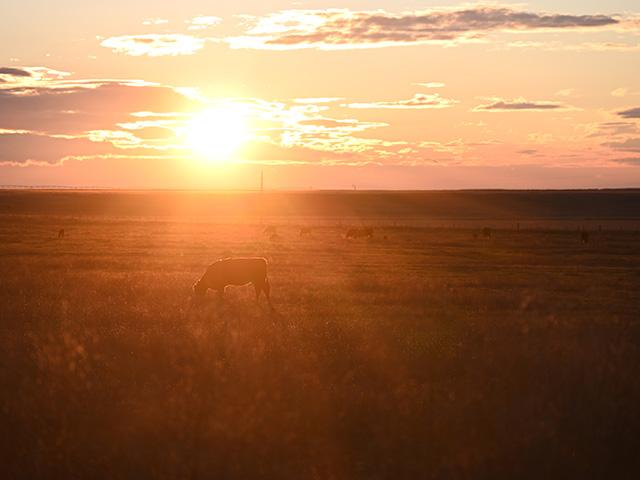
REDFIELD, Iowa (DTN) -- This was a particularly tough year in southeast Wyoming when it comes to moisture. Less snow fell throughout last winter, and this winter is starting drier too, according to Heather Dunmire.
Drought hit many parts of the Northern Plains, as it does every year, but parts of Wyoming and Montana saw the worst of it.
"We may have had enough snow in the mountains last winter to fill some ponds, but it didn't continue into the early spring months, and we have been extremely dry," she said. Dunmire runs Dunmire Ranch Company, a commercial cow-calf operation, with her family near McFadden, Wyoming. "From May through August, we were extremely dry."
Dunmire said they even brought some of their pairs back from the high country early because the water and grass were both lacking. Typically, they would leave cows in higher elevation until weaning in November, but the lack of moisture changed their management this year. This will also affect winter grazing on their ranch because those cattle were on the range they usually use for grazing this time of year. Cows are calved in big, open pastures in May and June. The Dunmires expect cows to calve on their own on the range. "We take care of the ranch, and the ranch takes care of us," she said.
LINGERING DROUGHT AFFECTS PASTURES
Mother Nature hasn't been as kind in 2025, especially after the Dunmires dealt with drought in 2024 as well, following a good growing year in 2023. Hay is flood irrigated, and this year, they put up about 5,000 big round bales, which will be fed in the winter months. This is fewer than they usually have, but it will provide the hay needed for their herd.
P[L1] D[0x0] M[300x250] OOP[F] ADUNIT[] T[]
"We typically graze as long as we can in the winter, but we are short on that grass as well," she explained. Cows are also supplemented with protein tubs and range cubes to ensure they are in good shape for calving. This winter, it will help provide needed nutrition, as well, with the lack of grass.
DTN Ag Meteorologist John Baranick said drought is more limited in this region now due to an active fall season. "Soil moisture is decent across most of the region heading into winter. And winter came early in parts of the Northern Plains with cold and snow right before Thanksgiving that has continued in the first half of December," he said.
Dunmire said moisture in September and early October made their grass greener in the fall than it had been all summer.
FORECAST FOR WINTER WEATHER
Baranick said the cold lurking across the border in Canada will be a constant threat for below-normal temperatures all winter in the Northern Plains.
"Relatively frequent clippers should keep the precipitation going, and hopefully, we gain a good snowpack prior to spring," he added.
Dunmire said they do rely on snow throughout the winter to give them a lot of moisture needed for the coming year. Due to all the circumstances with weather and cattle prices, they were much more stringent on culling this fall.
"On a different year, we may have given some of the cows we sold another chance, but with two years of drought in a row, we weren't willing to risk it. Our hay crop was about 70% of normal, but we will be OK since we had some left over from the prior season," she said. "With the predictions for cold and snow, we hope to get the weather we need."
Baranick said the winter could be rough for the region but may turn into a decent spring. "Depending on how long La Nina wants to last, we could see some cold shots lingering around in March and possibly April; but if we get the snowpack we are forecasting, we should have some good soil moisture out there for early pasture growth," he concluded.
For conditions in the Southern Plains, see: www.dtnpf.com/agriculture/web/ag/crops/article/2025/12/08/ample-spring-moisture-gives-way-fall.
And for Midwest pasture conditions, see: www.dtnpf.com/agriculture/web/ag/news/article/2025/12/02/late-summer-drought-challenges.
Jennifer Carrico can be reached at jennifer.carrico@dtn.com
Follow her on social platform X @JennCattleGal
(c) Copyright 2025 DTN, LLC. All rights reserved.

