


Regenerative Ag and MAHA Now Linked
USDA Launches Regenerative Ag Pilot Tied to Make America Healthy Again Agenda
OMAHA (DTN) -- USDA will spend up to $700 million to help more farmers use regenerative agricultural practices as part of the Trump administration's "Make America Healthy Again" agenda.
The pilot program will use $400 million from the Environmental Quality Incentives Program (EQIP) and $300 million from the Conservation Stewardship Program (CSP) and will also leverage private funding to promote conservation practices such as cover crops while helping farmers reduce the use of chemicals such as pesticides.
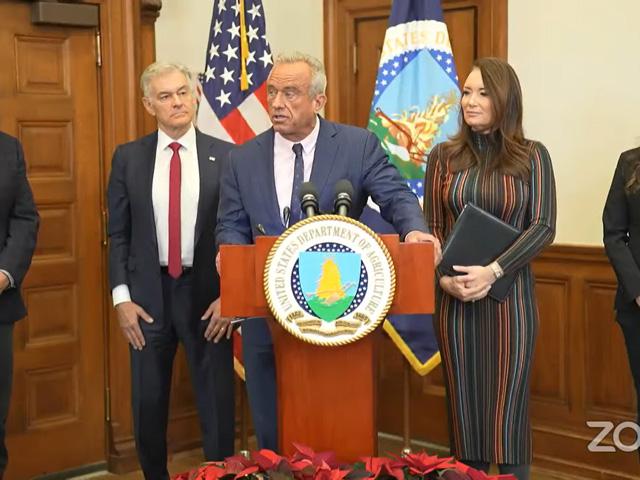
Secretary of Agriculture Brooke Rollins announced the pilot program on Wednesday with Health and Human Services Secretary Robert F. Kennedy Jr.
"Protecting and improving the health of our soil is critical, not only for the future viability of farmland, but to the future success of American farmers, in order to continue to be the most productive and most efficient growers in the world, we must protect our topsoil from unnecessary erosion and boost the microbiome of the soil," Rollins said.
Rollins also pointed out some of the country's health challenges, such as the estimate that roughly 75% of people between the ages of 17 and 24 years old are ineligible for military service because of obesity, poor physical fitness or mental health challenges.
"We all know we're at the point where we must do something to correct the chronic health problems that Americans face," Rollins said.
Officials made the point that regenerative agriculture and new restrictions on the type of foods purchased using Supplemental Nutrition Assistance Program (SNAP) benefits will both tie into how states will tap federal rural health care dollars as well.
Kennedy pointed out the push for regenerative agriculture was a goal of the MAHA report released in September. One MAHA focus is to find a way to make farmers less dependent on chemicals and fertilizer inputs, Kennedy said, and they need a way to transition to a model that emphasizes soil health.
"And with soil health comes nutrient density -- and without coercion, voluntary action gives them good incentives to do well by doing good for themselves, for their children and for the country," Kennedy said.
Saying there are too many chemicals on the land, Kennedy credited farmers who have been using regenerative practices to reduce their inputs. "They are inspiring to the farm community, to all of us who care about good health, about sustainability on the farm, about soil, about water retention, about soil retention," he said.
P[L1] D[0x0] M[300x250] OOP[F] ADUNIT[] T[]
The pilot project will have a streamlined application through EQIP or CSP for farmers that would include "whole farm planning" as the focus to look at soil, water and natural habitat, Rollins said.
"This initiative puts American farmers first as part of the solution to Make America Healthy Again by supporting access to American-grown whole foods that are critical to addressing the chronic disease crisis nationwide," she said.
Under the program farmers' data, results will be measured and "credited" back to the farmer through an outcomes report, Rollins said, "recognizing and rewarding improvements they achieve on their own land."
Aubrey Bettencourt, chief of the Natural Resources Conservation Service (NRCS), said the pilot program would rely on local NRCS offices and their expertise in conservation technical assistance.
"Ninety years ago, this country decided that it was a priority that we keep farmers on the landscape farming to the best and highest ability that they can, technical assistance is foundational to NRCS," she said. "It's something we are never going to stop doing and we will always have a way to provide that."
It should be highlighted that the Trump administration has pressed to reduce NRCS's staffing and Conservation Technical Assistance funding this past year. Through elimination of probationary staff and early retirement buyouts, USDA cut nearly 2,400 NRCS staff this year, roughly a 20% decline in staff. The department's proposed budget for FY 2026 also called for cutting another 1,200 positions and dramatically cutting CTA funding. Congressional appropriators, however, rejected those proposed cuts to the department's budget.
Rollins and Bettencourt also pointed to using private companies such as agricultural retailers as partners in the program, pointing to the "Sponsoring USDA Sustainability Targets in Agriculture to Incentivize Natural Solutions (SUSTAINS) Act". Bettencourt said that would also leverage private dollars for the program.
"So, we're really looking forward to being able to have those measurable results that the farmer has, that those companies can look to and match and leverage against our taxpayer dollars," Bettencourt said.
Rollins also plugged that the regenerative agriculture program would be part of the Office of Urban Agriculture at USDA.
SNAP, FARM TO SCHOOL
Rollins also touted that six more states have signed SNAP waivers that the secretary has championed to reduce the purchase of soft drinks or junk food under the program. At least 18 states now have waiver agreements with USDA, she said.
On SNAP, Dr. Mehmet Oz, administrator for the Medicare and Medicaid programs, discussed the Rural Health Transformation Fund -- which comes from the $50 billion included in the One Big Beautiful Bill Act to partially make up for Medicaid cuts in the law. Oz said one-way states will receive money under the fund is to apply for SNAP waivers.
"If you apply for a SNAP waiver -- and as the six documents here that were signed by Secretary Rollins today would attest there's a lot of interest in this -- you get paid extra money," Oz said.
Along with that, Oz said states would receive more money if they tie in their rural fund programs with the country's new dietary guidelines expected to be announced next year.
"We want to make sure there's a voracious appetite, metaphorically and in reality, for these tasty and nutritious foods, and eating those foods makes you healthier and will save the taxpayers money because Medicare-Medicaid won't have to pay out so much in health care claims," Oz said. "Either pay for it in food or you pay for health care expenses."
USDA also just closed its grant applications for the Farm to School Program that received a record 645 applications. That boost in applications comes after USDA canceled roughly $1 billion in grant funding for the Local Foods for Schools (LFS) and the Local Foods Purchasing Assistance Program (LFPA) earlier this year as well.
See, "Regenerative Ag is Having a Moment," https://www.dtnpf.com/….
Also see, "USDA Budget Plan Slashes Conservation Technical Assistance and NRCS Staff," https://www.dtnpf.com/….
Chris Clayton can be reached at Chris.Clayton@dtn.com
Follow him on social platform X @ChrisClaytonDTN
(c) Copyright 2025 DTN, LLC. All rights reserved.