

Tyson Settles $48M in Pork Price Fix
Tyson Reaches $48M Pork Antitrust Settlement; Industry Payouts Exceed $114M
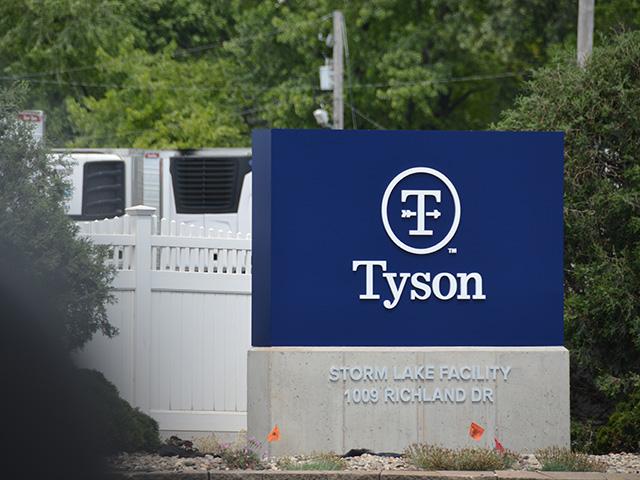
LINCOLN, Neb. (DTN) -- Tyson Foods has reached a $48 million settlement with restaurants, delis and other food service operators who alleged in a 2018 class-action lawsuit that the company conspired with other pork processors to raise prices.
The plaintiffs asked the U.S. District Court for the District of Minnesota to grant preliminary approval in a filing with the court on Tuesday. The settlement comes five years almost to the day after JBS reached a $24 million settlement in the case.
To date, six different settlements have been reached in the case, including with Smithfield, Seaboard, Hormel and Clemens. The Tyson Foods settlement would bring total monetary relief to more than $114 million, according to the court filing this week.
Settlements have yet to be reached with Triumph Foods LLC and Indiana Packers Corp., also among the companies named in the original lawsuit.
"The settlement agreement is the product of extensive litigation and vigorous arm's-length negotiation through a mediator following the court's summary judgment ruling," the plaintiffs said in the filing.
"By the time the settlement was reached, the CIIPPs (plaintiffs) had developed and assessed both their claims and Tyson's defenses after years of litigation."
P[L1] D[0x0] M[300x250] OOP[F] ADUNIT[] T[]
In 2018, several plaintiffs alleged in a complaint that the companies entered into a conspiracy from "at least 2009 to the present to fix, raise, maintain and stabilize the price of pork. The principal (but not exclusive) method by which defendants implemented and executed their conspiracy was by coordinating their output and limiting production with the intent and expected result of increasing pork prices in the United States."
The certified classes in the lawsuit include entities that indirectly bought pork products from the companies from June 28, 2014, to June 30, 2018.
The plaintiffs alleged a conspiracy among the defendants.
"To effectuate and ensure the stability of their price-fixing agreement, defendants relied on a unique industry data-sharing service known as Agri Stats," the original complaint said.
"Agri Stats provided a means for defendants to obtain and monitor critical and competitively sensitive business information regarding each other's production metrics, thereby serving as a central and critical part of defendants' price-fixing scheme, resulting in a remarkably stable and successful anticompetitive cartel."
The plaintiffs pointed to increased concentration in the pork industry as "an ideal zone for collusion."
"Because the industry was dominated by a relative handful of integrators, it was feasible to manipulate price through an agreement among the relatively few dominant players, whose market power greatly simplified the organizational complexity of the price-fixing agreement," the complaint said.
"Further, because none of the largest producers were capable of independently controlling price through their own production, such an agreement was necessary to inflate price."
The lawsuit alleges the industry began showing in 2009, "abnormal price movements. According to aggregate prices published by the USDA, the hog market year average price was at or below $50 every year between 1998 and 2009, before increasing to $76.30 in 2015."
In addition, the lawsuit said pork prices continued to rise into 2018.
"In 2009, 2010, and again in 2013, the pork industry cut production," the lawsuit said.
"The production dip in 2014 reflected the adverse impacts from the deadly pig disease, porcine epidemic diarrhea virus, which took place in the spring and summer of 2014. The decreases in production largely occurred after decreases in pork wholesale prices."
Todd Neeley can be reached at todd.neeley@dtn.com
Follow him on social platform X @DTNeeley
(c) Copyright 2026 DTN, LLC. All rights reserved.