

View From the Range
Alberta Ranchers Rely on 40-Year Seedstock Partnership
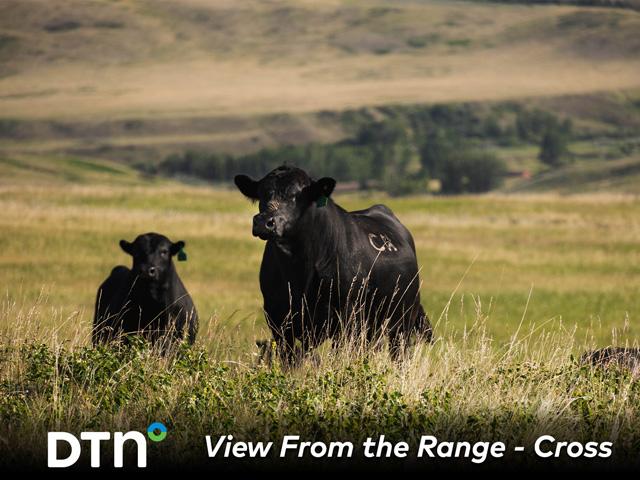
REDFIELD, Iowa (DTN) -- Selecting the right bulls to make genetic advancement while meeting the set genetic parameters of the herd is the goal at Cross Cattle Company.
The Cross family owns Cross Cattle Company in Claresholm, Alberta, Canada, and is participating in DTN's View From the Range series, where DTN will follow a year at the ranch to give readers an inside look at how the ranch operates and cares for its animals.
This segment of the series focuses on how they select bulls to make genetic advancements on their commercial Angus cow herd.
CARCASS AND MATERNAL TRAITS DRIVE BULL SELECTION
"Quality bulls make a quality herd," said Austin Cross, who owns the operation with his brother and their families. "Having a good working relationship with the people you buy your bulls from really helps both operations."
The Crosses have purchased registered Angus bulls from seedstock provider Cudlobe Angus since the mid-1980s. They look for bulls with good carcass attributes as well as producing great females.
P[L1] D[0x0] M[300x250] OOP[F] ADUNIT[] T[]
"It may sound like we are searching a long time for what we want because we want both carcass and maternal traits, but we set the parameters of what we are looking for in the data and then look at the bulls to see if they will meet our goals phenotypically also," explained Austin. "We do keep heifers back as replacements, but we are selling the rest for beef and quality is really our goal. We need to be a quality-based business."
They do want the cattle to have excellent feet and structural soundness because of the large pastures the herd must travel in to graze and get to water.
Depending on the grass growth in pastures, cows are sorted accordingly. If they have to graze specific areas more intensely, cows are in smaller groups with one bull per 20 to 25 cows. But in some years, most of the herd could run in one large group. Bulls must get along to get all the cows bred. They must also have similar data behind them, as the Crosses don't do specific planned matings in their commercial herd.
Bulls typically are kept until 4 years of age, but on occasion they will get an extra year of work out of one. Cows, on the other hand, will stay around as long as they are doing their job of raising a good calf while holding a youthful look. "It's not unusual for us to have a 15- or 20-year-old cow, but you shouldn't be able to pick her out if she has the youthful look we expect from all our cows. Longevity is important too," he added.
The improvements in the herd come on the bull side. That is the reason they can keep cows around longer. "If we know what the market wants and can identify any issues within the herd, we can make changes by the right bull selection," he said. Besides being aware of feet and skeletal structure, udders must be of the proper quality. They cull about 10% of the herd each year to rid the herd of problems to get proper genetic advancements.
A 40-YEAR SEEDSTOCK PARTNERSHIP GUIDES PURCHASES
Most of their bulls come from Cudlobe, with whom they have developed a good working relationship. "We know them well since we've purchased bulls there for 40 years. We look at each other's cows. I think it's important to know what the cows look like that your bulls are out of," he explained. "We don't want to just buy bulls that are fat like feedlot cattle. We want them to be able to work. But they also want to see our cows to be able to help us with the bull selection."
Having that kind of trusting relationship with the family raising the bulls they purchase is important to both sides. "We want to stay in business a long time and have our kids take over our operations and continue to work with each other," Austin said. Selecting the right bulls to make genetic advancements will help Cross Cattle Company be sustainable into the future.
Editor's Note: To see previous stories in this series, go to: "Alberta's Cross Family Will Offer Canadian View From the Range for DTN," https://www.dtnpf.com/…
"From Calgary Stampede Co-Founder to Modern Ranch: Inside Cross Cattle Company's 140-Year Angus Legacy," https://www.dtnpf.com/…
"Alberta Ranch Builds Herd to Thrive in Rugged Terrain," https://www.dtnpf.com/…
"Wintery Spring Storms Test Alberta Ranchers During Calving Season," https://www.dtnpf.com/…
Jennifer Carrico can be reached at jennifer.carrico@dtn.com
Follow her on social platform X @JennCattleGal
(c) Copyright 2026 DTN, LLC. All rights reserved.