


WOAH: Invest in Prevention, Not Crisis
WOAH 2026 Report: Animal Disease Prevention Costs Far Less Than Crisis Response
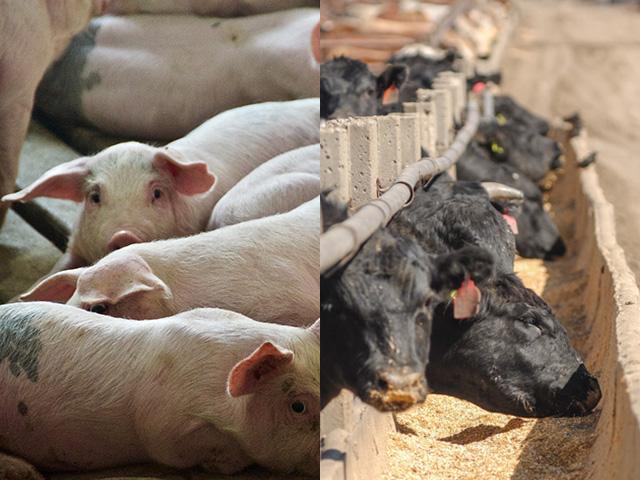
REDFIELD, Iowa (DTN) -- The World Organization for Animal Health (WOAH) released its 2026 State of the World Animal Health Report on Thursday during the group's general session in Paris. The report finds that global spending on animal disease crisis responses vastly outpaced investment in prevention, a gap experts say is both costly and correctable.
Emmanuelle Soubeyran, director general of WOAH, said the trends seen in the report show that the risks and challenges globally are both urgent and actionable.
"Animal health systems sit at the very center of different big challenges that affect food security, economic stability, human health and global security," she said.
Working toward closing the gap between spending on crisis reaction versus prevention will take some shift in mindset, according to Soubeyran. Currently, animal health represents just 0.6% of global health spending, which is less than $1 billion per year. Yet, each year, animal diseases destroy more than 20% of global animal production, equaling $300 billion per year. It's estimated that 75% of emerging infectious diseases in humans originate in animals.
Soubeyran went on to put into perspective the example of how COVID-19, which was likely of animal origin, cost the world $3.6 trillion in a single year.
"In comparison, bringing animal health systems in every country up to international standards would cost only $2.3 billion per year. That is less than one-tenth of 1% of what a single pandemic cost us," she added. "Animal health should not be overlooked. Animal health should not be underinvested."
PREVENTION VS. REACTION IS A COSTLY IMBALANCE
P[L1] D[0x0] M[300x250] OOP[F] ADUNIT[] T[]
The report shows planned investments in animal health systems can help save money and animals.
"I would like to draw attention to an important aspect of this report: the importance of investing, not only in national animal health systems, but also in global infrastructure that connects and strengthens them," said Susana Pombo, president of the council of WOAH. "Without that shared international architecture, national investments alone cannot achieve their full impact."
She explained this can be done by the different sectors of the industry working together, meeting standards set by the World Trade Organization and showing that the animals and animal products in countries are safe. And also by enabling a scientific process that ensures that new vaccines, diagnostics, and tools meet the standards required for safe global deployment. Pombo said partnerships between public and private sectors help to ensure animal health systems are prepared for good food security.
PREPAREDNESS PAYS OFF
Diseases like foot and mouth disease (FMD), highly pathogenic avian influenza, and African swine fever have led to extensive losses of livestock in many countries. The report spotlighted specifics of the past 25 years in the United Kingdom (UK) and where foot and mouth has been found, but affected the animal industry differently. In 2001, an FMD epidemic infected about 2,000 farms in the UK, leading to the culling of more than 6 million livestock. The total economic cost was estimated at over $9 billion. After the 2001 crisis, the UK government strengthened prevention and preparedness. They looked at biosecurity and traceability as well as planning and strengthening the emergency management strategies. When FMD reemerged in 2007, the spread wasn't nearly as vast and was contained in 58 days as compared to the eight-month duration in 2001. Far fewer animals were culled, and the economic loss was just over $54 million.
TRANSPARENCY, COORDINATION KEY TO STRONGER SYSTEMS
Paolo Tizzani, senior veterinary epidemiologist for WOAH, said the transparency and timely reporting of diseases and pests by members will allow the organization to take action to strengthen the response to animal health issues.
"We call on all members to strengthen their commitment to report transparently and timely. In the end, strong animal systems begin with transparency and with solid activity."
Soubeyran pointed out that it's very important to understand there is a link between human health, animal health and environmental health. While animal diseases have been seen to reappear in the same areas more than once, diseases can also reach different countries for the first time. She said it is important to have preventative measures in place and to remember that wild animals can play a part in disease spread, and, in some cases, vaccinations can help prevent the spread.
"There is not a simple answer (to how to improve world animal health). We need to reduce the risk, and that is not easy," Pombo added. "Over 1.3 billion people around the world depend on farmed animals for food and livelihoods. We need to have these in consideration. We cannot make a link only between farmed animals and emergence disease. Avian influenza has shown us the importance of wildlife spreading disease."
The report pointed out that preparedness is far less costly than large-scale crisis response. Preparedness must be maintained as a living system, not a static plan. It is not an administrative cost; it is a hedge against major economic and social loss.
It is also vital to ensure the veterinary network is aware of the guidelines set and what to look for in diseases, both regularly and rarely seen in their area, along with how to treat these in order to prevent extensive loss.
"We are investing more than ever in responding to crises and less than ever in preventing them. We need to close that gap. Disease doesn't recognize borders, and having animal health systems to protect the animals is what is important," concluded Soubeyran.
Jennifer Carrico can be reached at jennifer.carrico@dtn.com
Follow her on social platform X @JennCattleGal
(c) Copyright 2026 DTN, LLC. All rights reserved.