



Cash Market Moves
Spring Wheat Planting Slowed by Cold Soil and Wet Fields
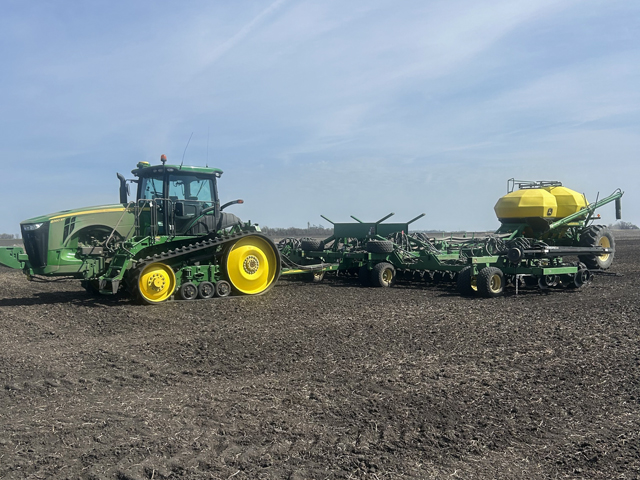
The theme among most of the farmers I spoke with in the past 10 days has been how late planting is because of weather. It isn't helping that North Dakota and parts of South Dakota are still seeing freezing temperatures for their morning lows. The National Weather Service on May 1 issued freeze warnings from 1 a.m. to 8 a.m. CDT Saturday, May 2, for much of North Dakota and central, east-central, south-central and southeast South Dakota.
Here is what various farmers and elevator managers told me about spring wheat planting and other crops. There have been a few success stories, but not many.
"We planted 566.7 acres of spring wheat," said Chris Johnson, C&S Farms Inc., Great Bend, North Dakota, on April 22. "Twenty-five years ago, we put in about 1,200 acres. Gradually less and less goes in. Conditions very good for our Fargo Clay soils. About a week later than average for my area."
In eastern North Dakota, Darrin Schmidt said, "As of April 28 we have not seeded a field yet, but I would think by tomorrow or the next day we'll be seeding our first field of spring wheat. Seems to be highly variable on guys starting or not. Usually, guys east of us start a week or two ahead of us and that isn't the case this year. We plan on around 45-50% of our usual acres. Financially with all the discounts that can pop up, it's hard to make wheat cash flow this year.
"The market has rallied these last few weeks so that makes breakeven closer, but it kind of depends on if you booked all your fertilizer or not. Fertilizer availability isn't an issue, but cost definitely is. Last time I checked it was $940/ton for urea, and a sales agronomist said it could be over $1,000 in season. So if you have to buy that, it'll hurt the pocketbook. We booked all to most of ours in December, but there are a few that didn't and they will have a tough time breaking even. With the rise in fertilizer price, my crop plan was set in stone when that happened. Couldn't change it if I wanted to, and I can't imagine it isn't the same for other farmers."
Cory Tryan, grain manager at Alton Grain Terminal LLC, Alton, North Dakota, said as of April 29, "Ground temps are cold yet and soil condition is barely ready. They are spreading fertilizer and have only planted a few fields of spring wheat. Most of the fertilizer was pre-bought last fall, with current inventory near full. Not expecting any big changes in rotation unless weather dictates it going forward."
P[L1] D[0x0] M[300x250] OOP[F] ADUNIT[] T[]
Austin Sundeen, east of Devils Lake, North Dakota, said, "Spring is taking its sweet time showing up this year. As I write this Friday, May 1, we woke up to a cool 25 degrees Fahrenheit with more cold weather coming the middle of next week. A few guys have got a little wheat in south of me 20 miles, but that's about all that's been going in the ground. We started putting down phosphate ahead of soybeans to keep from going crazy in the shop.
"Fertilizer prices have had some changes to guys' operations, but luckily I had all booked last fall. With that said, I think wheat acres will be down this year and bean acres will be up. We have a little durum going on again for a neighbor we custom farm for, but that's all I've heard about that crop around here. Corn continues to be king in our operation and the rise in price over the last week makes that look like a strong move. We fell behind this spring, but the calendar says not to worry yet and precipitation in the 10-day looks low. With all that being said, I think there is a little more optimistic outlook on this year than a few months ago."
In East Grand Forks, Minnesota, Matthew Krueger on April 30 said, "No corn in yet, but starting wheat tomorrow (maybe). Still waiting on low areas to dry fully. It's still quite wet underneath and so we have to make sure even with spreading we're not compacting the soil. Soil temps are warmer than I thought, around 43-46 degrees, and honestly I would have thought them to be closer to 30 than 50 with our air temps. Hope to be rolling on corn by next week. At that point I'm looking at the calendar versus soil temps. Fertilizer was all booked earlier so no crop plan changes. Company has the tons there too so we should be good. Now 2027, who knows. Ha."
Matt Undlin, Lansford, North Dakota, said on April 29, "Last year I was all corn and beans, but this year one-fifth of the acres will be back to hard red spring wheat (HRSW). Fertilizer availability is not an issue, but the fluctuations in price have been bothersome. This year the temps have been cold and we are sitting with a little extra moisture, so we are going to start this weekend, which is probably about average starting date in our area. This area is going to be mainly corn, soy, sunflower and canola. The price rise recently is buying more HRSW acres though."
In western North Dakota, Riley Schriefer said on April 28, "Just getting started. The oats are in and we are progressing through some spring wheat before we start canola. Temps have been getting really cold at night yet. There is more wheat than normal here due to rotation. Sufficient moisture in the fields so far. No fertilizer issue; we pre-bought 100% of our needs before the Iran conflict."
On April 29, Allan Rohrich, Zeeland, North Dakota, said, "We have not started spring wheat yet. A low of 23 degrees overnight yet. Cold temperatures and wet soils have been holding us back. Acres are about 60% of normal. Fertilizer was purchased early for the acres we had planned. No added acres even with a price rally now because of the increase in fertilizer prices."
A farmer in northeast Montana said, "Planting underway -- hectic as usual. We were a little short-bought on urea so will buy some expensive stuff to average up the prices and will cut back on planted acres again due to input increase and lack of reserve moisture. There will be lots of lentil acres due to no N (nitrogen) needed, but those prices are also muted compared to years past. We had an inch-plus snow/rain event 7-10 days ago so seeding conditions are very good and fallow ground will grow a crop."
Art Schultheis, Diamond-S Farms Inc., Colton, Washington, said, "Our local area is about 3 inches above normal for rainfall for the crop year starting Sept. 1. We really did not have any winter other than some cold temperatures for a few days here and there and we mostly had a small amount of snow cover when it was cold. We saved every bit of moisture we received over the winter. We have a great start to the year after three years of below-normal precipitation. Our winter wheat looks fabulous for this time of year. It looks to be at least 10 days ahead of normal for growth as it grew all winter. We will need continued moisture to support all the growth. Due to the price of wheat and MPCI-RP price guarantee, we re-cropped more acres than usual last fall as winter wheat will pay better than spring wheat.
"We planted our spring wheat on March 26 (about a week ahead of normal) and it was emerging on April 11. That was the last time I was at the field as it is on a dirt road that has been inaccessible due to recent rains. We only planted 130 acres of soft white spring wheat. The numbers just don't work well with costs and prices, but we are raising this field for seed for my son's brother-in-law who farms 70 miles north of us. They clean and treat their own seed but don't have enough storage bins, which we have."
Schultheis added, "Trying to find niche markets to survive these days. We were able to get a seed contract on some forage oats that will pay better. We also swapped some acres to canola when we were able to contract spring canola for August delivery at $24.80/cwt."
Ryan Wagner, Wagner Farms, Roslyn, South Dakota, said, "We got started on spring wheat April 23 and got three days of seeding done before rains put a halt to things Sunday and Monday. Hoping to get back in the field this weekend and get finished up, but a lack of heat and sunshine is making the drying process slow. We are sticking with our typical rotation and seeding roughly the same amount of acres as we normally do and were fortunate to get all our fertilizer down in the fall." Wagner also told me on April 30 that soil temps were in the upper 30s to low 40s and there were very few row crops going in around him.
"In the 25 years of farming, I have come to realize it's always something -- weather, commodity prices, politics, input costs, etc. -- and at the end of the day, we just do our thing and do the best we can and try to make some money to provide for our family," Undlin said.
Mary Kennedy can be reached at Mary.Kennedy@dtn.com
Follow her on social platform X @MaryCKenn
(c) Copyright 2026 DTN, LLC. All rights reserved.