


Chart a Roadmap for Retirement
The Road to Retirement
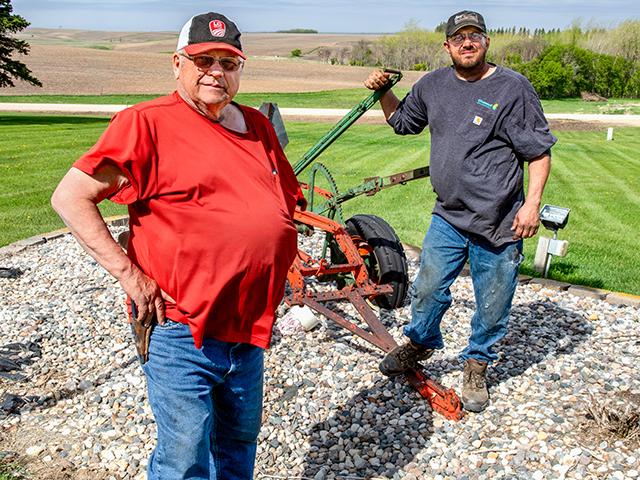
Driving off the farmyard on the day he moved to town remains fixed in Bob Worth's mind.
He'd be back the next day to do many of the same chores as always. But, passing the responsibility of overseeing the Lake Benton, Minnesota, farm to his son, Jon, was the end of a way of life. Memories and love for this place were -- and still are -- rooted as deep as the trees surrounding the family farmstead.
"I knew it was the right thing to do," Worth says. "I've seen too many farmers hold on too long and never give their successor a chance. And, I wanted to send a firm signal to Jon and to those we do business with that there was a change of leadership happening on our farm."
Of all the challenges farmers face, none is more daunting and few more important than planning their eventual retirement, says Dick Wittman, a northern Idaho farmer and farm family business consultant. Family business and succession discussions often focus on the incoming generation, when there's still a need to think about how to make the exiting generation feel valued, appreciated and relevant, he notes.
And, in agriculture, there's a deadline looming. According to the 2022 U.S. Census of Agriculture, the average age of all U.S. farm producers is 58.1 years. For the first time in history, there are now more farmers 75 and older than under the age of 35.
ELDER MATTERS
Everyone has seen the T-shirts: "Of course I have a retirement plan. I plan on farming." Or, "Born to farm. Forced to retire."
Wittman passed the general manager title of his family's 20,000-acre dryland crop, range cattle and timber operation to his daughter, Cori Wittman Stitt, in 2017. While he's advised many farm families on how to travel the rocky road to retirement, he admits that his own family still hit some potholes.
After he retired, Wittman remembers watching the management team freeze when he entered the Monday-morning farm-planning meetings and realized they thought he was there to quarterback the sessions or to second-guess decisions.
"In hindsight, my wife, Dawn, and I probably didn't think of the consequences of building a new house near farm headquarters. These days, I make sure I'm not on the grounds unless requested to attend those meetings," he says.
Still, the feeling of being dismissed or discarded after years of building and tending a business can be real, Wittman acknowledges. There's the question of what to do with all that accumulated institutional knowledge. Peer congratulations upon retirement can feel more like a death sentence for many who are the exiting generation.
"For people who are healthy and enjoy life and enjoy working, we need to focus more on the term transition rather than retirement," he says.
"Most of my clients at this stage in my career are people that have had success. They've got people following their footsteps, but most of the exiting managers are still owners. They enjoy staying involved. The biggest challenge is how to get out of the way without going away."
The financial structure of farms today can be a complicating factor. When Wittman assumed management from his father and uncles in 1980, it was possible to structure a 20-year buyout that gave the elder generation financial security without saddling the incoming generation with crippling debt.
"Today, there are often multiple entities involved, and many of those may be asset-holding entities that are not operating entities. Oftentimes, retiring principals are holding the bulk of the family capital," Wittman says, noting that in those cases, transitioning management and transitioning ownership occur over different time cycles and are seldom simultaneously connected.
"You can work for years to train future leaders to be the managers, but on the date of the official transfer management to the new CEO, the person transferring that power might be holding 80% of the business capital," he says.
"The next generation of successors is clamoring for the exiting generation to get out of the way so they can run the business. But, they need to understand that they are accountable to the capital owners, which are, in effect, board members," Wittman says.
HAVE THE TALKS
While there's nothing simple about charting a roadmap for retirement, and every person is different, not having a plan can lead to disappointments for all involved.
Bob Worth was only 53 when he made the choice to head to town. Today, at age 74, he isn't sure when he'll quit farming completely. His wife, Gail, retired from her off-farm accounting job several years ago but still does some of the recordkeeping for the farm.
Bob makes the one-mile trip to the farm most days and works from the shop. Climbing into the combine and semi isn't as easy as it once was, and he has been turning more ground over to Jon, who is now 52.
"Our arrangement has worked out better than I would have ever imagined," he says. "I don't have to get up in the night and worry about the grain dryer. We have a core group of friends we share time with, and Gail likes it better in town because she has neighbors around her."
P[L1] D[0x0] M[300x250] OOP[F] ADUNIT[] T[]
Bob says Jon seemed born to farm, buying machinery when he was in high school and farmland soon after. Their daughter, Kimberly, followed a life off the farm and landed in California.
After Jon attended vocational college and married, he began to search for a building site for his own operation. That set off a round of family discussions that resulted in a decision that a single main farm site made the most economic sense and cemented Jon's spot as an integral part of the family operation. At the time, Jon was living in town in a home purchased from his grandparents, so the two couples sold each other their respective homes.
With the help of an attorney, they drew up an agreement, which included allowing Bob to retain access to the farm shop and store equipment. Decisions on how to eventually divide the land assets were also established to ensure Jon eventually inherits property adjoining the farm site he now owns and is protected on the remaining land if it sells. The agreement is revisited every two to three years.
One thing Bob insisted on while coming up with terms was early and frank communication with all parties concerned. "We are so fortunate in this family because I think we all understand these things take compromise," he says. "Our plan may not be perfect, but everyone understands the why behind it."
Jon may now manage the operation, but he is quick to say his father is far from retired. "Occasionally, there are days when he shows up at the farm to work, and I might have to tell him I need the day to be with family," he admits.
"But, what I appreciate is Dad's willingness to embrace new ideas. To those working with parents of this age, I'd just say have patience. Not everything is always going to work for them the way it once did. But, the experience they have to share is better than what you'll find on the internet."
NEXT STEPS ON THE PATH
Bob's dance card is full of commodity association work and community involvement. He's serving his second term as president of the Minnesota Soybean Growers Association. He's been mayor of his small town. Although he tries to always be around during peak farming seasons and keeps Jon informed of travel obligations, he says he feels freer to pursue those activities in this stage of life.
Service activities are wonderful ways to fulfill the need to be needed, Wittman agrees. He's seen farmers who have worked hard in life double down on working in an attempt to deny or stall change.
"This should not be a time to grieve," he says. "It should be a time to ask yourself what you get to do next."
One of the surprises Wittman has experienced is the satisfaction in rekindling some friendships. Hardly anything stands in the way of his racquetball games.
"The incoming generation can have a role in helping the elder generation develop some of these opportunities and relationships," he says. "Don't ignore that the outgoing generation might be struggling as you push ahead. After all, someday, you'll be on this side of the fence."
Sidebar:
TIPS FOR FARMING TRANSITION
For the Retiree:
-- Plan your exit strategy and begin early. Is your next chapter to depart entirely or be Chairman of the Board?
-- Think about income. Don't strangle yourself to feed the farm. Start with a solid pre- and postretirement cash-flow projection. You will likely be surprised that you are more cash flush after retirement than you thought.
-- Find a hobby, a second mountain to climb or a worthwhile distraction upon retirement. Active people manage better when they find purpose in the second half of life. Don't forget the spouse. Their role is not to babysit you.
-- Look at retirement as an opportunity to service important relationships with folks you've neglected because you were "too busy."
-- Respect generational boundaries. You've turned it over, now let it succeed. Don't be afraid to give mutual permission to call out offensive behaviors with grace. Most want to succeed, they just haven't had any practice at this, as you only get one shot.
For the Incoming Generation:
-- Respect your elders and their wisdom. Remind them they matter.
-- Don't expect to manage the farm and ignore the bills. The Bank of Dad and Mom can be an effective financial tool, but entitlement isn't fair to the exiting generation or off-farm heirs.
-- Respect the rights of majority capital providers to hold successors accountable, especially when incoming leaders are risking others' capital.
-- Talk about "elder care" and who is responsible when aging intensifies.
-- Respect the outgoing generation's boundaries. Don't expect them to instantly go away and then drop everything when you need them on the farm or for babysitting.
-- Watch the exiting generation for signs of struggle. Retirement can be emotional. Don't forget to add them in your off-farm life, too.
Sidebar:
IN MEMORIAM: MAKE TRANSITION OF OWNERSHIP A GOAL
Ray Gaesser wasn't sure he intended to ever fully retire. But, he and his wife, Elaine, were adamant about transferring the management and ownership of the Corning, Iowa, farm business they'd built together.
Gaesser died in a farm accident on Sept. 5, 2026, just weeks after being interviewed and days after being photographed for this article. At 73, Ray had a lot of living left to do. He and Elaine were planning a bucket-list trip to Alaska.
When the farmhouse was renovated, the couple made it handicap accessible to ensure their ability to continue to live there as they aged. On the edge of the house, he installed a tower with an observation deck where he sipped coffee each morning and looked out over the land and crops he loved.
That all changed in an instant, but then again, it didn't. The family was well down the path of a farm transition.
Ray would get emotional about how happy he was the day their son, Chris, then a seed company agronomist, came home to help with the 2009 harvest and indicated an interest in returning to the farm full time. By then, their daughter, Jenny, was pursuing her passion as a vocal music teacher at a nearby high school.
"We told both kids when they were younger that we had a place for them if they wanted to farm," Ray recalled. "If not, find something you really want to do; that you could make a living at; that was legal." The couple also encouraged their children to experience employment elsewhere to learn management skills.
Chris began buying into the farm business at 5% per year. By the time he married Shannon in 2019, he was a 50-50 partner. Shannon, with a degree in business, assumed Elaine's duties as office manager.
That freed Elaine up to follow some volunteer opportunities that she enjoyed. It wasn't long before one day a week of clerking at a nearby charitable store turned into nearly a full-time mission.
By 2022, Ray had phased back to farming 550 acres. This parcel, located near the farmhouse, gave him some autonomy on decisions. Meanwhile, he claimed running the sprayer and planting cover crops as his main jobs when reporting to Chris. By the time of his death, the incoming generation was closing in on 90% ownership of the business. The parents retained land ownership.
The plan wasn't perfect, father and son agreed. "We encountered some taxes that we maybe could have avoided in the transfer of machinery and other assets," Chris recalls. "However, it was easier for Dad to let go than I would have thought, and I still had him as skilled labor."
MORE THAN THE FARM
Ray and Elaine started the farm as first-generation owners in 1977 and survived the farm crisis. Faith and a family with a gift of laughing together were key to accepting the next chapters in life. So was a life beyond the farm. His involvement in agricultural organizations, including as former president of the American Soybean Association, and community was next level.
"Farming was never our complete life," Ray said. "We've always been big on volunteering. It's good for mental health to have things beyond the farm.
"I was not going to be that 80-year-old guy with a 60-year-old son who didn't know how to manage the business," he added. "It starts with a mindset of having the responsibility to our next generation to help them be successful and provide them opportunities."
[PF_1126]
(c) Copyright 2026 DTN, LLC. All rights reserved.