


Under the Agridome
As Combines Roll, American Subsidies Loom Large
Editor's Note: Today DTN is sharing content by that is normally reserved for paying customers. Not a subscriber? Check here for a trial: https://www.dtn.com/…
**
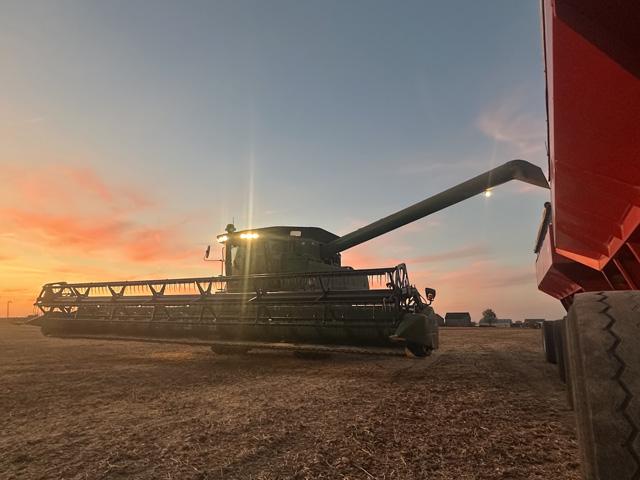
It's been another solid week of harvesting in southwestern Ontario. About 80% of the Ontario soybean crop has been harvested. In some areas of the province, it has been a bitter harvest as dry weather gave very poor yields. In other parts of the province such as the deep southwest where I reside, harvest has been good. As I drive around the farm country there is very little left in the field. It just so happened your loyal scribe has one of those fields where a long maturing variety is taking its time.
I will get to that; it will just take a little bit of patience and good weather. Hopefully it won't make the combine groan too badly. Soybean prices have actually been up and down during the last few days. Last Wednesday they closed above the 100-day moving average only to lose that the following day and close down near the 50-day moving average. It would seem without a World Agricultural Supply and Demand Estimates (WASDE) report this month, because of the government shutdown, the market seems to be a little bit more attune to these technical factors.
Of course, as always, it's hard to say. For a Canadian writer with a large U.S. audience, it doesn't do me any good to try to decipher the nuances of American politics. Having said that, the U.S. government is shut down now and that means that USDA services for the most part are as well. That means no WASDE this month and who knows what.
P[L1] D[0x0] M[300x250] OOP[F] ADUNIT[] T[]
Interestingly, there is something else going on within the agricultural landscape not unseen. That is the spectre of a large subsidy announcement from the U.S. government going toward American farmers in the next few days. I have been inundated with reports being sent to me of how much this is going to be. I have read reports of an announcement from $15 to $50 billion going out to American farmers during the next few weeks to help them deal with the trade war.
It is hard to speculate how much this will be, but I believe it will be substantial. As I've said many times in my almost 39 years of writing this column, all American governments take care of their farmers. I have seen that continuing during the last 39 years. I expect no less this time. I expect a substantial infusion of tariffs collected from American importers will find its way into American farm country. President Donald Trump mentions farmers often and I believe this is very likely in the mix.
As Canadians, we can argue why this is happening. However, the answer is it's simply an U.S. political solution to a uniquely American problem. Maybe trade wars aren't so easy to win. However, there is always a way to smooth things over.
From an agricultural economic perspective, this type of massive infusion of public money into farm country distorts the agricultural economy badly. It simply takes this money and re-capitalizes it back into fixed farm assets -- usually land and equipment -- making them more expensive. However, I get it as a farmer. U.S. soybean prices have been torched in some areas of the country because of the Chinese reaction to American tariffs. There will be lots of U.S. farmers who need the money and of course everybody will take it. All the signals that come from the market will be twisted in the wind, throttled by all of those subsidy dollars.
We will be spectators like we have been many times in the past. You will remember the past infusions of subsidy money in the first Trump administration in a similar trade war with China. On the contrary in Canada, we are on the receiving end a punitive tariffs on Canadian canola from China as well as steel and aluminum from the United States. The difference here is the farm subsidy cavalry is not coming. No Canadian government in 2025 so far showed any intention of doing anything like the Americans are about to do.
So, brace yourself for big news on the subsidy front, because it's about to happen in my mind. On the flip side of all this, it seems like we have market action in both corn and soybeans where we're seeing futures spreads tighten. In other words, it almost seems like the big supply that we were told is there is not quite as big as we thought. However, we don't have an October WASDE report to help sort that out. Maybe it will happen in November.
Meanwhile, back in Ontario, some farmers are rushing to harvest corn to take advantage of early premiums in the Ontario cash market approaching $7 a bushel. Ontario cash prices have been helped by a Canadian dollar at a four-month low of 0.7144 U.S. and relatively poor supply in some parts of the province. I guess at this point we'll take that, especially when we look south and see what is coming for our farmer friends in the U.S.
The challenge ahead for Canadian farmers in this environment is to stay nimble and realistic. We operate in a world where our U.S. friends often get the lion's share of the help when times get tough. Sure, it's frustrating to watch billions of dollars flow south of the border, but we've seen this movie before. So, as combines roll through the last soybean fields and corn dust fills the autumn air, keep an eye on the markets, keep your head on straight, and remember, politics may move the money, but the market sets the truth.
**
The views expressed are those of the individual author and not necessarily those of DTN, its management or employees.
Philip Shaw can be reached at philip@philipshaw.ca
Follow him on social platform X @Agridome
(c) Copyright 2025 DTN, LLC. All rights reserved.