



An Urban's Rural View
Is the Low-Interest-Rate Era Ending?
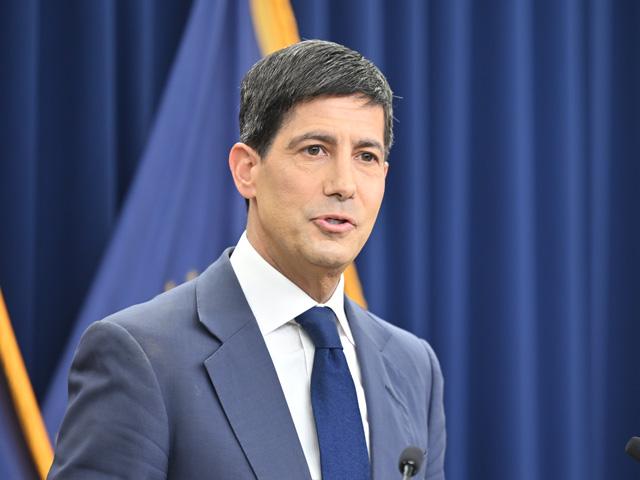
The Federal Reserve's quarter-point interest rate increase may not be the first of many hikes, but it ends, for now at least, the prospects of interest-rate cuts. That's a disappointment for farmers and other business borrowers, not to mention President Donald J. Trump.
In unanimously raising the benchmark rate to a range of 3.75% to 4%, the rate-setting Federal Open Market Committee (FOMC) released projections by 18 of its 19 members that there will likely be one more quarter-point increase this year to a rate of around 4.1%, a rate projected to continue through next year. (There were only 18 projections because Fed Chair Kevin Warsh refuses to make them.)
But while they're not forecasting numerous big short-term increases, the FOMC members definitely don't see interest rates coming down any time soon. The big worry for farmers and other business borrowers is whether -- short of a financial crisis or the economy stumbling into a deep recession -- we'll ever see low interest rates again.
The Fed's decision to raise rates will test Warsh's considerable political skills. President Trump appointed Warsh thinking he'd cut interest rates. Trump recently threatened to end trade with any country that has a trade surplus with the U.S. if the Fed failed to lower rates. He launched a criminal investigation of Warsh's predecessor that looked like a pressure campaign for rate cuts.
Asked about dealings with the president at a press conference after the rate increase was announced, Warsh ducked. What I would give to be a fly on the wall at their next conversation!
The president has his reasons for wanting lower rates. Every president wants them -- they juice the economy -- but no president until now has had a $40 trillion federal debt to service. Interest payments have risen to the point where they exceed government spending on national defense. Higher interest rates make the problem worse.
P[L1] D[0x0] M[300x250] OOP[F] ADUNIT[] T[]
Congress, however, gave the FOMC two jobs -- foster maximum employment and keep prices stable. The Fed's mandate does not include easing the government's debt-financing burden.
At his press conference, Warsh said, "The labor side of the committee's remit is in good shape," with a low and stable unemployment rate and a generally strengthening economy. On the other side of the remit, inflation has been above the FOMC's 2% goal for five years and hasn't shown recent signs of easing.
"Inflation is too high and has been for too long," Warsh said. He described the quarter-point interest rate hike as a step toward a "timelier return" to the 2% goal. He promised the FOMC will deliver price stability.
Even before the Fed's rate hike, which will mainly affect short-term interest rates, market interest rates on longer-term bonds were rising. The 10-year Treasury yield has recently risen to as high as 5.04% for the first time in 20 years.
Some of the reasons for this market trend could disappear in time; an end to the Iran War would help, and business-cycle history suggests the economy won't be strong forever. But it's also possible we're seeing a change in underlying supply and demand fundamentals. When borrowers want more funds than lenders are eager to lend, interest rates rise.
Demand for funds has indeed been rising. Warsh cited "competition for capital" from data center and other AI "hyperscalers," which is real. While Warsh didn't mention it, the U.S. Treasury's borrowing needs have shot up, as have other countries' borrowing needs.
On the supply side, some of the big foreign investors in U.S. Treasuries -- Japan, China, EU countries -- are, for a variety of reasons, pulling back.
In response to the 2007 financial crisis, central banks around the world, including the Fed, cut interest rates sharply. Since then, rates have fluctuated but in general have remained at relatively low levels. Some economists think this low-interest-rate era is ending.
If they're right, that's bad news for farmers. A couple of years ago, former DTN lead analyst Todd Hultman enunciated what I've been thinking of as the 3% rule: A federal funds interest rate below 3% would take some of the pressure off the ag economy.
But what if that benchmark interest rate never gets below 3%, or takes years to get there? Estimates I've seen of the average historical federal funds rate range between 4.5% and 5.5%.
Another major financial crisis or a worldwide recession could bring it back. Whatever its effect on interest rates, that's not something farmers should wish for.
Urban Lehner can be reached at urbanize@gmail.com
(c) Copyright 2026 DTN, LLC. All rights reserved.

