



Southern Plains Moves to Dry Winter
Ample Spring Moisture Gives Way to Fall Drought Across Southern Plains
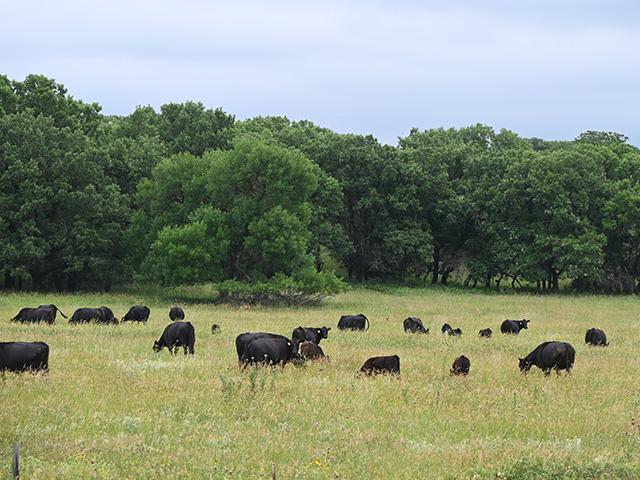
REDFIELD, Iowa (DTN) -- The 2025 grazing season started out with ample moisture in the Southern Plains and gradually got drier, especially in central Oklahoma.
"We had a great spring. What started out dry was corrected with a lot of moisture in March and April," said Oklahoma cattleman John Griswold. Griswold and his family raise cattle in two locations in Oklahoma, with the headquarters in Stillwater and another ranch in Poteau. They have a female sale in the winter and a bull sale in the spring, which takes some extra grazing days and hay.
Griswold said they make a lot of hay on their ground to feed the cattle, and they will purchase alfalfa hay to use in the total mixed ration for the bulls fed for their sale. "We actually had to bag some of our hay this spring because of the excess moisture," he said. "But there was a lot more hay available around our area because of the rains as well. The rains stopped in August, and we had one of the hottest and driest falls we ever have."
DROUGHT HAS BEEN HIT-OR-MISS
DTN Ag Meteorologist John Baranick said drought has been hit-or-miss across the Southern Plains this fall.
"It's been ebbing and flowing, as well as Texas started to really increase the coverage before getting some heavy rain at the end of November," he said.
P[L1] D[0x0] M[300x250] OOP[F] ADUNIT[] T[]
There is currently lighter drought coverage in the area, but some deep pockets are in the D3, or extreme drought category, especially in the southern half of Oklahoma and portions of southern Texas. Baranick said soil moisture maps showed mixed conditions where there are streaks of some really dry soils, while there is good soil moisture in other areas for this time of year.
Griswold said in late September armyworms destroyed a large wheat field they had planted for grazing.
"It just happens basically overnight. We had been checking the field, and it was just gone. If you see one of those armyworms, there will be a lot," he said. "We also feared they could get in our range grass."
The wheat was redrilled in November, and Griswold said a good rain helped get the wheat growing again.
TIMELY MOISTURE HELPED
Griswold said he's thankful for the moisture they received this year, as it will help them get through the winter months and be able to keep cows out on grass while supplementing them with a protein feed as needed. "We don't overgraze grass through the summer, so we can have enough to graze in the winter," he added.
Baranick said the Southern Plains may have mixed conditions over the winter.
"Being in a La Nina favors a storm track that is sort of split. The primary one should favor clipper systems well off to the north, leaving the region dry," he said. "However, a secondary one is forecast to come more alive with time, with a storm track from Texas into the Northeast."
Baranick said the western areas of the region are less likely to see beneficial rainfall, but the eastern areas could see some significant periods of rain, especially in February and March.
He expects some areas of the Southern Plains to see increased drought continuing in the springtime, which could have some major effects on cattle grazing conditions.
See Midwest pasture and range conditions predictions here: https://www.dtnpf.com/….
Jennifer Carrico can be reached at jennifer.carrico@dtn.com
Follow her on social platform X @JennCattleGal
(c) Copyright 2025 DTN, LLC. All rights reserved.

