


Traditionally Red States Flip Senate Seats
Historic Midterm Win for Democrats, Flipping Senate and Governor Seats
This article was originally published at 6:53 a.m. CST on Wednesday, Nov. 4. It was last updated with additional information at 7:04 a.m. CST on Wednesday, Nov. 4.
**
WASHINGTON (DTN) -- In a stunning rebuke of President Donald Trump and his administration's agenda, Democrats made major gains in Tuesday's midterm elections, flipping control of the House and Senate and winning several traditionally Republican-held seats in states with significant agricultural interests.
By Wednesday morning, Democrats had won 255 House seats, surpassing the 218 needed for a majority and flipping 16 red districts to blue. In the Senate, Democrats flipped seven seats to secure a 54-seat majority.
The party is on track to win its largest House majority since 2008, when Democrats won 257 seats. As of early Wednesday, 68 races remain outstanding.
The results set a new trajectory for the 120th Congress.
Democrats will face pressure to address rising fuel and agricultural input costs, trade concerns and the effects of global conflicts on agricultural markets while needing to find compromises with the White House.
CONGRESSIONAL LEADERSHIP
The election will bring significant turnover to the House and Senate agriculture committees.
House Agriculture Committee members facing defeat include Reps. Zach Nunn, R-Iowa, Rob Bresnahan, R-Pa., Monica De La Cruz, R-Texas, and Derrick Van Orden, R-Wis. In total, the committee is expected to see 11 members leave, with Rep. Brad Finstad, R-Minn., still awaiting results in his closely contested race.
In the Senate Agriculture Committee, four members are retiring, one lost reelection and two are leaving the Senate to pursue other offices.
Sen. Tommy Tuberville, R-Ala., won Alabama governor's race, while Sen. Amy Klobuchar, D-Minn., won Minnesota governor's race.
One of the Senate's biggest incumbent losses was Sen. Roger Marshall, R-Kan., who lost his reelection bid to Democrat Adam Hamilton, 51% to 46%, with 95% of votes counted. Marshall faced election-year criticism over his medical practice and his relationships with Proposition 12 adversaries, including independent meat producers and animal rights activists who spent an upward of $30 million on Midwest campaigns, including his. Kansas had not elected a Democrat since the 1930s, the longest streak in the country until Tuesday.
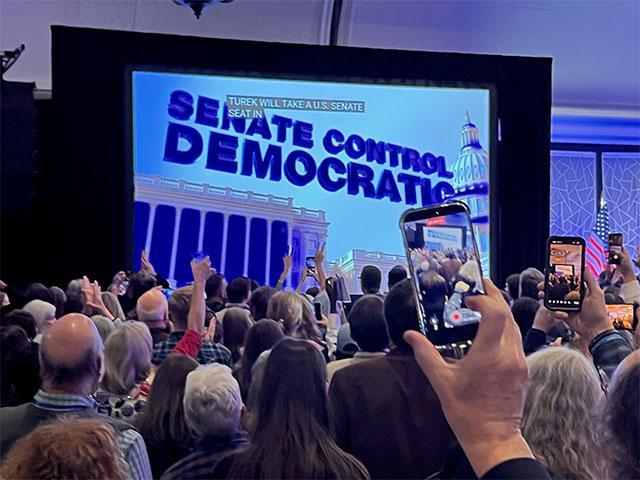
In Iowa, Josh Turek defeated nine-year U.S. Rep. Ashley Hinson, 50% to 46%, flipping a Republican-held Senate seat by retiring Sen. Joni Ernst, a two-term Republican.
In Texas, James Talarico became the state's first Democratic U.S. senator in 38 years. Talarico and Republican Ken Paxton debated religion, education and corruption throughout the campaign.
Sherrod Brown, D-Ohio, will return to the Senate after winning a special election against Jon Husted, who was appointed to fill the seat vacated by Vice President JD Vance. Brown will have to run again in 2028 to win a full six-year term. He will have to debate his relevance and seniority on Agriculture, Banking or Finance Committees.
P[L1] D[0x0] M[300x250] OOP[F] ADUNIT[] T[]
North Carolina and South Carolina also saw changes in their Senate delegations. Former North Carolina Gov. Roy Cooper defeated Republican Michael Whatley, flipping the seat previously held by Republican Sen. Thom Tillis. In South Carolina, Democrat Annie Andrews defeated Sen. Darline Graham, appointed after her brother's death.
It was a rebuke for Trump who had influenced both the Carolina races and Texas. In North Carolina, he urged Tillis to retire or face a primary challenge. In South Carolina, he endorsed Graham in August following her appointment. Trump also backed Paxton over incumbent Sen. John Cornyn.
Sen. Susan Collins, R-Maine, leaves the Senate after nearly 30 years, Democrat Troy Jackson defeating her for the seat. Jackson entered the race in late July after initial Democratic primary winner Graham Platner withdrew amid allegations of sexual assault.
In Michigan, Abdul El-Sayed defeated Republican Sen. Mike Rogers, campaigning on affordability and Medicare for All. El-Sayed, a physician, made health care access a central part of his campaign.
IOWA'S NEW ATTITUDE: BLUE
After hundreds of town hall meetings and extensive discussions about Iowa agriculture, the state's gubernatorial candidates focused on the agricultural economy, including agribusiness consolidation and the possibility of breaking apart corporate power.
Rob Sand defeated Republican Zach Lahn in the governor's race, becoming Iowa's first Democratic governor since 2008.
Throughout his campaign, Sand emphasized finding common ground, often opening events by inviting crowds to sing "America the Beautiful." The song became a recurring part of his campaign appearances, including events at the Iowa State Fair.
"To Iowa Democrats, you've had a hard few years here in Iowa, but balanced government has been restored," Sand said in his victory speech.
He also discussed his administration's goals of reducing cancer rates and improving water quality, saying those efforts would require bipartisan support and ideas from both parties.
The Iowa Legislature, however, remains under Republican control with a supermajority.
"I actually heard a Democratic and Republican legislative leader around 2013 say just exactly that. We do our best work when we're forced to work together. Come January, we will be forced to work together," he said.
Lahn reflected on the results in his concession speech "I believe tonight we are going to see this as the beginning of a movement, a real movement that has legs." He described the need to put corporate interests, lobbyists, career politicians "on notice." Lahn's campaign was closely associated with the Make America Healthy Again (MAHA) movement and its emphasis on challenging corporate influence.
His next political step, however, may not be far away. "We'll see you in four years," he said.
Democrats also picked up three of Iowa's four congressional districts. In Iowa's 1st Congressional District, Christina Bohannan defeated Rep. Mariannette Miller-Meeks, receiving 54% of the vote to Miller-Meeks' 43%, with 93% reporting. In the 2nd District, Lindsay James defeated Republican Joe Mitchell. In the 3rd District, Sarah Trone Garriott defeated Rep. Zach Nunn, receiving 55% to Nunn's 45%, with 92% reporting. The victories in the 1st and 3rd districts also flip seats held by members of the House Agriculture Committee.
RED STATES TURN BLUE
Democrats also won gubernatorial races in several traditionally Republican states, extending their gains beyond congressional contests.
In Ohio, Democrat Amy Acton defeated Republican Vivek Ramaswamy, flipping the governor's office.
In Texas, Gov. Greg Abbott conceded to Democrat Gina Hinojosa before the race was officially called. Abbott had served as governor for 12 years. Hinojosa came from the Texas State Legislature.
In Minnesota, Amy Klobuchar won the governor's race, defeating House Speaker Lisa Demuth, a Republican. Klobuchar's departure from the Senate leaves questions about Minnesota's future role in congressional agriculture leadership, particularly as lawmakers continue to face pressure to deliver a farm bill.
Klobuchar, in her victory speech, said Trump had a rubber stamp for two years, "but tonight the ink ran out."
Gov. Tim Walz would appoint an interim replacement to fill Klobuchar's Senate vacancy. Rep. Angie Craig, D-Minn., is among the names being discussed. A special election would follow next year to fill the remainder of the term.
HOW DEMOCRATS PROCEED
The Alaska and Mississippi Senate races remained uncalled early Wednesday. Several House races also remained outstanding as election officials continued counting ballots.
The 120th Congress will be sworn in Jan. 3, followed by new-member orientation and committee assignments. Democrats will face pressure to deliver on campaign promises involving the economy and agriculture while deciding how aggressively to pursue government oversight.
Subpoenas and congressional investigations are among the oversight measures openly discussed by Democrats.
"I look forward to your answer to what motivated this graphic when you appear in front of the Agriculture Committee in January," Shontel Brown, who is seeking to become chair of the House Agriculture Committee, said in a post directed at Agriculture Secretary Brooke Rollins this week.
Earlier this week, Trump told Fox News he would become "Mr. Veto" if Democrats took control of Congress. But late Tuesday night, however, he congratulated Democrats and said he wanted to work with the new majority.
"I don't want to be just sitting there for two years vetoing everything," he said.
See the results at "DTN's Election 2026 Quick Takes," https://www.dtnpf.com/…
DTN Farm Business Editor Chris Clayton contributed to this report.
Jake Zajkowski can be reached at jake.zajkowski@dtn.com
Follow him on social platform X @jzajkow
(c) Copyright 2026 DTN, LLC. All rights reserved.