


Under the Agridome
A Reasonable Place to Land: Merry Christmas
Editor's Note: Today DTN is sharing content by that is normally reserved for paying customers. Not a subscriber? Check here for a trial: https://www.dtn.com/…
**
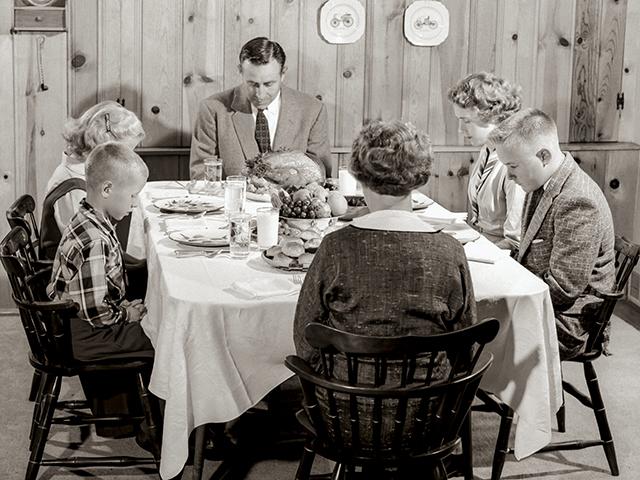
It is that time of year again. Christmas is next week and, as always at Christmas time, many of us are hoping for that idyllic picture of family and friends gathering around to celebrate the season. Of course, it is not always that way, as Christmas means different things to different people and there is a whole assortment of family structure trying to make it all work. On the farm, for the most part except for the feeding of livestock, much of the machinery is put away. It is the time to reflect and of course to look forward toward the new year.
For the record, March corn is $4.44 bushel, January soybeans are $10.62 a bushel and July 2026 wheat is $5.29 a bushel as we go into Christmas week. March 2026 corn seems to be locked in a trading range between $4.40 and $4.50; when you go further out, the May/July futures spread is covering a bullish 27 1/2% calculated full commercial carry. March/May future spread on soybeans is sitting at 12.5 or about 45% calculated full commercial carry. Then there is wheat -- well, do we really want to hear about wheat?
Wheat simply has a long story to it, with wheat grown almost everywhere in the world, planted and harvested every month of the year. At the end of the day, that's probably a very good thing. With wheat supply turning up almost everywhere, that means there are less humble empty stomachs than there were before.
P[L1] D[0x0] M[300x250] OOP[F] ADUNIT[] T[]
It is easy to get caught up in these agricultural economic statistics. Prices for these three commodities dominate our farmer lexicon constantly. We think about supply and demand for these commodities always, but at the end of the day consumption is the thing that drives that demand. Having a human being at the end of the food chain is always the most important part of that production process. People have to eat, but of course we know not everybody eats equally. Around the world and within our own country there is all kinds of food insecurity.
I know in my own community there is a thriving food bank that is run by a church which helps feed people who either are having a hard time or have other issues that make it difficult to get enough food to eat. I also have good friends that work with churches in bigger communities who put together hampers of food and distribute them through larger Ontario cities. At the end of the day, it's just part of life. We might try to get it right in Canada, but we will always have some type of food insecurity here.
That need will always be there even though I've often said in the past that food is ubiquitous in our society. In other words, Canadians believe it'll always be there. In fact, most Canadians believe it will always be there very cheaply. However, that is not the case in our more northern Arctic communities where food is very expensive, and any idea of a food supply is much more hand-to-mouth. Living off the land has been part of life for our northern aboriginal communities for centuries. As Canadians, we all need to realize this and get the food equation in northern Canada on a better footing.
That certainly will take some work, but on the other hand in the rest of Canada, food continues to be plentiful. It's everywhere, part of our social celebrations. However, in many parts of the world it is not quite like that. In the global south, people are often only one abject step away from poverty. When you see it up close, it changes you forever, especially if you are a food producer like all farmers are.
Rewind 32 years ago and I found myself on a train in Comilla, Bangladesh. As the train stopped at the station, we were inundated with food vendors at the windows. Of course, these people were surrounded by little children wanting some food to eat. It was almost a mob scene with kids clamoring to get stuff to eat. As the train left, I remember looking out the window seeing this little boy falling on the tracks and crying, not getting any food. That image has always haunted me since, me with so much and him so hungry and with so little. In that country, there is no end to it.
Back in Canada, I do what I do to try to circle that square. It is a long story. I've told you that story before. I do produce a lot of food on my farm, just like many of you do. And maybe that is the only real answer any of us ever get. We farm, we produce, we steward land and capital and risk so that food keeps moving through the system. We cannot fix every broken place in the world, but we can make sure that what we do here is done well, honestly, and with purpose. At Christmas, when the machinery is parked and the books are closed for a few days, that seems like a reasonable place to land. Feed people, do your best, and remember that none of this is guaranteed. Merry Christmas.
**
The views expressed are those of the individual author and not necessarily those of DTN, its management or employees.
Philip Shaw can be reached at philip@philipshaw.ca
Follow him on social platform X @Agridome
(c) Copyright 2025 DTN, LLC. All rights reserved.