

These Farm Kids Balance Off-Farm Agricultural Jobs to Sustain Legacy
Living a Rural Legacy
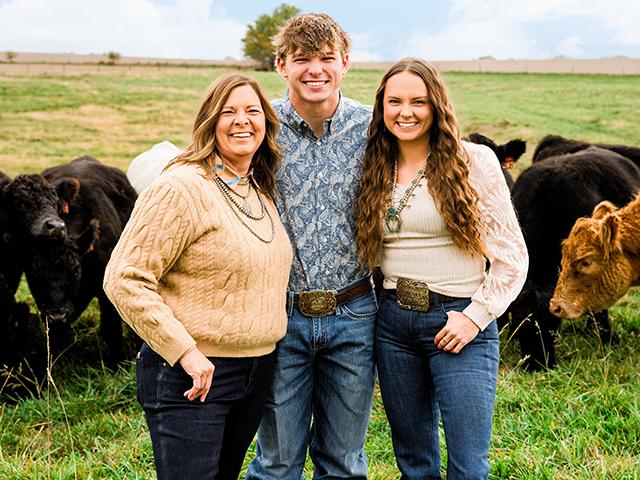
Living the legacy set by those before us is what a lot of farm kids want to do. Finding a way to stay involved in the industry while keeping our own legacy alive is reality for many on the farm. Often, opportunities are taken elsewhere to keep a family farm alive.
I grew up in the 1980s watching the dreams of many farm families dissolve with the high interest rates and high input costs. My dad was a full-time farmer, and my mom had an off-farm job that helped us survive and provided health insurance for our family. But, many kids in the 1980s and 1990s didn't go back to the family farm. Their parents didn't want them to go through the hardships experienced during the farm crisis of the 1980s. Life in 2026 in rural America isn't necessarily a lot different. The question often asked is, "How can we keep the family-farming legacy alive?"
Our central-Iowa farm has been in the family for over 150 years. In that time, so much has changed on our farm, in agriculture and in rural America. Small row-crop and cattle farms such as ours rarely produce enough income on which a family can live. Most small-farm owners aren't working the soil because it isn't feasible to do so. The high cost of equipment and inputs to raise a crop takes leverage, and that comes with bigger purchases.
FARM KIDS WANT TO RETURN TO RURAL AMERICA
My children are the sixth generation to grow up on our farm, near Redfield. They are both college-educated and have chosen to work in production agriculture, because it's what they know and love.
My daughter, Kassidy Bremer, 25, moved back to Iowa in the summer of 2025 after living in Colorado, Illinois and Oklahoma for college and jobs. A bachelor's degree in animal science from Oklahoma State University gave her some extra training and education she can use in her position as Angus herdsman at Nichols Farms, in Bridgewater.
"I wanted to work in production agriculture because, over the years, I have been taught the essential skills that help me be an asset on a cattle operation," she explains. "Sorting cattle, checking health and calving out cows are some of the most important skills to have no matter what operation. I use these at work and at home on our own farm."
P[L1] D[0x0] M[300x250] OOP[F] ADUNIT[] T[]
Kassidy's supervisor, Ross Havens, who is the marketing coordinator at Nichols Farms, says that when he's looking for employees, he wants those who have the work ethic and general knowledge to care for the cattle the right way. "I'm looking for people who will put in the extra effort and look to improve the little things. It often will take early mornings and late nights, and that is something that is hard to teach if you don't know the industry."
Working together as a unit, like a family, is how Kassidy describes day-to-day activities at the large cattle seedstock operation. Nichols Farms raises Angus, Simmental and South Devon cattle, selling bulls and females for commercial and purebred cattlemen. "Learning how the operation uses genomics and EPDs [expected progeny differences] to improve the cattle is unlike anything I've done before," she says. "It's really quite an eye-opener, and looking at what the market prices are like today, it makes a lot of sense to improve cattle performance in all aspects of the operation."
Havens says Kassidy's will to learn is a great asset to their operation. "She's not scared to learn something new and sit down at the computer to study a new program or sort through data," he says.
BUILDING SKILLS TO BECOME A BETTER PERSON
Willingness to learn new skills is what Brent Voss attributes to good employees. Voss owns Voss Angus, at Dexter, where Klayton Bremer is employed. "I hire a lot of young men from different backgrounds. I see it as an honor and a privilege to bring them in and lead them in ways to build more than job skills but also build them into great people," Voss says.
Klayton, 20, has an associate's degree from Iowa Central Community College, which he attained while also working full time at Voss Angus. The operation consists of a registered Angus cow herd and a row-crop operation. Klayton helps in all parts of the cattle and crop farm, which makes every day different.
"I enjoy working outside. I have known for a while that I wanted a job that I could be challenged and do something different every day. I get that at Voss'," he says. "I grew up on a farm but mostly have just done the cattle and hay part. Since we didn't raise crops, that part has been new to me. It's been challenging and rewarding to help, from planting until harvest."
Klayton has worked at Voss Angus since April 2025 and was involved on the farm the entire growing season, learning the skills for raising corn and soybeans. Voss says a good employee is a good listener -- a skill that can be especially important on the farm when using large equipment, studying precision details and working with livestock. "If they will listen and learn, it helps make our operation successful and make the employee successful," Voss adds.
According to a 2023 Iowa State University College of Agriculture and Life Sciences sociology study of students who came from a farm, 41% said they were definitely not or probably not going to return to the farm after college. Another 21% were unsure if they would return, and 38% reported they would probably or definitely return to the farm. This survey also showed 70% of male students were more likely to return to the farm, and only 20% of female students said they would go back to the farm. Men were more likely to return to large family farms, while women were more likely to return to a medium- to small-scale family farm.
Both Kassidy and Klayton have an active interest in continuing their family farm. But, both also know that for the operation to continue, they must have outside income because of the size and scale of the farm. The outside income helps to grow the family's cow herd.
Even though I didn't immediately return to the family farm after college in the mid-1990s, we have now been here for 20 years. The number of kids growing up on farms is a lot fewer than it was in the 1980s, but the skills they can provide to employers, other farms and their own businesses, along with the lifestyle found in rural America, will help the family-farming legacy thrive into the future.
**
-- Jennifer Carrico can be reached at jennifer.carrico@dtn.com
-- Follow Jennifer on social platform X @JennCattleGal
[PF_0426]
(c) Copyright 2026 DTN, LLC. All rights reserved.